09 Mar 2018
The Long Walk
An animated short based on a scene from "The Long Walk" by Stephen King

Exploring the conscious, the unconscious and the self, By Winds and Tides takes a deep experimental dive into the birth of an idea—how it takes shape, how it is released. An allegorical quest, the film combines images and words into a singular sigh.

(voice)
09 Mar 2018
An animated short based on a scene from "The Long Walk" by Stephen King
06 Oct 2023
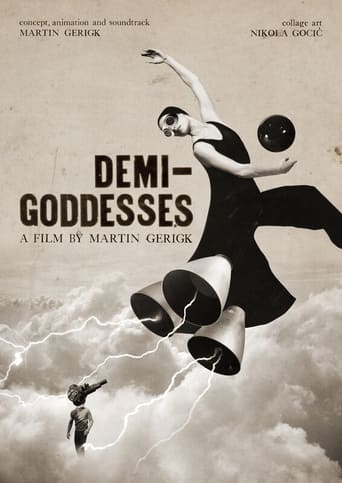
The second essay about still dominant dark aspects of our modern society. It is conceived as a surreal anti-patriarchal thought experiment and raises important questions about gender, power, and social change, prompting us to reflect on how historical patterns of discrimination and oppression might be either repeated or overcome in a reversed gendered world. It challenges the viewer to confront their own assumptions and biases, and to consider the possibilities of a more equitable society.
25 Jan 2023
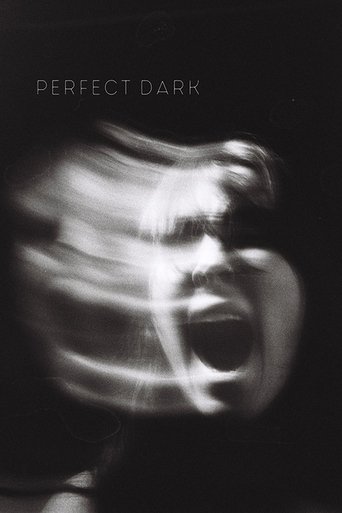
A womans last moments before she is consumed by a darkness.
01 Jan 1997
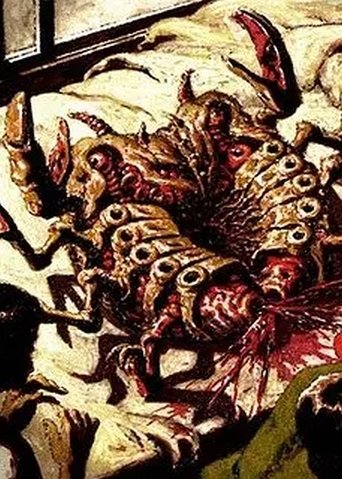
One morning, Papa transforms into a giant insect in the futon, emerges instantly in front of the astonished family, breaks through the window and flies into the sky. Short animation by Keita Kurosaka for MTV Japan.
01 Jun 1930
Experimental short film by Oskar Fischinger
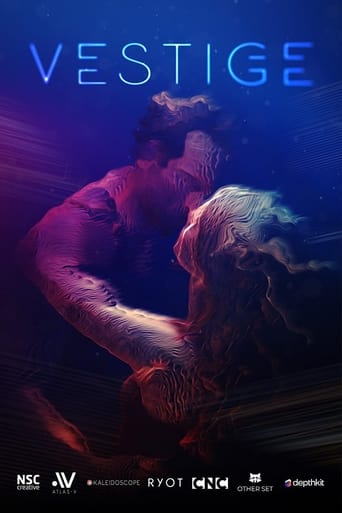
19 Jan 2023
A room-scale VR creative documentary that uses multi-narrative and volumetric live capture to take the viewer on a journey into the mind of Lisa as she remembers her lost love, Erik. Within an empty void, fragments of past memories appear of their life together.
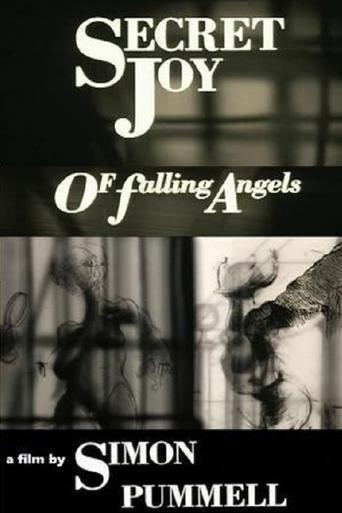
23 Jul 1991
A re-telling of the annunciation story which blurs the sacred and the profane. The film combines many different optical film techniques with an exploration of drawing the human body which breeds Mickey Mouse with Michelangelo.
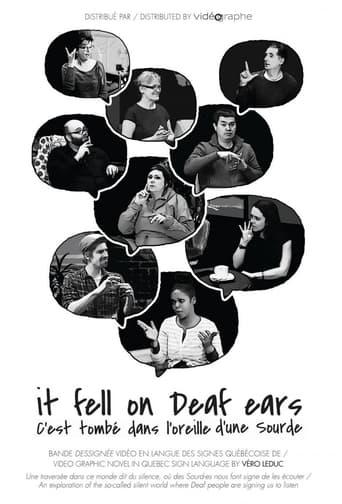
07 Nov 2016
Because Quebec Sign Language cannot be captured on paper, videography has revealed itself to be the best way to represent this visual language. The first ‘comic strip’ in sign language, the film depicts snatches of conversations between various deaf and hearing protagonists. A visit to a silent world, where the hearing impaired ask us to listen to them.
03 Jan 2004
Polish avant-garde animation with changing colors and shapes that suggest birth followed by heavy distortion and building to a face in the swamp.
01 Jul 1952
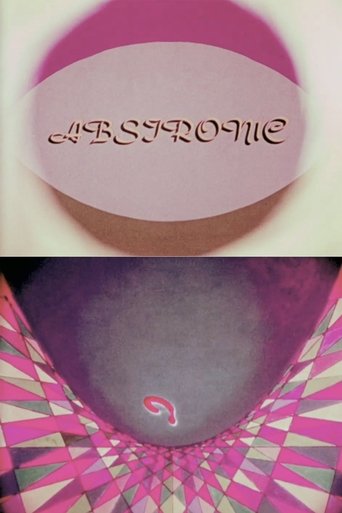
A pioneer of visual music and electronic art, Mary Ellen Bute produced over a dozen short abstract animations between the 1930s and the 1950s. Set to classical music by the likes of Bach, Saint-Saëns, and Shoshtakovich, and replete with rapidly mutating geometries, Bute’s filmmaking is at once formally rigorous and energetically high-spirited, like a marriage of high modernism and Merrie Melodies. In the late 1940s, Lewis Jacobs observed that Bute’s films were “composed upon mathematical formulae depicting in ever-changing lights and shadows, growing lines and forms, deepening colors and tones, the tumbling, racing impressions evoked by the musical accompaniment.” Bute herself wrote that she sought to “bring to the eyes a combination of visual forms unfolding along with the thematic development and rhythmic cadences of music.”
01 Jan 1979
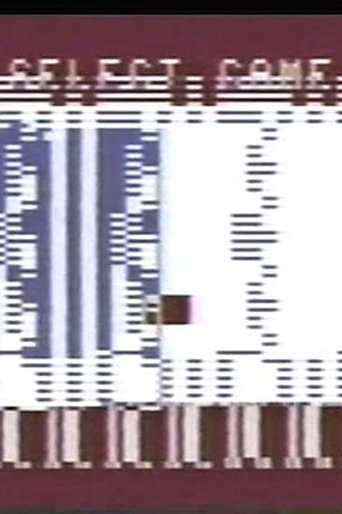
Digital TV Dinner is a video art clip from 1979 created using the Bally Astrocade console game to generate unusual patterns. The Bally Astrocade was unique among cartridge games in that it was designed to allow users to change game cartridges with power-on. When pressing the reset button, it was possible to remove the cartridge from the system and induce various memory dump pattern sequences. Digital TV Dinner is a collection of these curious states of silicon epilepsy set to music composed and generated upon this same platform.
24 Jul 2024
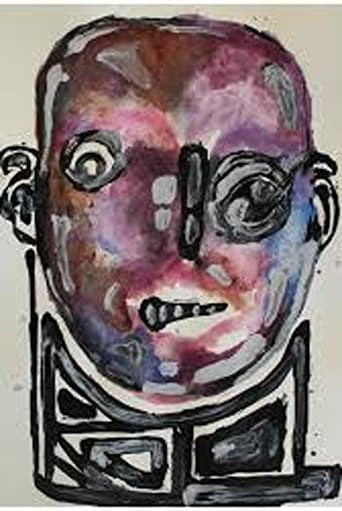
A strange wire-fingered homunculus navigates through his dreams of different faces and faces, traversing a subliminal and endless variety. They are all different faces, but all have huge eyes that are questioned as to what keeps them apart, perhaps left broken by an impossible love.

31 Dec 1993
This is a hand-painted film which has been photographically step-printed to achieve various effects of brief fades and fluidity-of-motion, and makes partial use of painted frames in repetition (for "close-up" of textures). The tone of the film is primarily dark blue, and the paint is composed (and rephotographed microscopically) to suggest galactic forms in a space of stars.
06 May 2009
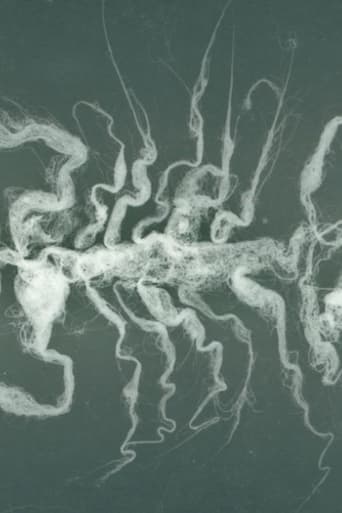
Short animation by Alvise Renzini inspired by a C.G. Jung's dream
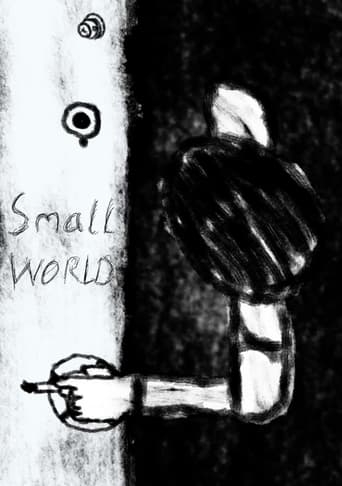
12 Mar 2022
A teacher spends a day in their classroom where nothing is what it seems.
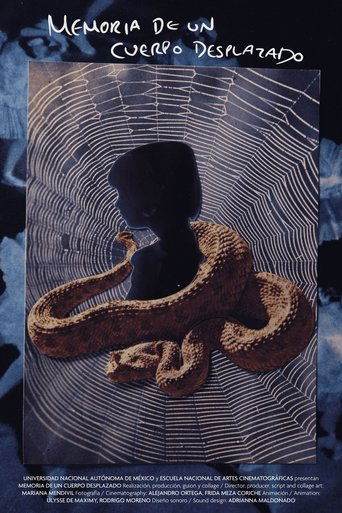
17 Jun 2024
A ritual in the form of a film essay that explores, through collage, the sense of exile experienced during early childhood migration. It examines the primal configuration of detachment from one’s homeland, family environment, and body, and the reclamation of origins as a symbolic center.
21 Jun 2024
Surreal environments take center stage in this visual odyssey.
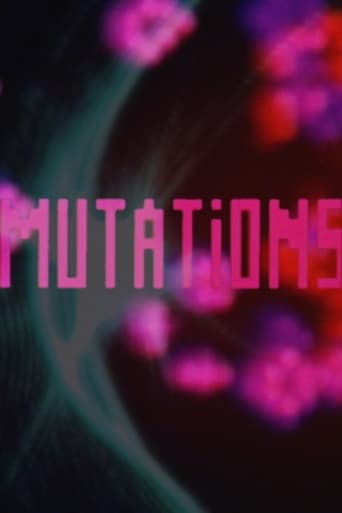
01 Mar 1972
“The changing dots, ectoplasmic shapes and electronic music of L. Schwartz’s ‘Mutations’ which has been shot with the aid of computers and lasers, makes for an eye-catching view of the potentials of the new techniques.” – A. H. Weiler, N. Y. Times
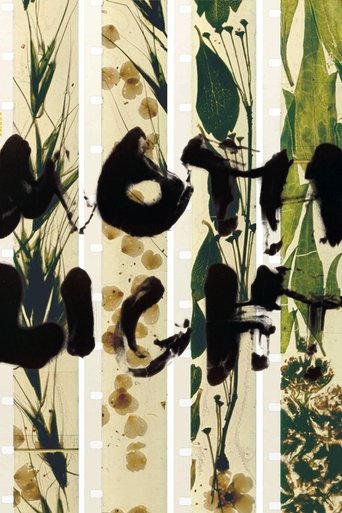
02 Dec 1963
Seemingly at random, the wings and other bits of moths and insects move rapidly across the screen. Most are brown or sepia; up close, we can see patterns within wings, similar to the veins in a leaf. Sometimes the images look like paper cutouts, like Matisse. Green objects occasionally appear. Most wings are translucent. The technique makes them appear to be stuck directly to the film.

28 Aug 1967
After the title, a white screen gives way to a series of frames suggestive of abstract art, usually with one or two colors dominating and rapid change in the images. Two figures emerge from this jungle of color: the first, a shirtless man, appears twice, coming into focus, then disappearing behind the bursts and patterns of color, then reappearing; the second figure appears later, in the right foreground. This figure suggests someone older, someone of substance. The myth? Preserved by the Academy Film Archive in 2012.