09 Aug 2018

Como Fotografei os Yanomami
No overview found

We are all in this canoe together, and the canoe is Mother Earth.
Rematriation explores scientific, cultural, economic and sociopolitical perspectives, as citizens fight to protect the last big trees in British Columbia from being felled. The lessons we take away permeate the fabric of Canadian identity.


09 Aug 2018

No overview found
More than an attachment to our territory, the Innu live a filial relationship with Nitassinan, our ancestral homeland. For so many generations, the land has nourished, cared for and raised us. It has inspired our language, our culture, our lifeway and our vision of the world. Throughout the seasons, our ancestors criss-crossed the territory on foot, by canoe or on snowshoes. They knew every river, lake, or stream; every mountain, hill or bog; every camp, trail and portage path. Nomadism forged our people, and the film will record this journey and our history – past, present and future. And while it will attest to our vitality and resilience it is also – and above all – a tribute and a message of respect for the Earth.
30 Jan 2015
Portrait of the Dene, natives of the Northwest Territories whose way of life has been documented by an Oblate father who has lived with them for more than seventy years.

01 Dec 2016

The title Indian Time seeks to reverse the stereotypical expression associated with ‘’being late’’ in order to present the indigenous viewpoint of their relationship with time, territories, people and objets proper to the First Nations, thus launching the spectator into this ‘’Indian Time’’ with fresh eyes and an open heart. Captured over a period of five years within 18 communities, INDIAN TIME is a personal and current portrayal of the 11 Aboriginal nations of Québec, where some forty people take turns speaking, allowing for exceptional encounters and immersing the viewer - eyes and heart - in this "Indian Time".

20 Oct 2025

A film about the gold panning adventures of Hans Söderström, an indigenous Swede. The story stretches from Scandinavia to Africa, via Asia and the Americas, but ultimately boils down to the simple boyish dream of finding gold. Lots of it.

07 Jan 1926

Robert J. Flaherty’s follow-up to Nanook of the North shifts from the Arctic to the South Seas, portraying Samoan village life with a painterly eye. Blending ethnographic detail with a romanticized “Gauguin idyll,” the film celebrates daily rituals, communal traditions, and the passage into adulthood, suffused with what Flaherty called “pride of beauty, pride of strength.”

11 Jun 2022

Poet Layli Long Soldier crafts a searing portrait of her Oyate’s connection to the Black Hills, through first contact and broken treaties to the promise of the Land Back movement, in this lyrical testament to resilience of a nation.

04 Oct 2024

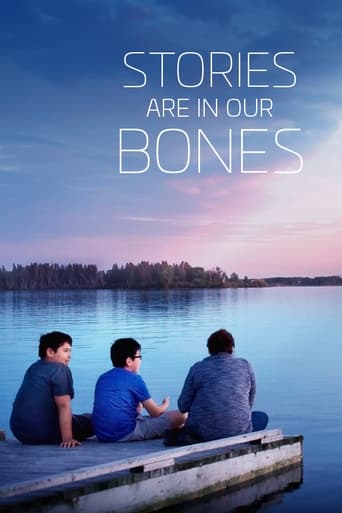
Known for her intimate films, director Kim O’Bomsawin (Call Me Human) invites viewers into the lives of Indigenous youth in this absorbing new documentary. Shot over six years, the film brings us the moving stories, dreams, and experiences of three groups of children and teens from different Indigenous nations: Atikamekw, Eeyou Cree, and Innu. In following these young people through the formative years of their childhood and right through their high school years, we witness their daily lives, their ideas, and aspirations for themselves and their communities, as well as some of the challenges they face.

14 May 2018

Acoustic Ocean is an artistic exploration of the sonic ecology of marine life in the North Atlantic. Located on the Lofoten Islands in Northern Norway, the video centers on the performance of a marine-biologist diver who is using a life-size model of a submersible equipped with all sorts of hydrophones and recording devices. In this science-fictional quest, her task is to sense the submarine space for acoustic and bioluminescent forms of expression.

14 Jun 2018

They were forced to assimilate into white society: children ripped away from their families, depriving them of their culture and erasing their identities. Can reconciliation help heal the scars from childhoods lost? "Dawnland" is the untold story of Indigenous child removal in the US through the nation's first-ever government-endorsed truth and reconciliation commission, which investigated the devastating impact of Maine’s child welfare practices on the Wabanaki people.
26 Jul 1999
As the name of this short film promises, a filmmaker (Merata Mita), a cook (Anne Thorp) and a singer (Moana Maniapoto) sit down for an interview at Pākiri beach. With a focus on their personal lives, these highly accomplished wahine Māori are generous in sharing what motivates and challenges them in their mahi — with friendship a recurring theme. Filmed a year after the disbanding of her group Moana and the Moahunters, Maniapoto is particularly vulnerable in her reflections. The film was made by Honours student Sam Cruickshank as part of a Film and Media Studies degree at Auckland University.

14 Sep 2012

Actor Rawiri Paratene was 16 years old when he joined Māori activist group Ngā Tamatoa (Young Warriors) in the early 1970s. "Those years helped shape the rest of my life," says Paratene in this 2012 Māori TV documentary, directed by Kim Webby. The programme is richly woven with news archive from the 1970s, showing protests about land rights and the Treaty of Waitangi, and a campaign for te reo to be taught in schools. Several ex Ngā Tamatoa members — including Hone Harawira, Tame Iti and Larry Parr— are interviewed by Paratene, who also presents the documentary.

06 Dec 2018

Amá is a feature length documentary which tells an important and untold story: the abuses committed against Native American women by the United States Government during the 1960’s and 70’s: removed from their families and sent to boarding schools, forced relocation away from their traditional lands and involuntary sterilization. The result of nine years painstaking and sensitive work by filmmaker Lorna Tucker, the film features the testimony of many Native Americans, including three remarkable women who tell their stories - Jean Whitehorse, Yvonne Swan and Charon Aseytoyer - as well as a revealing and rare interview with Dr. Reimart Ravenholt whose population control ideas were the framework for some of the government policies directed at Native American women.
Yellowtail is the story of a young Native American cowboy searching for meaning as his chaotic lifestyle begins to wear on him both physically and mentally. To find his purpose the young man has to reflect on his upbringing as a native to become the spiritually connect man he was meant to be.


The director's maternal grandfather has created beautiful pieces of Navajo jewelry for nearly 50 years. He witnesses the craftsmanship it takes, while connecting with his grandfather in his hogan.

17 Oct 2023

Part oral history and part visual poem, Miss Campbell: Inuk Teacher is the story of Evelyn Campbell, a trailblazer for an Inuit-led educational system in the small community of Rigolet, Labrador.

04 May 2012

It portrays a pioneering and risky work carried out in a small Xinane base, by FUNAI, near Parallel 10º South, west of Acre, on the border with Peru. In simple installations, in the middle of the jungle, the sertanista José Carlos Meirelles carries out the difficult mission of protecting the isolated Indians of the region, with the help of anthropologist Terri Aquino. With few resources, specialists perform their tasks tirelessly. In addition to carrying out a permanent negotiation with the riverside populations in the area, they also deal with the confrontation with traffickers and squatters who try to invade it.

20 Nov 2023

In the form of a poetic love letter to its nation, this short film reveals a strong community and the anchoring of the new generation in this rich culture.
08 Nov 2018
All across Alaska, Native cultures have depended on the abundant natural resources found there to support their families, cultures and way of life. Now these resources are growing scarce, and the people who have relied on them for centuries have to find new ways to adapt.
08 Nov 2018
From totem poles to language revitalization and traditional agriculture, host Chris Eyre (Cheyenne Arapaho) discovers the resilience of the Coast Salish Tribes of the Pacific Northwest. Travel down historic waterways as the tribe revisits their ancient connection to the water with an annual canoe journey.