04 Dec 2017
Beerput Nederland
No overview found
On the Trail of Hazardous Waste from Subic and Clark
In 1991 and 1992, the United States closed down two of their largest military bases in Asia. After almost 100 years, our American guests were gone. But we discovered that our guests forgot to clean up. Toxic Sunset probes the issue of toxic wastes in US Military bases in the Philippines.
04 Dec 2017
No overview found
21 Nov 2002
A documentary on how British double-dealing during the First World War ignited the conflict between Arab and Jew in the Middle East. The bitter struggle between Arab and Jew for control of the Holy Land has caused untold suffering in the Middle East for generations. It is often claimed that the crisis originated with Jewish emigration to Palestine and the foundation of the state of Israel. Yet the roots of the conflict are to be found much earlier – in British double-dealing during the First World War. This is a story of intrigue among rival empires; of misguided strategies; and of how conflicting promises to Arab and Jew created a legacy of bloodshed which determined the fate of the Middle East.

18 Aug 2021
A documentary on the rise and fall of Project Cybersyn, an attempt at a computer-managed centralized economy undertaken in Chile during the presidency of Salvador Allende.

02 Jan 1991
They speak the same language, share a similar culture and once belonged to a single nation. When the Korean War ended in 1953, ten million families were torn apart. By the early 90s, as the rest of the world celebrated the end of the Cold War, Koreans remain separated between North and South, fearing the threat of mutual destruction. Beginning with one man's journey to reunite with his sister in North Korea, filmmakers Takagi and Choy reveal the personal, social and political dimensions of one of the last divided nations on earth. The film was also the first US project to get permission to film in both South & North Korea.
12 Feb 1993
Edward Said, a Palestinan writer, academic and exile, talks about his book "Culture and Imperialism" and explains how the attitudes forged over the last 200 years continue to enforce the relationship between the west and the developing world.
21 Jan 2018
Unraveling one of the biggest environmental scandals of our time, a group of citizens in West Virginia take on a powerful corporation after they discover it has knowingly been dumping a toxic chemical — now found in the blood of 99.7% of Americans — into the local drinking water supply.

21 Jun 2023
In an era of throw-away ease, convenience has cost us our well-being. Plastics have been found inside our bodies— in our colons, our brains, and even in mothers’ developing wombs. Scientists around the country are sounding the alarm, but without public buy-in, there is little that can be done. How much evidence do we need before we decide to take action?
11 Feb 2022
A feature length Marxist documentary looking at 20th Century fascism, early English settler colonialism in the Americas and the prospects of a contemporary neofascism. The film focuses on the political economy of these forms, drawing on Rajani Palme Dutt's view that fascism represented an organisation of capitalist decay, to illustrate the various different laws of motion which condition the development of reactionary political movements.
03 Sep 2015
A documentary following an Estonian fashion designer Reet Aus on a global tour to explore the origin process and the environmental footprints of today's fast paced fashion industry. On the road the mission takes an unexpected turn towards trying to introduce her "upcycling" inspired product line to some of the major fashion retailers to increase awareness of the massive resource waste built into the current product lifecycle.
08 Sep 2006
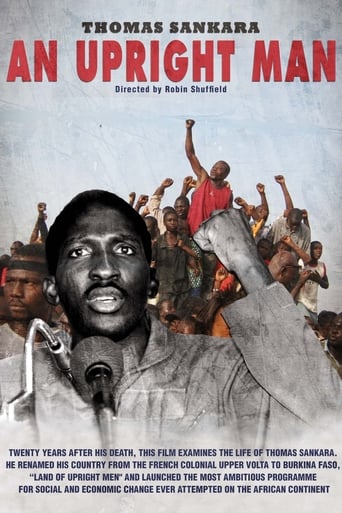
Thomas Sankara, former president of Burkina Faso, was known as "the African Che", and became famous in Africa due to his innovative ideas, his devastating humor, his spirit and his altruism. More than a classic biography, this film sheds light on the impact that this man and his politic made on Burkina Faso and Africa in general.
28 Nov 2012
Zambia's copper resources have not made the country rich. Virtually all Zambia's copper mines are owned by corporations. In the last ten years, they've extracted copper worth $29 billion but Zambia is still ranked one of the twenty poorest countries in the world. So why hasn't copper wealth reduced poverty in Zambia? Once again it comes down to the issue of tax, or in Zambia's case, tax avoidance and the use of tax havens. Tax avoidance by corporations costs poor countries and estimated $160 billion a year, almost double what they receive in international aid. That's enough to save the lives of 350,000 children aged five or under every year. For every $1 given in aid to a poor country, $10 drains out. Vital money that could help a poor country pay for healthcare, schools, pensions and infrastructure. Money that would make them less reliant on aid.
01 Jan 1993
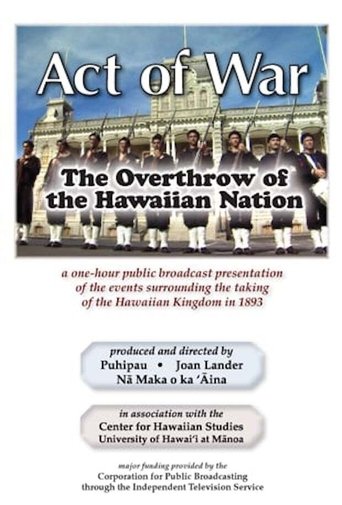
This hour-long documentary is a provocative look at a historical event of which few Americans are aware. In mid-January, 1893, armed troops from the U.S.S Boston landed at Honolulu in support of a treasonous coup d’état against the constitutional sovereign of the Hawaiian Kingdom, Queen Lili‘uokalani. The event was described by U.S. President Grover Cleveland as an "act of war."
16 Jul 1996
They're called bar women, hostesses, or sex workers and "western princesses." They come from poor families, struggling to earn a decent wage, only to be forced into the world's oldest profession. They're the women who work in the camptowns that surround U.S. military bases in South Korea. In 40 years, over a million women have worked in Korea's military sex industry, but their existence has never been officially acknowledged by either government. In The Women Outside, a film by J.T. Orinne Takagi and Hye Jung Park, some of these women bravely speak out about their lives for the first time. The film raises provocative questions about military policy, economic survival, and the role of women in global geopolitics
01 Jan 1998
Documentary tracing Hezbollah’s emergence in southern Lebanon after years of Israeli occupation, focusing on its social base, resistance activities, and the return of displaced villagers.
07 Jun 2003
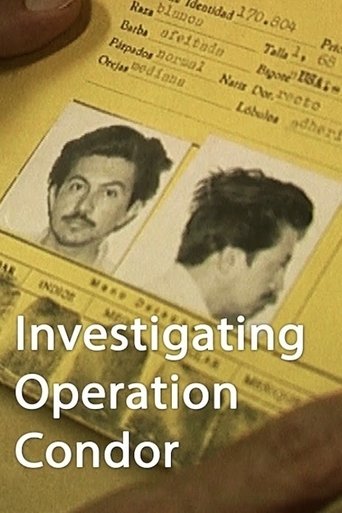
In the name of the struggle against terrorism, a special operation - code named CONDOR - was conducted in the 1970s and '80s in South America. Its target were left-wing political dissidents, the organized labor and intellectuals. Condor soon became a network of military dictatorships supported by the U.S. State Department, the CIA, and Interpol.
23 Nov 2020
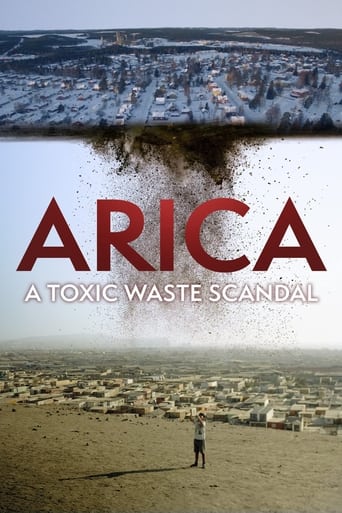
A Swedish mining giant, Boliden, is accused of having dumped 20000 tonnes of toxic waste in a poor neighborhood in a Chilean desert town.
14 May 2022
In the eighteenth century, the family of BBC World News anchor and correspondent, Laura Trevelyan, were absentee slave owners on the island of Grenada, profiting for years from the sale of sugar harvested from five different sugar cane plantations. When slavery was abolished in 1834, the UK government paid compensation to slave owners, but the enslaved received nothing. In the wake of the racial reckoning in America following the death of George Floyd, Grenada's national commission on reparations for slavery has begun to meet and debate what reparations means. In this film, Laura she travels to Grenada to try and learn more about the legacy of slavery on Grenada and her family's involvement in the slave trade.

13 Feb 2007
Featurette about the demise, during the early 1940s, of the once-popular Mr. Moto B-films series that starred Peter Lorre.
31 Jul 2004
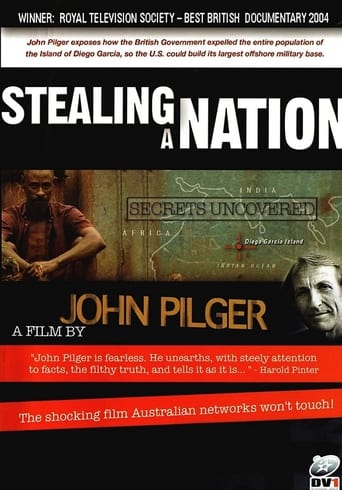
This tells a story literally 'hidden from history'. In the 1960s and 70s, British governments, conspiring with American officials, tricked into leaving, then expelled the entire population of the Chagos islands in the Indian Ocean. The aim was to give the principal island of this Crown Colony, Diego Garcia, to the Americans who wanted it as a major military base. Indeed, from Diego Garcia US planes have since bombed Afghanistan and Iraq. The story is told by islanders who were dumped in the slums of Mauritius and in the words of the British officials who left a 'paper trail' of what the International Criminal Court now describes as 'a crime against humanity'
29 Oct 2023
No overview found