28 Aug 2017
Tower
Four siblings, whose father disappeared during Brazilian Military Dictatorship, report their childhood during the regime.

28 Aug 2017
Four siblings, whose father disappeared during Brazilian Military Dictatorship, report their childhood during the regime.
During the first days after the 1973 Chilean coup d’état, the political leadership of the Popular Unity government was arrested and transferred to Dawson Island, Magallanes Region, extreme south of Chile and the mainland. The wives of the then political prisoners began an incessant effort to find out the whereabouts of their husbands and then try to return them alive. In these circumstances, they meet and spontaneously organize into a group they call the “Dawsonianas.”

18 Aug 2021
A documentary on the rise and fall of Project Cybersyn, an attempt at a computer-managed centralized economy undertaken in Chile during the presidency of Salvador Allende.

21 Feb 2020
Images of Argentinian companies and factories in the first light of day, seen from the inside of a car, while the director reads out documents in voiceover that reveals the collusion of the same concerns in the military dictatorship’s terror.
23 Nov 1999
A documentary film about the 1960, 1971, 1980, and 1997 military interventions and coups d'etat in Turkey.
07 Mar 2003
Hugo Chavez was a colourful, unpredictable folk hero who was beloved by his nation’s working class. He was elected president of Venezuela in 1998, and proved to be a tough, quixotic opponent to the power structure that wanted to depose him. When he was forcibly removed from office on 11 April 2002, two independent filmmakers were inside the presidential palace.
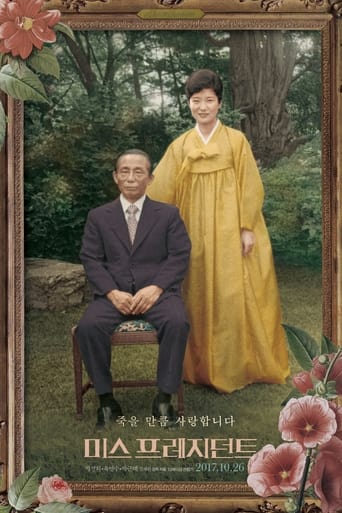
26 Oct 2017
My father led a coup in 1961. Two years later, I became the president's daughter.
No overview found
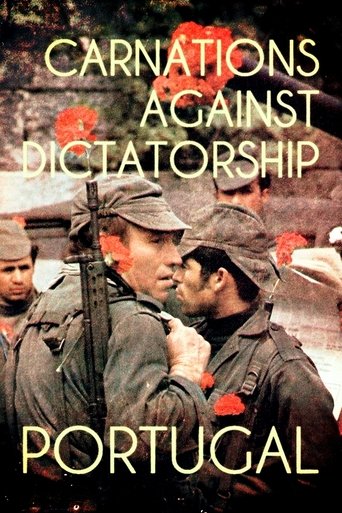
16 Apr 2024
In Portugal, during the night of April 24-25, 1974, a peaceful uprising put an end to the last government of the Estado Novo, the authoritarian regime established in 1933 by dictator António de Oliveira Salazar (1889-1970), paving the way for full democracy: a chronicle of the Carnation Revolution.

15 Nov 1977
Swiss television documentary on the first years of the dictatorship, filmed (in color) in 1977 by a team led by director André Gazut and journalist Claude Smadja. Strongly critical of authoritarianism and the failures of the economic model that was beginning to be adopted, the report shows different aspects of the ideological and technical implementation of the military government. From the purge in universities to the precariousness of the Minimum Employment Program, from the revenge of employers in the countryside to the lamentable composition of the constitutional commission, the show is full of conversations with personalities close to the regime (Jaime Guzmán, Maximilianio Errázuriz, Manuel Valdés, Ruy Barbosa, Arturo Fontaine Aldunate, among others) which is interspersed with testimonies from residents and farmers, victims of violence and poverty.

15 Oct 2013
Florian Hartung and Dirk Pohlmann have reconstructed a previously unknown dimension of the collaboration between Nazis and the CIA in the Cold War. Drawing upon recently released documents, the film exposes for the first time a perfidious, worldwide net that reaches deep into the power structures of the Federal Republic of Germany. Lending their authority to the fact-finders’ mission are high-ranking statesmen, journalists and historians.
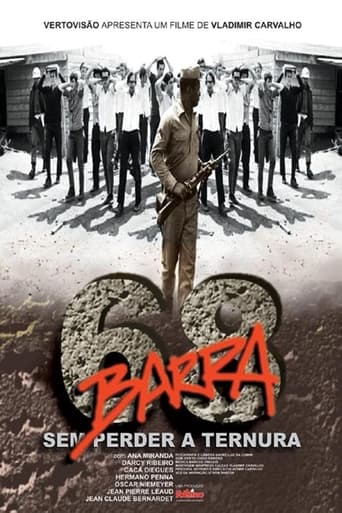
25 May 2001
The story of the University of Brasília, since it was only a project in Darcy Ribeiro's head until the fateful events in August 1968 when its campus was invaded by the police, during the military dictatorship, thus putting an end to its independence.

08 Sep 2011
For decades, Eva Braun was seen as Adolph Hitler's "dumb blonde" - just a pretty distraction for the Nazi dictator. But more recently, historians have revealed another side to her story. She was an attentive disciple dedicated to the man she called "my Führer," but stayed out of the limelight as World War II unfolded. Eva and Adolph married in April 1945, and the next day they committed suicide.

01 Sep 2009
In this revealing program, noted author and economic activist Naomi Klein offers a lecture and a candid interview in which she expounds on the ideas at the heart of her best-selling book.
24 Oct 2014
No overview found
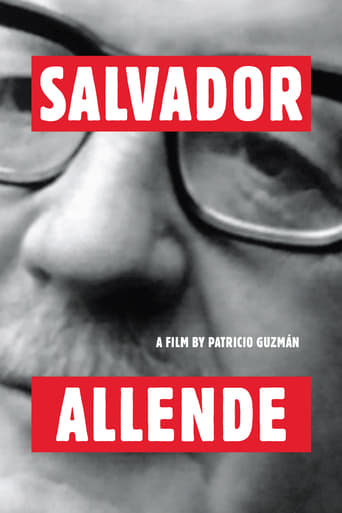
08 Sep 2004
A leftist revolutionary or a reformist democrat? A committed Marxist or a constitutionalist politician? An ethical and moral man or, as Richard Nixon called him, a "son of a bitch"? In SALVADOR ALLENDE, acclaimed Chilean filmmaker Patricio Guzmán (The Battle of Chile and Chile, Obstinate Memory) returns to his native country thirty years after the 1973 military coup that overthrew Chile's Popular Unity government to examine the life of its leader, Salvador Allende, both as a politician and a man.
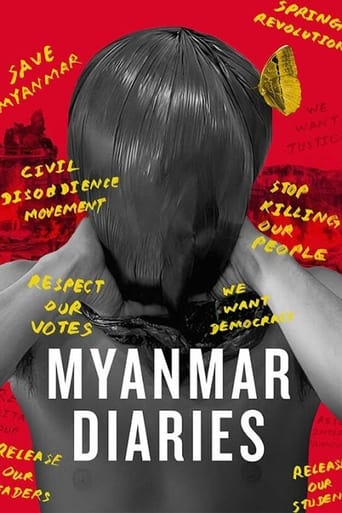
12 May 2022
How does it feel to be forgotten by the world? A powerful collective cry denouncing the crimes of the military dictatorship installed in Myanmar after the coup perpetrated on February 1, 2021: cinema and imagination against horror and in defense of freedom.
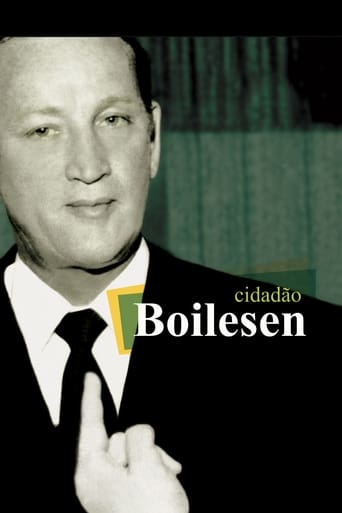
27 Nov 2009
A documentary about the controversial businessman Henning Boilesen Jr. and his involvement with the military regime as one of its most enthusiastic supporters, financing it and participating in the tortures of political prisoners. Those actions later culminated in his assassination in 1971 by members of militant groups opposed to the regime.
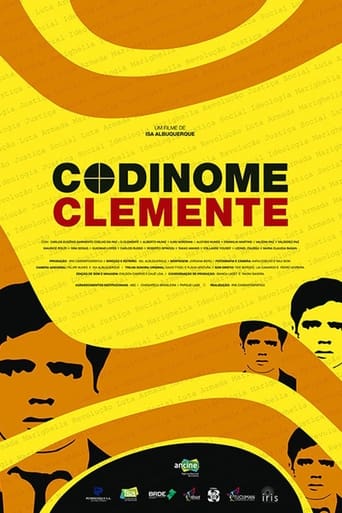
01 Nov 2019
Carlos Eugênio Paz recalls his participation in the armed struggle against the military dictatorship between the 1960s and 1980s. Using the code name “Clemente”, he participated in the National Liberation Alliance and in several urban actions. Through her own testimony and that of her fellow fighters, director Isa Albuquerque builds a portrait of a troubled moment in Brazilian history and of an entire generation that fought for their country's democracy.

15 Aug 2024
No overview found