09 Dec 1964
Kwaheri
Early Mondo film featuring primitive rituals, animals being butchered, unusual birth defects, and a legit trepanation scene.
Short ethnographic documentary on the Tetela tribe in Congo based upon footage and commentary by director Luc de Heusch from 1953 reassembled by Damien Mottier (Université Paris Nanterre) and Grace Winter (CINEMATEK).
09 Dec 1964
Early Mondo film featuring primitive rituals, animals being butchered, unusual birth defects, and a legit trepanation scene.

01 Jan 1957

An ethnographic film that documents the efforts of four !Kung men (also known as Ju/'hoansi or Bushmen) to hunt a giraffe in the Kalahari Desert of Namibia. The footage was shot by John Marshall during a Smithsonian-Harvard Peabody sponsored expedition in 1952–53. In addition to the giraffe hunt, the film shows other aspects of !Kung life at that time, including family relationships, socializing and storytelling, and the hard work of gathering plant foods and hunting for small game.
01 Jan 1986

The film tells two parallel stories. One, set in the present, tells of a pagent about the conquest of America, while the other, set in the 15th century, tells of a group of conquistadors coming ashore searching for gold. The film takes place in an unnamed country.

01 Jan 2011

Ñaalec (Fabián Valdez) is a Moqoit college student disenchanted with formal ways of learning and embarrassed by his drunken classmates. He seeks to recover his people's culture by learning from elders who still remember the old ways. Ñaalec travels to the Nanaicalo Nqote ("eye of the dragon"), a sacred lake whose water gave people the power of the gods. This docudrama is part of a series of community-created films supported by CEFREC (led by Iván Sanjinés, son of legendary Bolivian filmmaker Jorge Sanjinés).
22 Mar 2023
Short ethnographic documentary showing a leopard dance based upon footage shot by director Luc de Heusch in Congo in 1954 reassembled by Damien Mottier (Université Paris Nanterre) and Grace Winter (CINEMATEK).
22 Mar 2023
Short ethnographic documentary showing some everyday life scenes based upon footage shot by director Luc de Heusch in Congo in 1954 reassembled by Damien Mottier (Université Paris Nanterre) and Grace Winter (CINEMATEK).

01 Feb 2022

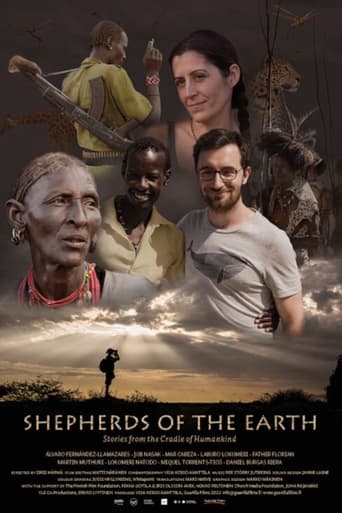
The region of Lake Turkana, located in Kenya and Ethiopia, is considered to be “the Cradle of Humankind”. Among other finds, primate fossils from millions of years ago have been discovered in the region. But what about the region’s modern inhabitants and their relationship to their environment? Iiris Härmä, whose previous work includes the award-winning Leaving Africa, had the chance of joining Helsinki University’s researchers, Álvaro Fernández-Llamazares and Mar Cabeza, on their pre-pandemic trip to study the Daasanach people’s relationship to their environment through traditional animal tales. The researchers hope that storytelling would help to bridge the gap between people’s everyday lives and conservation efforts.
24 May 1935
The first Easter Island documentary, filmed in 1935 when the Belgian naval ship Mercator came to collect Drs. Henri Lavacherry and Alfred Métraux, who had arrived six months before to carry out archaeological and ethnological work. The film, directed with melodramatic gusto and featuring a full orchestral score by Maurice Jaubert (who also did the narration), shows islanders, the monuments, and a public dance. A theme of decay and decadence characterizes the film, the motif portrayed gruesomely by extensive close-ups of the inhabitants of the leper colony there at the time. The film suited a romantic image of a mysterious lost civilization, the survivors eking out a pitiful existence on a barren rock. (Grant McCall)
16 May 1897
A woman from the Ashanti tribe bathes her child in a shallow bowl.

18 Apr 1897

Travellers, nomads and salesmen make their way along a dam next to the Nile.
14 Jul 1899
A man demonstrates a human-powered water wheel that irrigates a rice field.

01 Jan 1911

With a dual motion a cruise ship and a fishing boat pass one another on the Nile and butlers in turbans set up a wooden gangway. Thanks to a rope and pulley system cows climb skywards then disappear into the hold of the sailing vessel. On the bank, black-haired women rock back and forth, bursting out laughing and showing the first signs of going into a state of trance. Never-before filmed gestures and faces of the people of the Nile succeed one another, uprooted to an unknown, magical world. The Banks of the Nile is one of the first experiments of film in colour that uses the Kinemacolor process.
08 Aug 1901
“The picture [shows] a number of Esquimaux picking nickels from cracks in a board with their dog whips, in which sport they are very expert. In the background will be seen one of their "Topeks," a sealskin tent in which they live during their short summer.” (Edison catalog)

01 Jan 1982

As retailers, wholesalers, and negotiators, Asante women of Ghana dominate the huge Kumasi Central Market amid the laughter, argument, colour and music. The crew of this `Disappearing World' film have jumped into the fray, explored, and tried to explain the complexities of the market and its traders. As the film was to be about women traders, an all female film crew was selected and the rapport between the two groups of women is remarkable. The relationship was no doubt all the stronger because the anthropologist acting as advisor to the crew, Charlotte Boaitey, is herself an Asante. The people open up for the interviewers telling them about their lives as traders, about differences between men and women, in their perception of their society and also about marriage.

02 Nov 2017

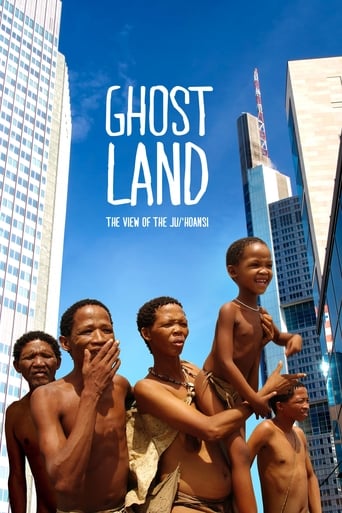
Remember the culture clash in THE GODS MUST BE CRAZY? This time it's real. One of the most ancient cultures on our planet is undergoing a major change. The Ju/Hoansi Bushmen in Namibia are not allowed to hunt anymore and need to converge with our so called “civilized” lifestyle. For the first time the Ju/Hoansi Bushmen travel through the Kalahari and then right into the heart of Europe. What starts as a look at their fascinating culture becomes an even more fascinating look at our Western lifestyle. A warm and humorous reflection of our habits through the eyes of people who are about to give up their million year old traditions.

21 Oct 2018

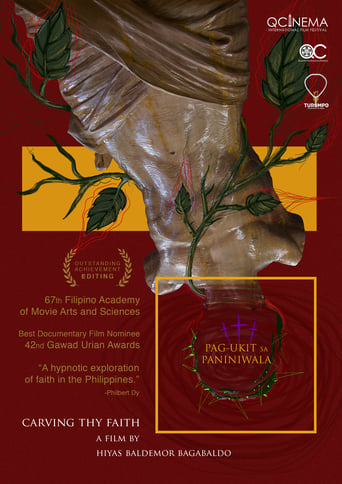
A five-year visual ethnography of traditional yet practical orchestration of Semana Santa in a small town where religious woodcarving is the livelihood. An experiential film on neocolonial Philippines’ interpretation of Saints and Gods through many forms of rituals and iconographies, exposing wood as raw material that undergoes production processes before becoming a spiritual object of devotion. - A sculpture believed to have been imported in town during Spanish colonial conquest, locally known as Mahal na Señor Sepulcro, is celebrating its 500 years. Meanwhile, composed of non-actors, Senakulo re-enacts the sufferings and death of Jesus. As the local community yearly unites to commemorate the Passion of Christ, a laborious journey unfolds following local craftsmen in transforming blocks of wood into a larger than life Jesus crucified on a 12-ft cross.

12 Sep 1993

"Monday's Girls" explores the conflict between modern individualism and traditional communities in today's Africa through the eyes of two young Waikiriki women from the Niger delta. Although both come from leading families in the same large island town, Florence looks at the iria women's initiation ceremony as an honor, while Azikiwe, who has lived in the city for ten years, sees it as an indignity.

01 Jan 1981

David and Judith MacDougall are exploring the marriage rituals and roles of Turkana women in this ethnographic documentary. The film's biggest part is taken up by talks between the Turkana people. As one of the first ethnographic documentaries "A Wife Among Wives" subtitles these talks so that the viewer can get a better and probably more personal understanding of the life of the Turkana.

27 Sep 2004

Ibogaine is a plant extract that stops drug addiction. In this documentary, a 34-year-old heroin addict undergoes ibogaine therapy with Dr Martin Polanco at the Ibogaine Association, a clinic in Rosarito, Mexico. In Gabon, where use of the iboga root is traditional, a Babongo woman's tribe uses the plant to help her recover from a depressive malaise. Director Benjamin De Loenen interviews people formerly addicted to heroin, cocaine, and methamphetamine, who share their perspectives about ibogaine treatment.

20 Dec 2023

380 kilometers from Nairobi, in the Samburu territory, lies a unique village: Umoja. Defended by a thorn fence, access is strictly forbidden to men. Created in 1991, it offers refuge to women repudiated by their husbands or victims of domestic violence. A nerve center for the community, its school is open to children from other villages, provided their families undertake not to subject them to genital mutilation or early marriage. As the new school year approaches, Jane, co-founder of the community, and Rose, teacher, meet little Samella's parents.