01 Oct 2016

Charcot: Secret Poles
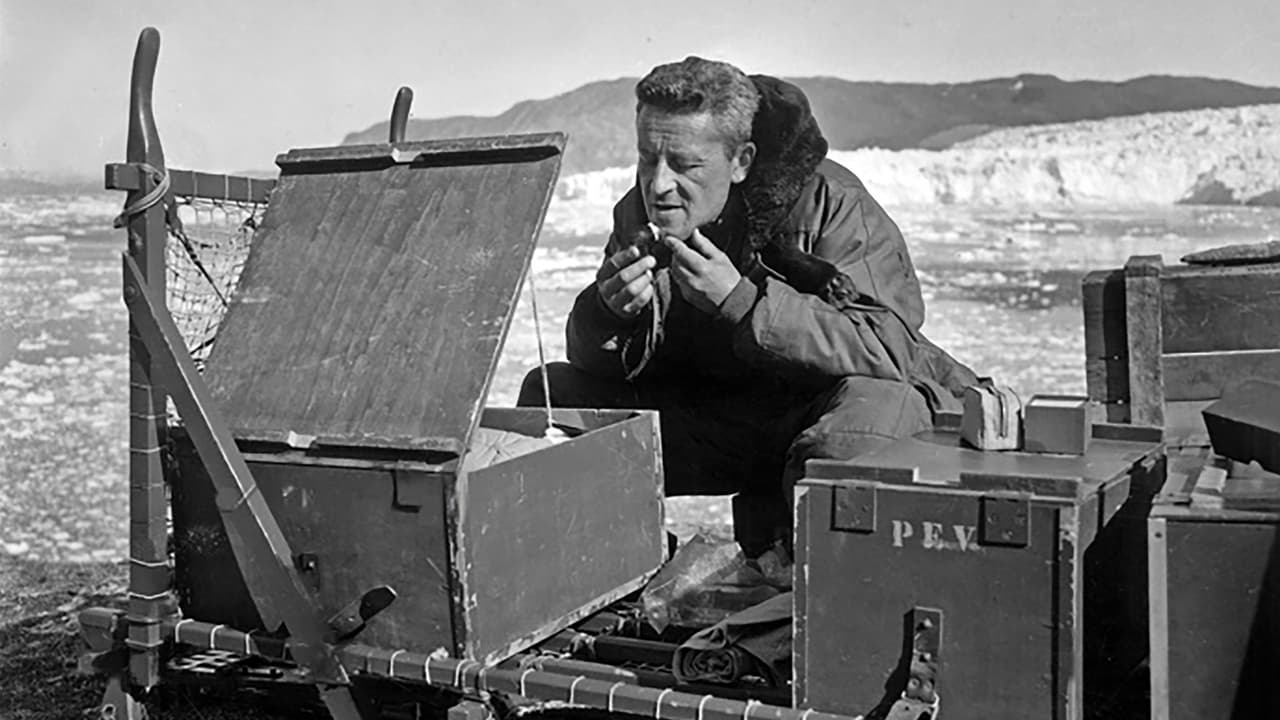
The adventures and exploits of Jean-Baptiste Charcot (1867-1936), an intrepid scientist and explorer who laid the foundations of modern oceanography.


Self

Self
Self
Self

01 Oct 2016

The adventures and exploits of Jean-Baptiste Charcot (1867-1936), an intrepid scientist and explorer who laid the foundations of modern oceanography.
20 May 1912
Captain Kleinschmidt leads an expedition sponsored by the Carnegie Museum to the arctic regions of Alaska and Siberia to study the natives and the animal life.

14 Jun 2019

Documentary that follows a lone Inuit as he hunts, fishes and constructs an igloo, a way of life threatened by climate change.

08 Jan 2020

How in 1959, during the heat of the Cold War, the government of the United States decided to create a secret military base located in the far north of Greenland: Camp Century, almost a real town with roads and houses, a nuclear plant to provide power and silos to house missiles aimed at the Soviet Union.

21 Oct 2022

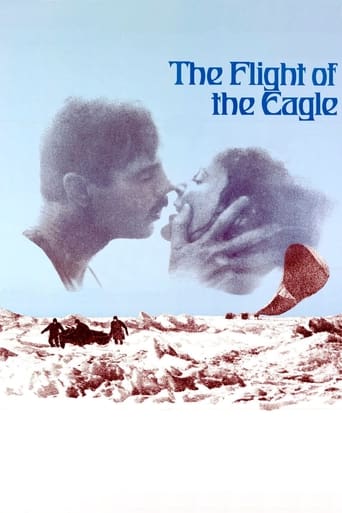
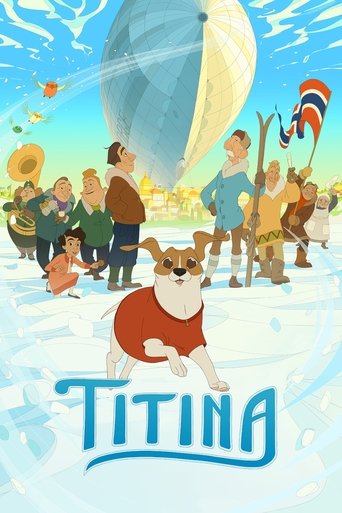
Italian airship engineer Umberto Nobile enjoys a quiet life with his beloved dog Titina. One day, Norwegian explorer superstar Roald Amundsen contacts him and orders an airship to conquer The North Pole.

02 Sep 2000

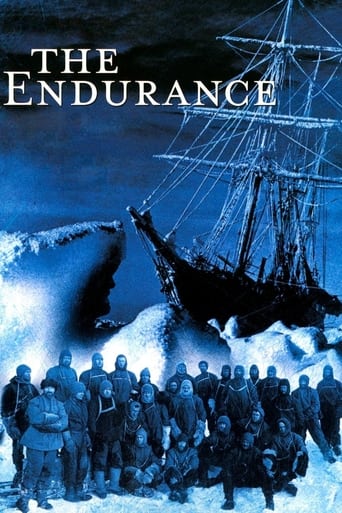
Documentary on the Shackleton Antartic expedition. A retelling of Sir Ernest Shackleton's ill-fated expedition to Antarctica in and the crew of his vessel 'The Endurance', which was trapped in the ice floes and frigid open ocean of the Antarctic in 1914. Shackleton decided, with many of his crew injured and weak from exposure and starvation, to take a team of his fittest men and attempt to find help. Setting out in appalling conditions with hopelessly inadequate equipment, they endured all weather and terrain and finally reached safety. Persuading a local team of his confidence that the abandoned team would still be alive, he set out again to find them. After almost 2 years trapped on the ice, all members of the crew were finally rescued.
09 Mar 2025

No overview found

13 Oct 2021

1947. The rush to the poles marked the beginning of an incredible human adventure to discover the last-remaining unknown lands. In France, Paul-E?mile Victor persuaded the government to finance expeditions to explore the Arctic and Antarctic. For the pioneers the conditions were Dantean, all in the name of science.

23 Feb 2016

Gombessa Expedition 3 Protected by an international treaty Antarctica has been spared the effects of hunting and fishing. But signs in ice’s cyclical patterns and its biodiversity have become worrying. Connected to the planet’s global ecosystem via atmospheric circulation and ocean currents, this white haven is suffering the effects of human activities. To document and explain what is unfolding in Antarctica, photographer, diver, and marine biologist Laurent Ballesta and photographer of extreme environments Vincent Munier will be blending their artistic perspectives of a rapidly changing continent. Laurent will tackle technical and human prowess below the ice to bear witness to its remarkable underwater life. His photographs will advance knowledge on Antarctica’s unique and little-known biodiversity. On land, his eye riveted to the lens of his camera, Vincent captures snapshots of life in an Emperor Penguin colony.

16 Dec 1974

A Victorian gentleman hopes to find his long-lost son, who vanished while searching for a mysterious Viking community in a volcanic valley somewhere in uncharted Arctic regions. The gentleman puts together an expedition team to go on the search, but when they reach their destination they must escape from some Viking descendants who will kill to keep their existence a secret.

29 Nov 1948

The true story of the British explorer Robert Falcon Scott and his ill-fated expedition to try to be the first man to discover the South Pole - only to find that the murderously cold weather and a rival team of Norwegian explorers conspire against him

27 Nov 2015

Ellesmere Island, northern Canada, 1908. Josephine, a brave but naive woman, embarks on a dangerous journey through inhospitable regions in search of her husband, the explorer Robert Peary, who tries to find a route to the North Pole.

22 Apr 2025

If the ice sheet covering Greenland melted, global sea levels would rise 21 feet, profoundly impacting our planet. How, why, and when could this happen? A few years ago, scientists found lost sediment from a secret sub-ice Cold War base in the Arctic from the 1960s that holds clues to a time when Greenland Ice Sheet was gone. The Memory of Darkness, Light, and Ice is an hour-long documentary about the discovery of this sediment and the critical implications of the science to our future. The finding that the ice sheet melted in the past completely transforms our understanding of the stability of the Greenland Ice Sheet.

01 Jan 1980

In 1979, aboard the Basile, a Damien II type ship (Joubert design), French sailors and mountaineers sailed in the footsteps of the explorer Ernest Shackleton, considered one of the main figures of the heroic age of exploration in Antarctica, towards South Georgia, where they climbed Mount Paget, which is part of the Allardyce range and peaks at an altitude of 2,935 metres.

21 Oct 2015

Documentary about the work of Claude Lorius, who began studying Antarctic ice in 1957, and, in 1965, was the first scientist to be concerned about global warming.

01 Jan 1977

The film of the first ascent of Mont Foraker (5,304 m) in the Denali chain in Alaska, by the southeast ridge of independence in 1976, which remains years after an unequaled sporting and human adventure. The 7 members of the expedition, Henri Agresti, Jean-Paul Bouquier, Jean-Marie Galmiche, Werner Landry, Gérard Creton, Isabelle Agresti, Hervé Thivierge, all came to the top after thirty days of climbing in conditions still limits. Breathtaking images where the grandiose views of the icy desert and the scenes of daily life alternate on a most rough mountains on the planet. The film received the Gentiane d'Or Festival prizes from Thirty 1977, Public Prize Festival des Diablerets 1977, SFP Festival de la Plagne in 1977.

01 Jan 1979

A film about the 1979 expedition to Nanga Parbat in Pakistan, led by Lyon native Jean-Pierre Frésafond. After a city tour, they set off by bus and then on foot with Sherpas to base camp. Having set out to attempt the Rupal Pillar, the expedition was unable to reach its objective in time (torrential rain, blocked roads, scree, etc.) and lost precious time before choosing to attempt the Mazeno Ridge by default. The team theoretically had the means to do so, since it brought together no fewer than 21 strong climbers, with a large core from Lyon—a concentration of talent rarely seen. But the resulting group dynamic worked contrary to expectations, and they had to settle for the most modest of consolation prizes: the ascent of the First Peak (6,880 meters). Frésafond recounted this in a book-testimony "The Revenge of the Himalayas - The Human Adventure at Nanga-Parbat".

01 Jan 1969

This film - without commentary and simply accompanied by local music - relates the 1969 ascent of the north face of Kohe Shakhawr, a Himalayan peak located on the border with Afghanistan, by mountaineers Benoît Mathieu, Jacques Soubis, René Thomas, Jean-Paul Paris, Isabelle Agresti, Henri Agresti, Roger Dietz, Jean-Pierre Frésafond, Paul Gendre, Claude Jager and Félix Magnin. As is often the case in Henri Agresti's films, there is an encounter with other peoples, other cultures, documented at length in the introduction. Then, after the interminable approach, the ascent begins: distribution of camps, successive assaults on the mountain, walking on steep scree and snowy slopes, climbing on icy walls... The arrival at the summit, without the aid of oxygen devices, seems to take place in slow motion: exhaustion mixes with the joy of the victorious mountaineers who will celebrate their success on their return to base camp on August 24, 1969.

26 Jun 1971

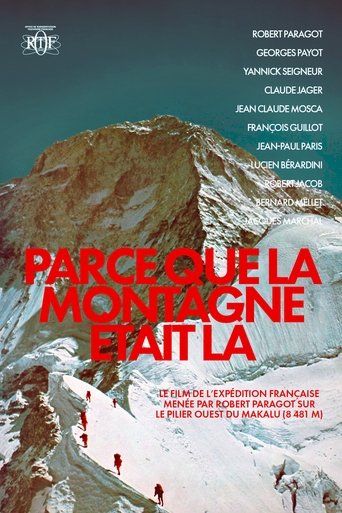
The French Alpine Club's film about the French expedition to conquer Makalu (8481m) via the west pillar in Nepal, which began on February 24, 1971. Composed of 11 mountaineers, Robert Paragot (expedition leader), Georges Payot, Lucien Berardini, Yannick Seigneur, Claude Jager, Jean-Paul Paris, Jean-Claude Mosca, François Guillot, Bernard Mellet, Robert Jacob and Jacques Marchal (surgeon), it took twenty-five days of walking on the Himalayan trails with 460 porters and 18 Sherpas to transport 14 tons of equipment to reach the base camp. Finally, it was Mellet and Seigneur who managed to reach the summit on May 23, 1971: 8481 m, temperature - 30°, oxygen 30%, no wind.
25 Feb 2006
A photographic journey compiled from journals, archival footage and photographs of an Australian military photographer, Sir Hubert Wilkins in 1931 as he went from New York to the North Pole in an old WWI submarine to explore the Arctic Ocean. Included on dvd are a brief history of the submarine and photographic gallery of Wilkins.