23 Jun 2022

The Little Church That Could
Amidst a mostly Catholic community, a small tiny Anglican church offers more to the community of Placentia than people may think, and holds many connections and history to the rest of the world.

23 Jun 2022

Amidst a mostly Catholic community, a small tiny Anglican church offers more to the community of Placentia than people may think, and holds many connections and history to the rest of the world.

19 Jun 2021

More than 2.000 years ago, Narbonne in today's Département Aude was the capital of a huge Roman province in Southern Gaul - Gallia Narbonensis. It was the second most important Roman port in the western Mediterranean and the town was one of the most important commercial hubs between the colonies and the Roman Empire, thus the town could boast a size rivaling that of the city that had established it: Rome itself. Paradoxically, the town that distinguished itself for its impressive architecture, today shows no more signs of it: neither temples, arenas, nor theaters. Far less significant Roman towns like Nîmes or Arles are full of ancient sites. Narbonne today is a tranquil town in Occitania

01 Jan 1993

Documentary about Queen Elizabeth Square, Sir Basil Spence's block of Brutalist style flats built to replace the Gorbal's tenements in Glasgow during the 1960s. His vision was based on architect Le Corbusier's ideas and inspired him to transform the Gorbals into a Modernist Utopia. The film is about the life and times of one building told by some of the people involved in its history. The block was dynamited in 1993 amidst controversy and the death of a spectator. It is mentioned in Pevsner's Notable Buildings of Britain. This film was shown on BBC Scotland's Ex-S strand in 1993. Produced by May Miller and directed by Conrad Blakemore. This film is posted for educational and research purposes only and is copyright of BBC Scotland. Archive material courtesy of the Scottish Film Archive and the film's contributors.

17 Apr 2011

Frederick Law Olmsted designed New York City's Central Park with Calvert Vaux over 150 years ago, and it remains an undisputed haven of tranquility amidst one of the largest, tallest, and most unnatural places on earth. This film examines the creation of America's great city parks in the late 1800s through the enigmatic eyes of Frederick Law Olmsted, visionary urban planner and landscape architect. In his own words, Olmsted and America's Urban Parks weaves together Olmsted's engaging and poignant personal story with those of the lasting masterpieces he left for us today, featuring Academy Award-winning actor Kevin Kline as the voice of Frederick Law Olmsted.

01 May 2014

To Olmsted, a park was both a work of art and a necessity for urban life. Olmsted’s efforts to preserve nature created an “environmental ethic” decades before the environmental movement became a force in American politics. With gorgeous cinematography, and compelling commentary this film presents the biography of a man whose parks and preservation are an essential part of American life.

01 Jan 2009

Explorations in 21st Century American Architecture Series: Ray Kappe has long been a cult figure in the architectural scene in and around Los Angeles. In 1972, he founded the influential, avant garde Southern California Institute of Architecture (SCI-ARC), where many of the younger-generation architects have studied or taught.

01 Jan 1986

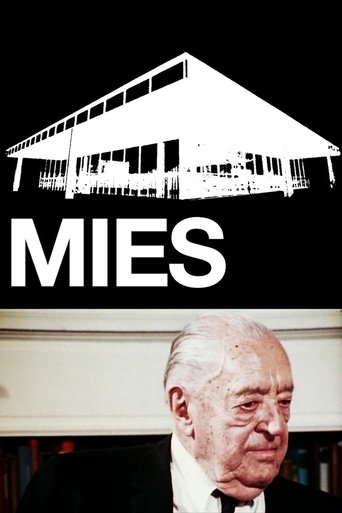
No understanding of the modern movement in architecture is possible without knowledge of its master builder, Mies van der Rohe. Together with documentation of his life, this film shows all his major buildings, as well as rare film footage of Mies explaining his philosophy. Phyllis Lambert relates her choice of Mies as the architect for the Seagram building. Mies's achievements and continuing influence are debated by architects Robert A.M. Stern, Robert Venturi, and Philip Johnson, by former students and by architectural historians. Mies is seen in rare documentary footage.

11 May 2019

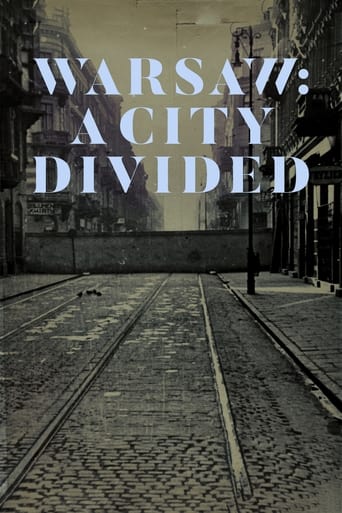
The history of the Warsaw Ghetto (1940-43) as seen from both sides of the wall, its legacy and its memory: new light on a tragic era of division, destruction and mass murder thanks to the testimony of survivors and the discovery of a ten-minute film shot by Polish amateur filmmaker Alfons Ziółkowski in 1941.

17 Dec 2024

No overview found

26 Oct 2020

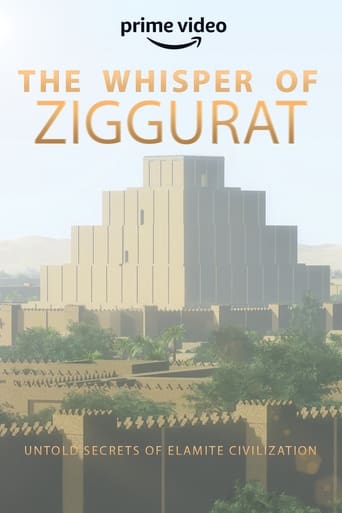
5000 years ago the ancient Elamites established a glorious civilization that lasted about three millennia. They created marvelous works in architecture and craftsmanship. These works of art depict the lifestyle, thoughts, and beliefs of the Elamites.

01 Dec 1973

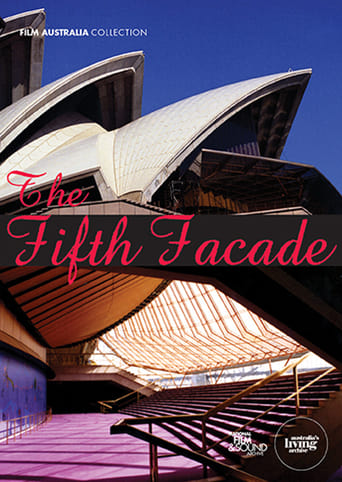
On 20 October 1973, the Sydney Opera House was officially opened by Queen Elizabeth II. From conception to completion, it had taken more than 15 years and over $100 million dollars. In the years since its completion, the Sydney Opera House has become one of the most identifiable of Australia’s icons - ranking with the Sydney Harbour Bridge, Uluru, the koala and kangaroo - and is considered by many to be among the world's great architectural masterpieces.
31 Dec 2014

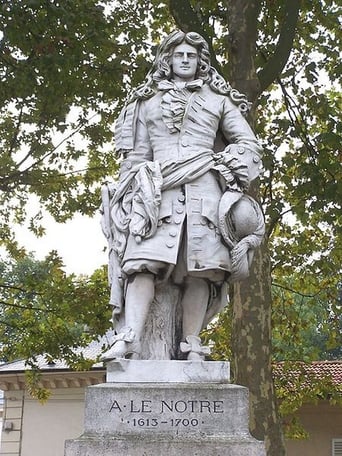
André Le Notre is certainly the most famous French gardener. He was also a designer, architect, engineer, landscaper and urban planner. He worked for Louis XIV from 1645 to 1700 and designed the gardens of Versailles, Vaux le Vicomte, Chantilly and Fontainebleau, as well as the Tuileries in Paris.

28 Jan 2020

The Sacred City of Caral or Caral-Supe is the capital of the Norte Chico Civilization of Supe located in the Supe Valley, 200 km (124 miles) north of Lima. The Sacred City of Caral is the earliest known civilization in the Americas, it dates to the Late Archaic period. Radiocarbon analysis performed by the Caral-Supe Special Archaeological Project (PEACS) dates its development between 3000 to 1800 B.C.. It is believed that this civilization started by the merging of small villages based on trade of agricultural and fishing products. Its importance rests on the success of techniques of domestication of cotton, beans, potatoes, chilis, squash among other products. Success in agriculture was due to the development of water canals, reservoirs and terraces. They used guano, bird excrement, and anchovies as fertilizer.

05 Mar 2024

Secluded from view by nine-meter-high walls and composed of 980 buildings, the Forbidden City in Beijing is the largest imperial palace ever built in the world. Three majestic structures form its center and host the city's ceremonies, each of which is considered an architectural masterpiece. In 1406, construction of the Forbidden City was launched at the initiative of one of China's most powerful sovereigns and founder of the Ming dynasty: Yongle. Endowed with divine power, the construction has already resisted more than 200 earthquakes.

11 Oct 2020

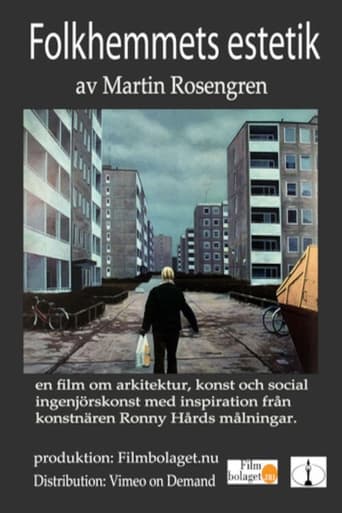
Documentary about the architecture of the Swedish housing boom in the 1960s and how it's viewed today.

25 Jun 1997

Isamu Noguchi was a sculptor, designer, architect, and craftsman. Throughout his life he struggled to see, alter, and recreate his natural surroundings. His gardens and fountains were transformations meant to bring out the beauty their locations had always possessed.

03 Nov 2022

No overview found

18 Sep 2023

Explores the Pyramids of Giza as Egyptologists try to unravel the mysteries and decipher the clues behind these stone giants built over 4,500 years ago.

01 Jan 2023

The work of Fernand Pouillon, "France's most wanted" architect after being imprisoned and mysteriously escaping in the 1960s, now seems to have faded into the background. However, in 50 years he has built more than 5 million square meters, mainly between France and Algeria, at a frantic pace, traveling tens of thousands of kilometers per week, by propeller plane, to go to construction sites. at night or at dawn between Marseille, Paris, Algiers or in the middle of the desert, until you burn your wings. Among others, Fernand Pouillon decided to build houses for the most modest.

01 Jan 2017

In this documentary, Marie-Claire Rubinstein reveals to us, through the testimonies of the inhabitants who live there, the architectural achievements of the French urban planner Fernand Pouillon in Algiers. In particular the vast complexes of hundreds of social housing units, including the most famous Diar E Saâd (1953), Diar El Mahçoul (1954) and Climat de France (1957). The historical context, during the war of independence is related by the historian Benjamin Stora and Nadir Boumaza. This documentary also evokes the personality of Fernand Pouillon in a post-colonial context.