01 Jan 1983
Ikátena
No overview found

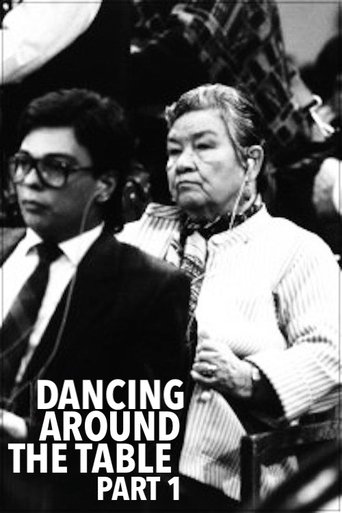
It is taking decades for Canada to come to terms with its history in the Arctic, and with its relationship to all its indigenous people. “Kikkik” is the story of government mistakes and neglect, of starvation, murder, freezing death, but, in the end, a kind of justice that helps restore our faith in human decency. In 1958, the Inuit woman Kikkik was charged with murder and criminal negligence leading to the death of her child. Her trial and our visit back to the place and to Kikkik’s children confront us with a legacy that’s still a challenge for Canada.
Kikkik
Judge Jack Sisson
Interpretor
Matron
01 Jan 1983
No overview found

11 Jun 1922

This pioneering documentary film depicts the lives of the indigenous Inuit people of Canada's northern Quebec region. Although the production contains some fictional elements, it vividly shows how its resourceful subjects survive in such a harsh climate, revealing how they construct their igloo homes and find food by hunting and fishing. The film also captures the beautiful, if unforgiving, frozen landscape of the Great White North, far removed from conventional civilization.

11 Jan 2024

A documentary about climate change in Brazil, especially at Atafona Beach (in the Campos de Goytacazes region), which is being swallowed up by the sea. Narrated by Sonia Guajajara and Sidarta Ribeiro, the film deals with the genocide of the native people of Goytacazes.

20 Apr 1977

This film joins a hunting-party of inhabitants of the Frobisher Bay Correctional Centre. The stalking, killing and skinning of seal and caribou are featured prominently, with explanations as to the importance of these animals to the Inuit way of life.

09 Oct 2002

This is not a film about gun control. It is a film about the fearful heart and soul of the United States, and the 280 million Americans lucky enough to have the right to a constitutionally protected Uzi. From a look at the Columbine High School security camera tapes to the home of Oscar-winning NRA President Charlton Heston, from a young man who makes homemade napalm with The Anarchist's Cookbook to the murder of a six-year-old girl by another six-year-old. Bowling for Columbine is a journey through the US, through our past, hoping to discover why our pursuit of happiness is so riddled with violence.
01 Jun 1971
A documentary on the massacre of Planas in the Colombian east plains in 1970. An Indigenous community formed a cooperative to defend their rights from settlers and colonists, but the government organized a military operation to protect the latter and foreign companies.

06 Jun 2012

No overview found

06 Jun 1992

No overview found

25 Apr 2017

This documentary let us to relive the challenge of the men behind the 1967 Universal Exposition in Montréal, Canada. By searching trough 80,000 archival documents at the national Archives, they managed to bring light on one of the biggest logistical and political challenges that were faced by organizers during the "Révolution Tranquille" in the Québec sixties. Includes the accounts of the Chief of Advertising Yves Jasmin, and businessman Philippe de Gaspé Beaubien.

25 Oct 2019

A young and ambitious team of chefs face the life-changing challenges of competing in the world's most prestigious culinary competition.

23 Feb 2019

Sean and Adrian, a Two-Spirit couple, are determined to rewrite the rules of Native American culture through their participation in the “Sweetheart Dance.” This celebratory contest is held at powwows across the country, primarily for heterosexual couples … until now.

23 Jan 2023

No overview found

20 Feb 2020

The North of Cauca is the region of Colombia most affected by the internal armed conflict since 1940. There is an orchestra of ancestral music composed of young indigenous people of the Nasa ethnic group who, with their instruments, their voice and their poetry, remember Maryi Vanessa Coicue, Sebastian Ul and Ingrid Guejia, three of the hundreds of indigenous children who have died because of this eternal and useless war between leftist guerrillas, armed groups of the extreme right, drug traffickers and the Colombian State.

01 Jan 1991

Filmed on location in Saskatchewan from the Qu'Appelle Valley to Hudson Bay, the documentary traces the filmmaker's quest for her Native foremothers in spite of the reluctance to speak about Native roots on the part of her relatives. The film articulates Métis women's experience with racism in both current and historical context, and examines the forces that pushed them into the shadows.

25 Feb 2023

An intimate and thrilling portrait of a young Siksika woman and the deep bonds between her father and family in the golden plains of Blackfoot Territory as she prepares for one of the most dangerous horse races in the world… bareback.

14 Sep 2001

2001 French documentary about the murder trial of a 15 year old black teen accused of murder in Jacksonville, Florida. Winner of 2002 Academy Award for Best Documentary.
16 Oct 1989
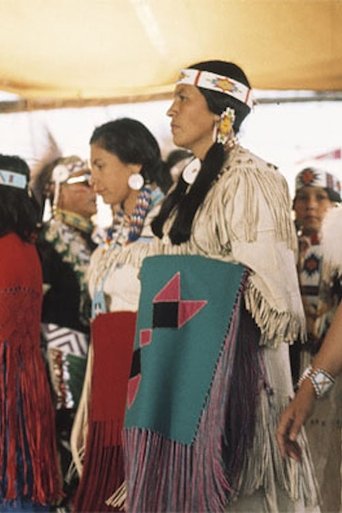
A film made by Victress Hitchcock and Ava Hamilton in 1989 on the Wind River Reservation for Wyoming Public Television.

18 Jan 2020

An unflinching documentary of those dealing with mental illness in the criminal justice system and a profile of families who tragically fell victims to that system.

08 Feb 2013

TPB AFK is a documentary about three computer addicts who redefined the world of media distribution with their hobby homepage The Pirate Bay. How did Tiamo, a beer crazy hardware fanatic, Brokep a tree hugging eco activist and Anakata – a paranoid hacker libertarian – get the White House to threaten the Swedish government with trade sanctions? TPB AFK explores what Hollywood’s most hated pirates go through on a personal level.

08 Jun 2018

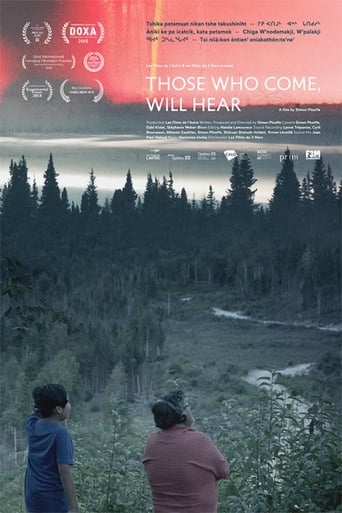
The documentary proposes a unique meeting with the speakers of several indigenous and inuit languages of Quebec – all threatened with extinction. The film starts with the discovery of these unsung tongues through listening to the daily life of those who still speak them today. Buttressed by an exploration and creation of archives, the film allows us to better understand the musicality of these languages and reveals the cultural and human importance of these venerable oral traditions by nourishing a collective reflection on the consequences of their disappearance.