03 Oct 2017
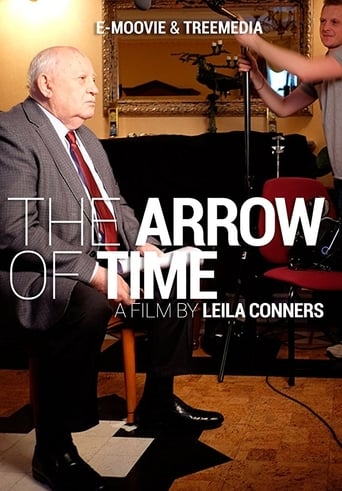
The Arrow of Time
President Mikhail Gorbachev recounts the end of the Cold War and the reduction of nuclear arms.
A training film for public shelter managers explaining when people should be allowed to leave the shelter after a disaster.
03 Oct 2017
President Mikhail Gorbachev recounts the end of the Cold War and the reduction of nuclear arms.
29 Jul 1962
Made at the height of 'cold war' paranoia, this drama-documentary shows the work of the UK Warning and Monitoring Organisation, who's duties included the issuing of public warnings of any nuclear missile strike and the subsequent fallout.
08 Jan 2020
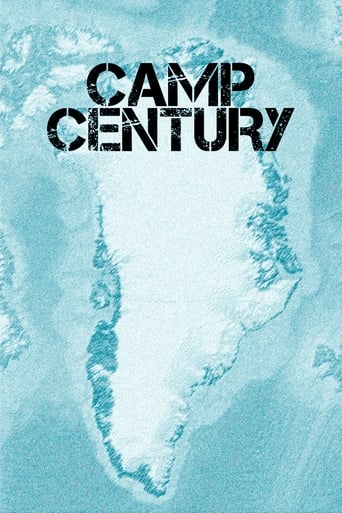
How in 1959, during the heat of the Cold War, the government of the United States decided to create a secret military base located in the far north of Greenland: Camp Century, almost a real town with roads and houses, a nuclear plant to provide power and silos to house missiles aimed at the Soviet Union.
17 Oct 1997
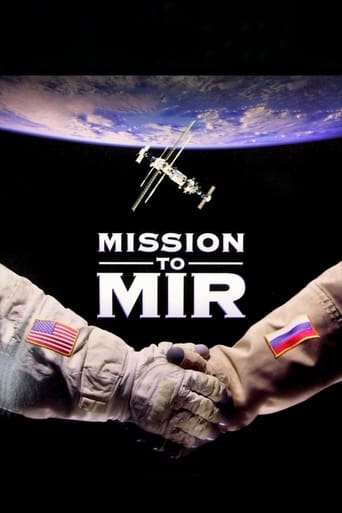
This film shows how far we have come since the cold-war days of the 50s and 60s. Back then the Russians were our "enemies". And to them the Americans were their "enemies" who couldn't be trusted. Somewhere in all this a young girl in Oklahoma named Shannon set her sights on becoming one of those space explorers, even though she was told "girls can't do that." But she did.

10 Dec 2019
Deng Xiaoping's economic and political opening in China. Margaret Thatcher's extreme economic measures in the United Kingdom. Ayatollah Khomeini's Islamic Revolution in Iran. Pope John Paul II's visit to Poland. Saddam Hussein's rise to power in Iraq. The Soviet invasion of Afghanistan. The nuclear accident at the Harrisburg power plant and the birth of ecological activism. The year 1979, the beginning of the future.
29 Jan 2020
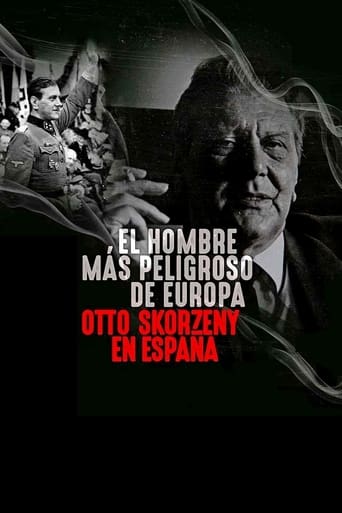
Waffen-SS officer Otto Skorzeny (1908-75) became famous for his participation in daring military actions during World War II. In 1947 he was judged and imprisoned, but he escaped less than a year later and found a safe haven in Spain, ruled with an iron hand by General Francisco Franco. What did he do during the many years he spent there?
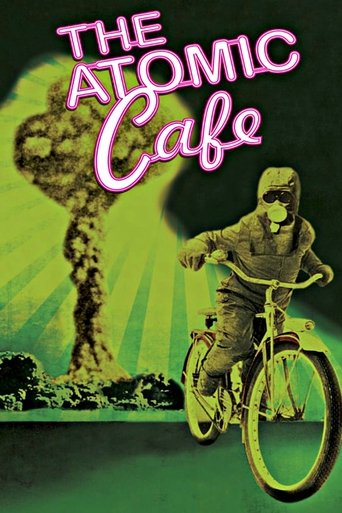
17 Mar 1982
A disturbing collection of 1940s and 1950s United States government-issued propaganda films designed to reassure Americans that the atomic bomb was not a threat to their safety.

20 Dec 2016
In the aftermath of the Cold War, Russian and American intelligence agencies, once enemies, joined forces and pooled their data to serve the planet, threatened by global warming. The story of a remarkable odyssey.
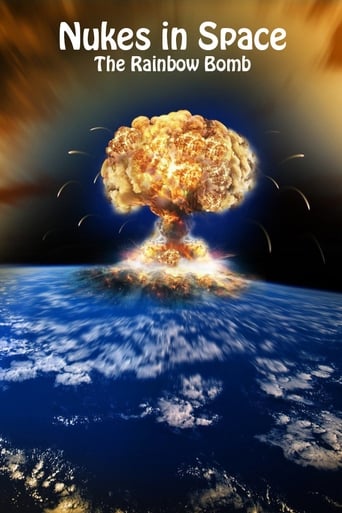
01 Jan 1999
U.S. nuclear tests in space, and the development of the military intercontinental ballistic missile (ICBM).
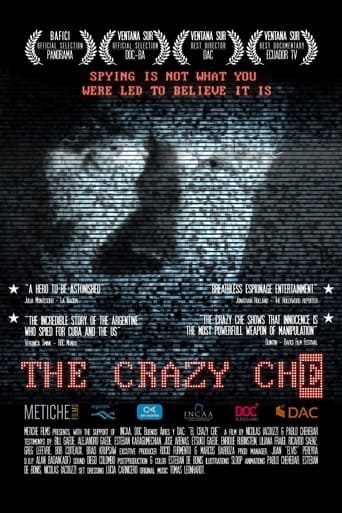
19 Nov 2015
The incredible story of Bill Gaede, an Argentinian engineer, programmer… and Cold War spy.
29 Jan 2021
A 3 year trade war has created corporate casualties in both US and China. In China, a dual circulation model is now underway to mitigate the effects of US protectionism. In the US, a Biden administration mulls new economic measures against China, even as industry groups lobby for tariffs to be lifted. Both countries also brace for what used to be unthinkable- the possibility of a financial war.
27 Feb 2021
No overview found
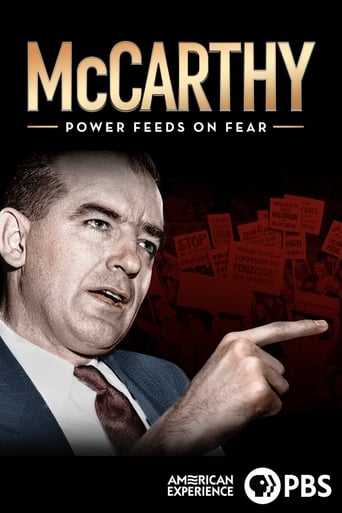
06 Jan 2020
"McCarthy" chronicles the rise and fall of Joseph McCarthy, the Wisconsin senator who came to power after a stunning victory in an election no one thought he could win. Once in office, he declared that there was a vast conspiracy threatening America — emanating not from a rival superpower, but from within. Free of restraint or oversight, he conducted a crusade against those he accused of being enemies of the state, a chilling campaign marked by groundless accusations, bullying intimidation, grandiose showmanship and cruel victimization. With lawyer Roy Cohn at his side, he belittled critics, spinning a web of lies and distortions while spreading fear and confusion. After years in the headlines, he was brought down by his own excesses and overreach. But his name lives on linked to the modern-day witch hunt we call “McCarthyism.”
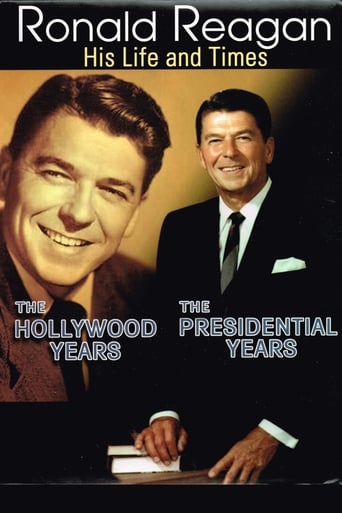
22 Aug 2001
These 2 one-hour specials will take a look back at Ronald Reagan from his ups and downs as a Hollywood movie star to a legendary force in American politics. HOLLYWOOD YEARS: will take a look at the actor as he goes from local sports broadcaster to respected leading an using film clips, interviews and rare footage. This one a kind documentary traces the ups and downs of his on-screen career, his marriages to Hane Wyman and Nancy Davis and his role as a "friendly witness" during the McCarthy hearings. PRESIDENTIAL YEARS: documents Ronald Reagan's extraordinary transformation from a Hollywood movie star to a legendary force in American politics. From political spokesman to Governor of California, Reagan's rapid rise in leadership carried him all the way to the White House where he would inscribe an indelible legacy into the pages of world history.
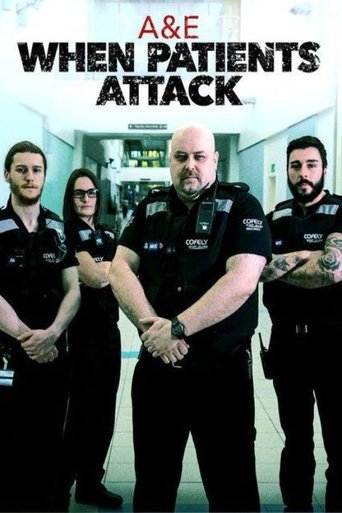
01 Jan 2015
Hospital staff are reporting more violence and anti-social behaviour than ever before. In 2015, 8 staff were assaulted every hour – a new record high. At The Queen Elizabeth Hospital in Birmingham – one of the UK’s biggest hospitals – they think they have the answer. Here a private security force of 46 uniformed guards, and a sophisticated CCTV system, keep staff and patients safe. A colourful mixture of characters ranging from ex-soldiers, to bouncers, to former elite sportsmen, it’s the security team’s job to keep the hospital running smoothly. With more than 2 million visitors they have to deal with all aspects of crime and anti-social behaviour. All against a back drop of life changing and life saving procedures.

19 Dec 2017
Docudrama telling the story of a building with a breath taking career that began in the empire, flourished in the Weimar Republic, perished in the Nazi dictatorship, and was rebuilt after its partial destruction.
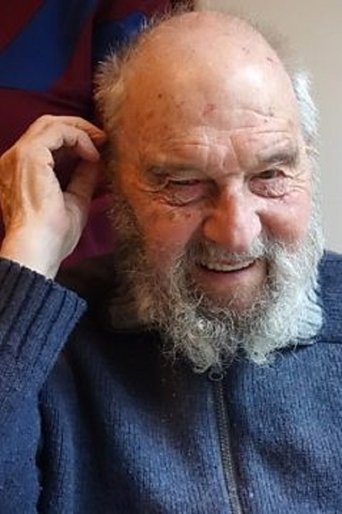
23 Mar 2015
Documentary about the Cold War spy George Blake, who betrayed his colleagues to the KGB, then escaped from Wormwood Scrubs five years later and fled to the Soviet Union.

01 Sep 2014
David Hasselhoff, better known for his roles in “Knight Rider” and “Baywatch” released a song titled, “Looking for Freedom” the year before the Berlin Wall came down. He performed it on top of the Berlin Wall to a million people during the biggest New Year's Eve party Germany had ever seen. Twenty five years later, David revisits the now-reunited capital, investigating what is left of the Wall, and explores what it meant in the context of the Cold War dividing Communism in the East from democracy in the West. Along his journey he meets extraordinary people who dreamt of freedom and risked their lives trying to overcome the dreaded Berlin Wall.

25 Jul 1946
A doctor talks about the number of injuries and deaths resulting from automobile accidents.

11 Feb 2006
In the documentary Last To Know political prisoners, sent to jail for openly opposing the East German regime that existed until the German reunification in 1990, talk about their times of trial and their lives today. Neither they, nor their families have come to terms with what happened.