22 Nov 2024

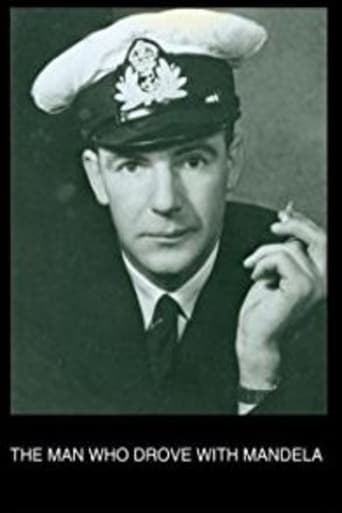
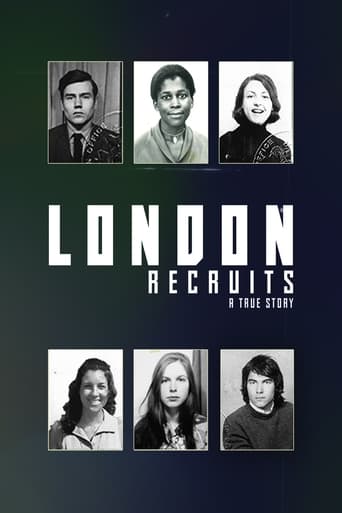
London Recruits
The story of the Londoners recruited to be freedom fighters during the South African apartheid during the 1960s.

In Cape Town's informal settlements, created to segregate the racialized population during Apartheid, the South African government never built a sewage system, hence the absence of flush toilets. Each resident must therefore invent an individualized solution for disposing of his or her excrement. Excrétapolitiques is a documentary based on meetings with some twenty people who are fighting against this infrastructural injustice.

22 Nov 2024

The story of the Londoners recruited to be freedom fighters during the South African apartheid during the 1960s.

21 Sep 2002

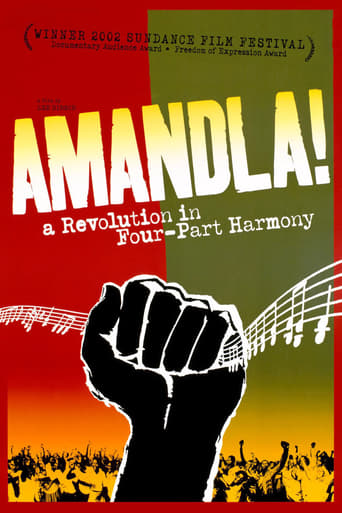
The struggle to eradicate apartheid in South Africa has been chronicled over time, but no one has addressed the vital role music plays in this challenge. This documentary by Lee Hirsch recounts a fascinating and little-known part of South Africa's political history through archival footage, interviews and, of course, several mesmerizing musical performances.
13 Sep 1991

Nick Broomfield tries to interview Eugene Terre'Blanche, leader of the sinister neo-nazi AWB Afrikaner Party in South Africa. Cameras capture awkward interactions with skittish AWB supporters, combat training of militant youth, and the coveted interview itself. Broomfield's access to these events is made possible by the leader's driver, whose wavering allegiance to the movement is explored as well.

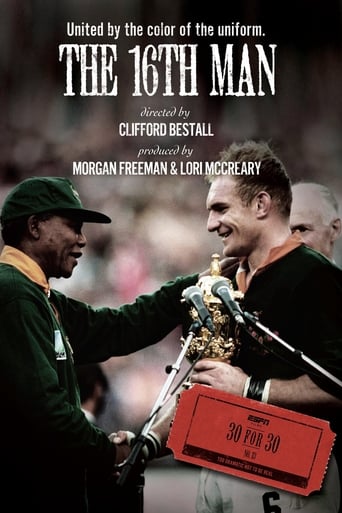
04 May 2010

Rugby Union has long been viewed in South Africa as a game for the white population, and the country’s success in the sport has been a true source of Afrikaner pride. When the 50-year-old policies and entrenched injustices of apartheid were finally overthrown in 1994, Nelson Mandela’s new government began rebuilding a nation badly in need of racial unity. So the world was watching when South Africa played host to the 1995 Rugby World Cup. Though they had only one non-white player, the South African Springboks gained supporters of all colors as they made an improbable run into the final match where they beat the heavily favored New Zealand team. When Mandela himself marched to the center of the pitch cloaked in a Springbok jersey and shook hands with the captain of the South African team, two nations became one. Oscar winner Morgan Freeman and director Cliff Bestall will tell the emotional story of that cornerstone moment and what it meant to South Africa’s healing process.

17 Oct 2018

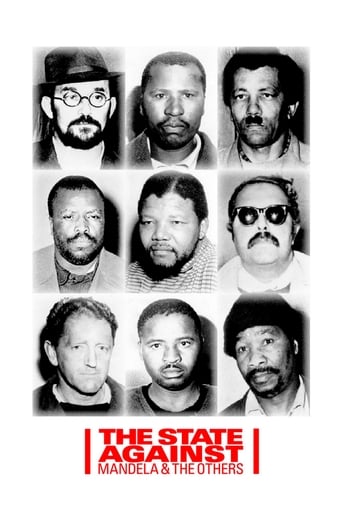
South Africa, July 11th, 1963. Several members of the African National Congress, an organization declared illegal, are arrested in Rivonia, a country house near Johannesburg. The detainees, along with Nelson Mandela, imprisoned since 1962, are charged with serious crimes for their radical activism against the apartheid regime.

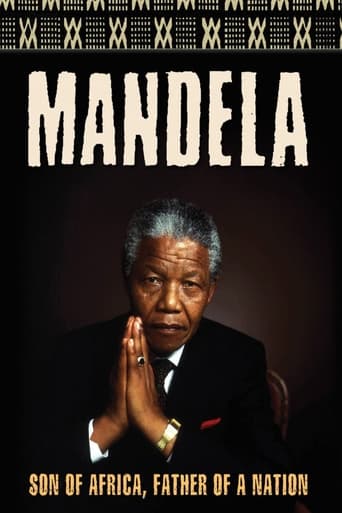
11 Oct 1996

A documentary that chronicles the life of South African leader Nelson Mandela. Mandela is probably best known for his 27 years of imprisonment, and for bringing an end to apartheid. But this film also sheds light on the little-known early period of Mandela's life.

23 Mar 2015

‘The Great Wall has been completed at its most southerly point.’ So begins Kafka’s short story ‘At the Building of the Great Wall of China’, and so, at Europe’s heavily militarised south-eastern frontier, begins this film. In the shadow of its own narratives of freedom, Europe has been quietly building its own great wall. Like its famous Chinese precursor, this wall has been piecemeal in construction, diverse in form and dubious in utility. Gradually cohering across the continent, this system of enclosure and exclusion is urged upon a populace seemingly willing to accept its necessity and to contribute to its building.

01 Jan 2018

We admire beauty; we recoil from bodies that are marred, disfigured, different. Didier Cros’ moving, intimate film forces us to question what underlies our notions of beauty as we join a talented photographer taking stunning portraits of several people with profound visible scars which have dictated certain elements of their lives but have not come to define their humanity. The subjects' perceptions of themselves are dynamic, unexpected, and even heartwarming. This is an unforgettable journey to be shared with the world.

25 Feb 2000

Eugene de Kock, nicknamed "Prime Evil," was South Africa's most notorious government assassin under the apartheid regime. A highly decorated and powerful man, he led police death squads against enemies of the state; his victims were mainly connected with the ANC. The film includes interviews with torture victims and with friends of de Kock.

07 Feb 2019

Ndola, Northern Rhodesia (currently Zambia), September 18, 1961. Swedish economist and diplomat Dag Hammarskjöld, Secretary General of the UN, dies mysteriously in a plane crash. Decades later, Danish journalist and filmmaker Mads Brügger and Swedish researcher Göran Björkdahl investigate the case in search of definitive closure.

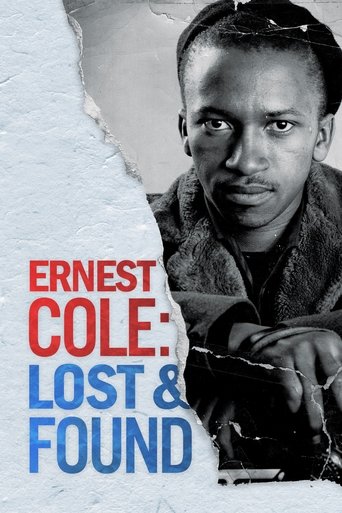
22 Nov 2024

More than 60,000 of Ernest Cole’s 35mm film negatives were inexplicably discovered in a bank vault in Stockholm, Sweden. Most considered these forever lost, especially the thousands of pictures he shot in the U.S. Told through Cole’s own writings, the stories of those closest to him, and the lens of his uncompromising work, the film is a reintroduction of a pivotal Black artist to a new generation and will unravel the mystery of his missing negatives.

20 Jun 2019

Gaza Fights for Freedom depicts the ongoing Great March of Return protests in the Gaza Strip, occupied Palestine, that began in 2018.

15 Nov 1949

After several farmyard analogies featuring chicks and calves, the well-spoken narrator and director of the film, Winifred Holmes, considers the subject of girls and how they reach adulthood and readiness for the 'important job of motherhood.

17 Jan 2014

Based on powerful archival material documenting the most daring moments in the struggle for liberation in the Third World, this documentary is accompanied by classic text from The Wretched of the Earth by Frantz Fanon.

29 Jul 2016

The Fall tells the remarkable story of a South African barefoot runner, an American track-and-field prodigy, and the events behind one of the most memorable moments in sporting history – the 1984 LA Olympics. The film charts two journeys, from rural South Africa under apartheid and the rolling hills of Southern California, to the starting line of the women’s 3,000 metres. It uncovers a tale of betrayal and exploitation, of the blurred lines between politics, media and sport, and of the dedication and sacrifice required to compete at the highest level. It’s a story that split governments and divided nations, but at its heart is a tale of two young women who, despite the turmoil in their lives, just wanted to run.

03 Jun 2019

How African artists have spread African culture all over the world, especially music, since the harsh years of decolonization, trying to offer a nicer portrait of this amazing continent, historically known for tragic subjects, such as slavery, famine, war and political chaos.

14 Oct 2021

During his stay in Cape Town as a film student, Shatho Tibone was inspired by an initial casual trip he took to the scenic but informal settlement of Hangberg. This film focuses on the uncertainties and inhumane acts of police and state brutality faced by the predominantly Rastafarian, KhoiSan identifying community of Hangberg in Cape Town, South Africa. So, through the participatory collective effort of a few journalists, filmmaker and community leaders Shatho went on a 5 year journey to document the story of this community which has become an enigma in South African imagination,

01 Feb 1970

The first film to ever show what life was in South-Africa under the Apartheid state. The film was released as an anonymous production under the aegis of the Pan Africanist Congress in 1970.

21 May 2025

In July 2020, Rob Bliss, a young, white filmmaker, posted a video of what happened when he held up a ‘Black Lives Matter’ sign in Harrison, Arkansas, 'the most racist town in America'. It went viral, attracting 12 million views. What Bliss did next was remarkable. Over 1500 miles, two months and 25 miles a day, he set out to walk through the American South, wearing a Black Lives Matter t-shirt, and a sign that invited people to ‘come walk with me’. His goal was simple: to take the conversation Floyd’s murder had sparked about racism in American society into the places where it was most needed, yet most silent.

11 Jan 2021

The dramatic untold story of 420,000 Cubans– soldiers and teachers, doctors and nurses– who gave everything to end colonial rule and apartheid in Southern Africa.