01 Jan 1972
Congo
An experimental ethnographic documentary that criticizes the colonizer view of anthropology.
Poetic film about the struggle of man's will and muscles against nature, about the rock-climbers who prevent landslides and eliminate their consequences.
01 Jan 1972
An experimental ethnographic documentary that criticizes the colonizer view of anthropology.
08 Jan 2020
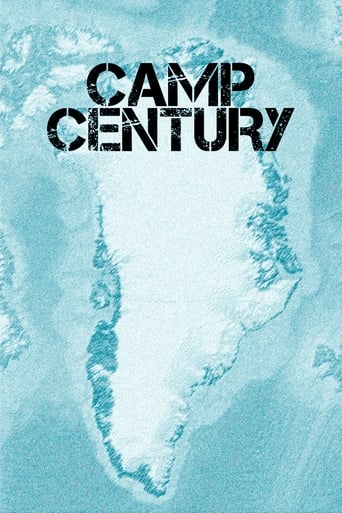
How in 1959, during the heat of the Cold War, the government of the United States decided to create a secret military base located in the far north of Greenland: Camp Century, almost a real town with roads and houses, a nuclear plant to provide power and silos to house missiles aimed at the Soviet Union.
27 Jun 1978
This film describes a psychological state "kin to moonstruck, its images emblems (not quite symbols) of suspension-of-self within consciousness and then that feeling of falling away from conscious thought. The film can only be said to describe or be emblematic of this state because I cannot imagine symbolizing or otherwise representing an equivalent of thoughtlessness itself. Thus the actors in the film, Jane Brakhage, Tom and Gloria Bartek, Williams Burroughs, Allen Ginsberg, Peter Olovsky and Phillip Whalen are figments of this 'Thought-Fallen Process', as are their images in the film to find themselves being photographed."

12 Dec 2020
No overview found
31 Dec 1961
Documentary movie about testing of the largest nuclear weapon in history, the Tsar Bomba. Declassified and made available to the public in 2020.

15 Mar 2018
Lithuania, 1941, during World War II. Hundreds of thousands of texts on Jewish culture, stolen by the Germans, are gathered in Vilnius to be classified, either to be stored or to be destroyed. A group of Jewish scholars and writers, commissioned by the invaders to carry out the sorting operations, but reluctant to collaborate and determined to save their legacy, hide many books in the ghetto where they are confined. This is the epic story of the Paper Brigade.
30 Nov 2013
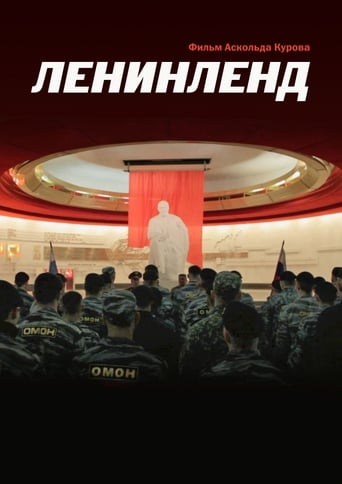
At the peak of Perestroika, in 1987, in the village of Gorki, where Lenin spent his last years, after a long construction, the last and most grandiose museum of the Leader was opened. Soon after the opening, the ideology changed, and the flow of pilgrims gradually dried up. Despite this, the museum still works and the management is looking for ways to attract visitors. Faithful to the Lenin keepers of the museum as they can resist the onset of commercialization. The film tells about the modern life of this amazing museum-reserve and its employees.
01 Jan 2013
Thanks to his myriad film roles, Lon Chaney is known as “the man of a thousand faces,” and you could say that the early horror era never beheld a figure more intriguing. Yet because of his numerous transformations, his face never became as iconic as that of, say, Boris Karloff. Accompanied by a soundtrack from Bernhard Lang, this “re-imagination of shots” taken from Chaney´s forty-six surviving films offers a beguiling excursion into the history of film. The director reveals surprising associations, while highlighting the enduring magic of works which are now more or less forgotten.
26 Oct 2013
At various points in its history, tiny St. John's Island was where Singapore's colonial founder Sir Stamford Raffles docked his ship upon arrival, a quarantine centre for immigrants and pilgrims returning from Mecca, a penal colony for political detainees and secret society leaders, and a sleepy holiday resort. Unlike its neighbouring islands, however, St. John's was never fully developed. It occupies an in-between space, the vestiges of its history scattered around the land. Its indeterminacy stands in sharp contrast to Singapore, where land use is meticulously planned to fulfil economic and social functions. In this film, St. John's Island - otherwise known as 'Bukit Orang Salah', a nickname coined by the people who were quarantined there - becomes a site of and for reflection, prompting questions about our history, heritage and identity.
13 Nov 2001
A small portrait of the volatility of intimacy and of breaking free from abusive cycles: made in response to a year of collapsing relationships and violent accidents that left me broken, dislocated and stuck in my apartment.
01 Jan 1963
Made on a wind-up Bolex camera, The Sound of Seeing announced the arrival of 21-year-old filmmaker Tony Williams. Based around a painter and a composer wandering the city (and beyond), the film meshes music and imagery to show the duo taking inspiration from their surroundings.
28 Jan 2020
This experimental nature documentary by Minna Rainio and Mark Roberts depicts climate change and the wave of extinction from the point of view of our near future. Actually, it depicts the age we live in now, or rather its fateful consequences.

06 Jan 2019
No overview found
27 Sep 2017
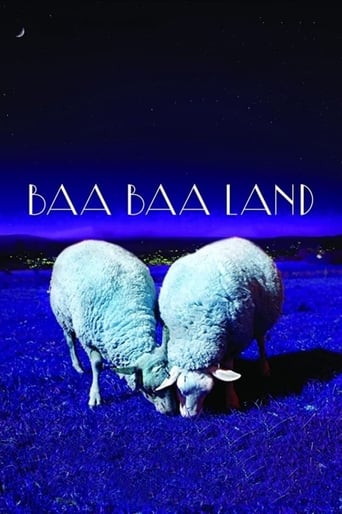
An eight-hour contemplative epic, entirely starring sheep.

01 Jan 1978
This portrait of a guinea fowl is the first clear vision I've had of the hot-blooded dinosaurs still living among us. (SB)

01 Jan 1999
WORM AND WEB LOVE begins with bracketed light, a throbbing worm in the sand and sea foam mixed with grass and oceanic detritus, soon superimposed upon the dark blue-toned face of a man, then a woman (Michael McClure and Amy Evans McClure), each seen, then on, through superimpositions of drifting smoke and the back-lit stark grid of a spider's web. The obvious affections of the man and woman, their clear display of love, is metaphored in these tenuous superimpositions, culminating in the frantic movements of the spider itself and the dance of joy of the features of the couple in loving resolution.

01 Jan 1988
This stream-of-consciousness could be nothing less than pathway of the soul, as images of Marilyn's window are remembered from inside-out, its "view" interwoven with all of other windowing and the Elements of the known world.
01 Aug 2017
In continuous motion with no end or barrier in its way.
23 May 2017
A manufactured memory.
18 Mar 2014
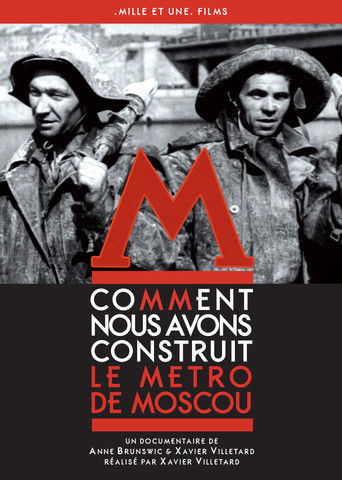
In the 1930’s, the workers of the underground, headed by brigades of writers, are in charge to write in real time "the history of the Moscow Metro". Based on their narratives, partially unpublished, the film recounts the first lines construction of the most beautifiul underground in the world, in the light of this "big literary Utopia", stoped by the purges of 1937-38.