
16 Jul 1989
Bludný Holanďan
No overview found

All the throbbing eroticism—and ultimate heartbreak—of Puccini’s youthful score is unleashed by James Levine and his top-flight cast. Plácido Domingo is Des Grieux, the handsome, headstrong young aristocrat who falls head over heels for the enticing, impetuous Manon Lescaut (Renata Scotto). Manon returns his love, but her obsession with luxury ruins them both. Gian Carlo Menotti’s opulent production, with sets and costumes by Desmond Heeley, superbly captures the colorful world of 18th century France.

Manon Lescaut

Chevalier des Grieux
Lescaut

Geronte

A musician
Edmondo
An innkeeper
Dancing master
A lamplighter
A sergeant
A sea captain
16 Jul 1989
No overview found

24 Jul 2025

No overview found

01 Jan 2005

This is an effective staging, though the set looks medieval and the costumes are modern. It’s well paced, well played, well sung. Jonas Kaufmann is an ideal Tito. His voice is not only beautiful and flexible, it’s also ample, retaining warmth and sweetness when he sings out. The character of Tito is too good to be true, but Kaufmann makes him intense, noble, and beliveable. Vesselina Kasarova is riviting as Sesto. Her voice is gorgeous and multi-colored, her technique exquisite, her immersion in the role complete.

01 Jan 2001

This hard-edged postmodern production of Giuseppe Verdi's haunting masterpiece brings the story of Shakespeare's bloody tragedy to vivid life, characterized by spine-tingling atmospherics and a triumphant debut by American baritone Thomas Hampson in the title role. This Zurich Opera House production also features a mesmerizing turn by Paoletta Marrocu as the beautiful, power-hungry Lady Macbeth, while striking sets and costumes further enhance the duality of the main character whose rise and fall mirror the darkest impulses of man. Replete with supernatural mystery, sexual tension, and violent power plays, this timeless story remains gripping and chilling for today's audiences and boasts some of the most astonishing music of Verdi's legendary body of work.

01 May 2001

Gaul has been conquered by the Romans. Oroveso, the Arch-Druid longs to lead a Gallic rebellion against the colonial forces. He and all the others wait for the signal to be given by his daughter, the Druid High Priestess Norma. But Norma has fallen in love with the Roman Proconsul, Pollione, and given birth to two children. They have been brought up in secrecy by her confidante Clotilde. Norma still loves Pollione but he has fallen in love with a novice priestess, Adalgisa.

18 Feb 1928

Set in Paris, the story concentrates on the romantic triangle involving cabaret singer Liane, bon vivant Tony and petty crook Jean.

19 Feb 2016

This Wagner opera is rarely performed because of the scandals that engulfed the Magdeburg Theatre when it was performed in 1836 under the title The Novice of Palermo, and became known as a cursed opera from which the composer had to distance himself. Wagner's adaptation of the story reflects the rebellious mood of a Revolutionary Germany, vindicating sensual love and attack the fanatical repression of sexuality by a puritanical and hypocritical authority. As the prose says, "Shame to him whose cruel striking/Kills for faults of his own liking!". One of the most extraordinary musicals based on a text by Shakespeare, especially worthy of a new performance as it is four hundred years since the death of the Bard.
22 Dec 1985
No overview found

03 Mar 2006

This beautiful production by renowned opera director Michael Hampe was recorded at the exquisite Rococo Theatre in Schwetzingen Palace in May 1990. La scala di seta is one of the five one-act operas - farsa giocosa - in which the young Rossini first demonstrated his operatic genius. This sparkling production continues the Rossini one-act opera series emerging from the Schwetzingen Festival. The staging is perfectly suited to the screen and the cast of principals, led by David Griffith and Luciana Serra provide musical excellence together with the flexible Stuttgart Radio Symphony Orchestra.
01 Jan 1973
No overview found

03 Oct 2019

With an illustrious career spanning five decades: over 150 stage roles, 11 Grammy Awards and his iconic performances alongside Luciano Pavarotti and José Carreras as one of the Three Tenors, the legendary Plácido Domingo continues to astound audiences with a vocal talent unmatched in power. For one very special night, Plácido Domingo returns to the breath-taking Arena Di Verona amphitheatre, 50 years after his debut, to revisit three of his greatest ever roles.
20 Apr 2003
An adaptation of Leos Janacek's opera Prihody Lisky Bystrousky (1925), based on the novel Liska Bystrouska by Rudolf Tesnohlidek. It follows the life of Sharp-Ears, a fox who is captured by a forester as a cub and raised in his home prior to escaping back into the forest.

01 Jan 1969

Based on a revolutionary play supposedly written by the Eternal President of the Democratic People's Republic, Kim Il-sung, and rumored to have been co-directed by Kim Jong-il. This revolutionary work is also popular among the Chinese, especially those who lived through the Cultural Revolution, and have fond memories of revolutionary antics.

01 Jan 2004

The operatic version of the famous story about a governess who fears her two charges are possessed.

06 Oct 1981

Strauss's opera adapted to the screen by Gotz Friedrich.

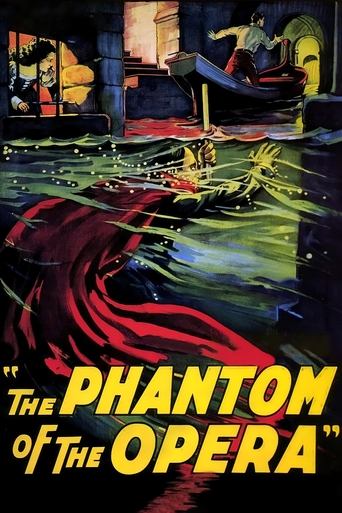
29 Jun 1925

The deformed Phantom who haunts the Paris Opera House causes murder and mayhem in an attempt to make the woman he loves a star.

11 Dec 1966

A version of Benjamin Britten's opera based on the Melville story. Will the virtuous young sailor Billy Budd be hanged for murder?

17 Jun 2001

La Cenerentola, ossia La bontà in trionfo (Cinderella, or Goodness Triumphant) is an operatic dramma giocoso in two acts by Gioachino Rossini. The libretto was written by Jacopo Ferretti, based on the fairy tale Cendrillon by Charles Perrault. The opera was first performed in Rome's Teatro Valle on 25 January 1817.---- IMDB id refers to Great Performances: Season 24, Episode 12 La Cenerentola (3 Apr. 1996) from Houston Grand Opera so release date is misleading.

04 Mar 2001

La traviata (Italian: [la traˈviaːta], "The Fallen Woman"[1][2]) is an opera in three acts by Giuseppe Verdi set to an Italian libretto by Francesco Maria Piave. It is based on La dame aux Camélias (1852), a play adapted from the novel by Alexandre Dumas, fils. The opera was originally entitled Violetta, after the main character. It was first performed on 6 March 1853 at the La Fenice opera house in Venice. Piave and Verdi wanted to follow Dumas in giving the opera a contemporary setting, but the authorities at La Fenice insisted that it be set in the past, "c. 1700". It was not until the 1880s that the composer and librettist's original wishes were carried out and "realistic" productions were staged.[3]
24 Aug 2012
No overview found