11 Sep 2024
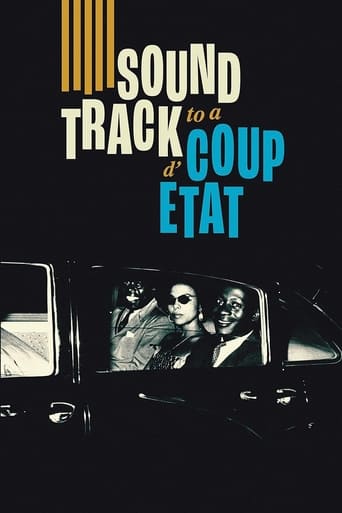
Soundtrack to a Coup d'Etat
Jazz and decolonization are intertwined in a powerful narrative that recounts one of the tensest episodes of the Cold War.
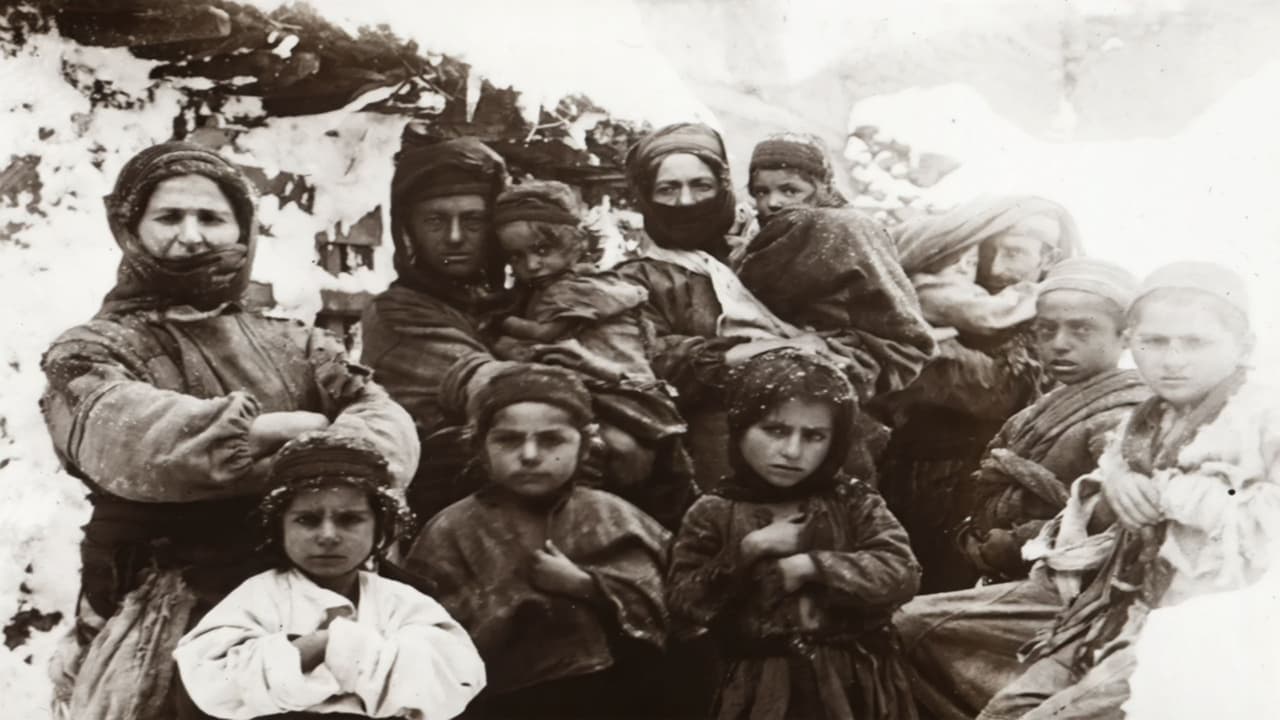
Explores the Ottoman Empire killings of more than one million Armenians during World War I. The film describes not only what happened before, during and since World War I, but also takes a direct look at the genocide denial maintained by Turkey to the present day.

Self - Narrator (voice)
Self
Self
Self
Self
Self

Auguste Berneau (voice)

U.S. Consul Leslie Davis (voice)

Haig Baronian (voice)

Maria Jacobsen (voice)
U.S. Consul Jesse Benjamin Jackson (voice)
U.S. Consul Oscar Heizer (voice)
Turkish Strength Society

Aurora Mardiganian (voice)
Enver Pasha (voice)

Turkish Court Martial Trial Transcript (voice)
11 Sep 2024
Jazz and decolonization are intertwined in a powerful narrative that recounts one of the tensest episodes of the Cold War.
When ordinary humans failed, Roghaye became a 48-hour superwoman—not to escape death, but to reclaim her ordinary life.
01 Nov 1915
Feathered friends prepare to meet their fate in this seasonal newsreel outing to a Norfolk turkey farm.
23 Jan 2026
When three American doctors — Palestinian, Jewish, and Zoroastrian — enter Gaza to save lives, they find themselves caught between medicine and politics, risking everything to expose the truth.
22 Oct 2023
No overview found
27 Apr 2009
In Turkey, buses are a cheap, widespread and therefore the most important means of public transportation throughout the country. What the airplane is in America and the train is in Europe, the intercity bus is in Turkey. The documentary takes a trip through Turkey using the common people's means of transport.
14 Jul 2015
In the shadow of the First World War, the genocide of the Christian Assyrians took place almost unnoticed by the world public. This first systematic genocide of the 20th century was committed by the Young Turks (Ottoman Empire) and would not have been possible without the support of some Kurdish local rulers and their family clans. The Assyrians are the indigenous people of Mesopotamia and have lived in Mesopotamia for thousands of years. The film includes testimony from several European, Turkish and Assyrian historians, as well as genocide researchers, including Professor Taner Akcam, Dr. Gabriele Yonan and Professor David Gaunt. The film includes testimony from survivors of the genocide. Various journalists and publicists also have their say with well-researched information in this documentary. The Assyrians refer to the Genocide as "Seyfo" (ܣܝܦܐ), which translates as "sword".
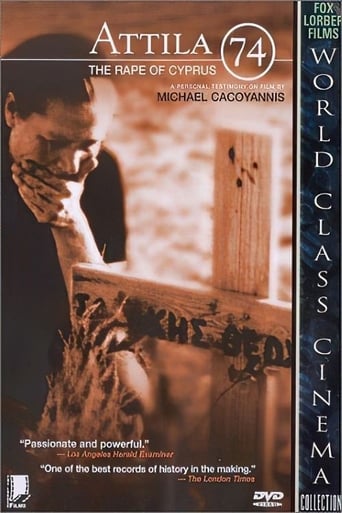
06 Mar 1975
An indictment of the protagonists in the Cypriot civil war.
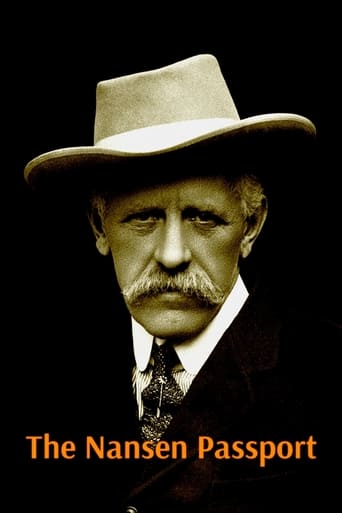
21 Jun 2016
On July 5th, 1922, Norwegian explorer, scientist and diplomat Fridtjof Nansen creates a passport with which, between 1922 and 1945, he managed to protect the fundamental human rights as citizens of the world of thousands of people, famous and anonymous, who became stateless due to the tragic events that devastated Europe in the first quarter of the 20th century.
01 Nov 2024
This film made by a Palestinian-Israeli collective shows the destruction of the occupied West Bank's Masafer Yatta by Israeli soldiers and the alliance which develops between the Palestinian activist Basel and Israeli journalist Yuval.

07 Oct 2016
Summer of 1939. Zosia is a young Polish girl who is deeply in love with Ukrainian Petro. Their great love will be put to the test when her father decides to marry her to a wealthy widower Skiba. Right after wedding she is left alone because her husband is drafted to the Polish army for the war with Germany. Meanwhile, tensions grow due to Jews, Poles, and Ukrainians living side by side.

31 Jan 2017
Set between the two World Wars and based on true historical events, Bitter Harvest conveys the untold story of the Holodomor, the genocidal famine engineered by the tyrant Joseph Stalin. The film displays a powerful tale of love, honour, rebellion and survival at a time when Ukraine was forced to adjust to the horrifying territorial ambitions of the burgeoning Soviet Union.
22 Apr 2019
Germans colonized the land of Namibia, in southern Africa, during a brief period of time, from 1840 to the end of the World War I. The story of the so-called German South West Africa (1884-1915) is hideous; a hidden and silenced account of looting and genocide.
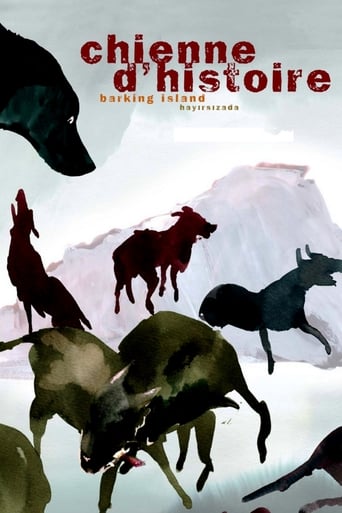
29 Jan 2010
Constantinople, Ottoman Empire, 1910. There are too many stray dogs on the streets, so the government decides to deport thousands of them on a desert island, off the coast of the city.
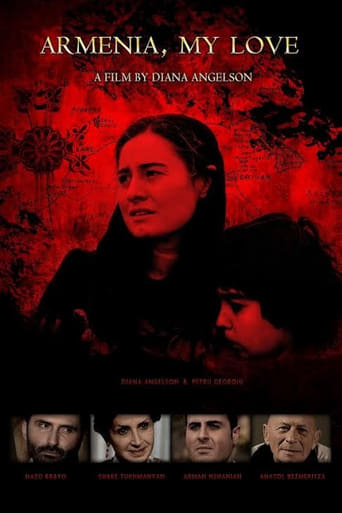
14 Apr 2016
The destiny of a happy Armenian family will change forever in 1915, Ottoman Empire, (Armenian land), now Turkey and whose beautiful dreams will become memories in the eyes of the most famous Armenian American painter, who lives to paint the story of his shattered childhood.
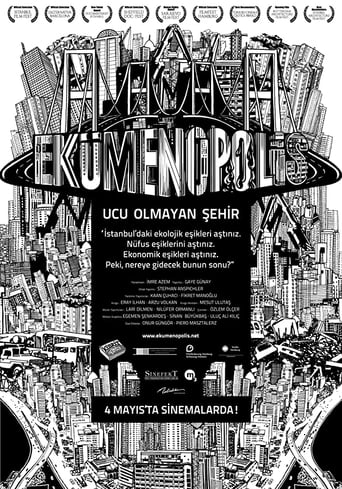
15 Apr 2011
Ecumenopolis: City Without Limits" tells the story of Istanbul and other Mega-Cities on a neo-liberal course to destruction. It follows the story of a migrant family from the demolition of their neighborhood to their on-going struggle for housing rights. The film takes a look at the city on a macro level and through the eyes of experts, going from the tops of mushrooming skyscrapers to the depths of the railway tunnel under the Bosphorous strait; from the historic neighborhoods in the south to the forests in the north; from isolated islands of poverty to the villas of the rich. It's an Istanbul going from 15 million to 30 million. It's an Istanbul going from 2 million cars to 8 million. It's the Istanbul of the future that will soon engulf the entire region. It's an Istanbul nobody has ever seen before.
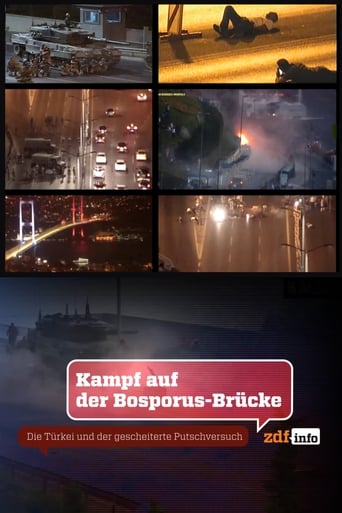
22 Jan 2021
The night of July 15, 2016 changed the history of Turkey. On that day there were coordinated attacks by parts of the Turkish army, among others in Istanbul. The aim of the military: a coup against the government. The decisive confrontation occurred on the Bosporus Bridge. While President Erdogan was still on vacation, live at TV he called on the people who were devoted to him to stand against the military. As an enemy for the masses, he presented his adversary Fethullah Gülen, whom he branded as the coup leader. He also urged the imams of the country's mosques to condition the population to resist. And so it happens that at night thousands of agitated people take to the streets to oppose the armed insurgents. The death toll was high. 352 people died across Turkey during the attempted coup. The consequences are even more serious: Erdogan used this gift, as he called it himself, to undermine democracy, to arrange mass arrests of dissidents and to transform Turkey into a dictatorship.
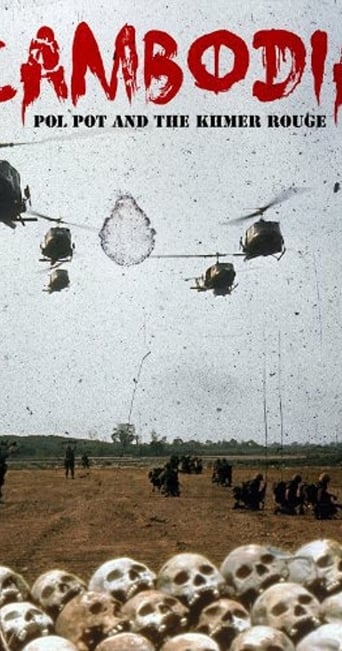
01 Jan 2011
Between April, 1975 and January, 1979, Pol Pot and the Khmer Rouge were responsible for the deaths of 1.7 million people in Cambodia. A quarter of the population were wiped out in one of the most brutal and virulent genocides of the twentieth century. This new film explores the life of Pol Pot, the ever-smiling, obsessively secretive leader of the Khmer Rouge. What drove him to inflict such a radical experiment on his own people? How did the Khmer Rouge turn from a band of nationalist revolutionaries into a ruthless killing machine? And why did the West stand by and let it happen? As an international tribunal in Cambodia finally brings the surviving leaders of the Khmer Rouge to justice, it's time to re-examine the gruesome legacy of Pol Pot.
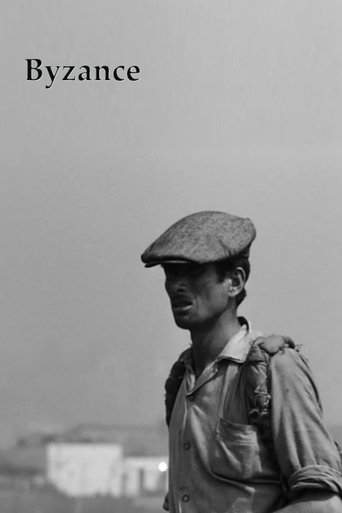
01 Jan 1964
Byzance uses a text by Stefan Zweig to describe the Ottoman conquest of the city in 1453. Before he turned to feature filmmaking in 1968 with Naked Childhood, Pialat worked on a series of short films, many of them financed by French television. Byzance is one of Pialat’s six Turkish shorts.
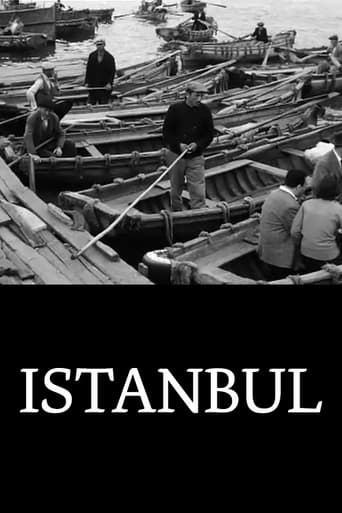
01 Jan 1964
All of Pialat's Turkish films are uniquely interested in the country — especially Istanbul — as it was, not just as it is at the precise moment that Pialat is filming it. History informs these films in a big way, with the voiceover narration (which incorporates excerpts from various authors) introducing tension between the images of the modern-day city and the descriptions of incidents from its long and rich history. Istanbul is probably the most conventional documentary of Pialat's Turkish series, providing a general profile of the titular city, its different neighborhoods, and the different cultures and ways of living that coexist within its sprawling borders. As the other films in the series also suggest, Pialat sees Turkey, and Istanbul in particular, as a junction point between Europe and the East, between the old and the new, between history and modernity.