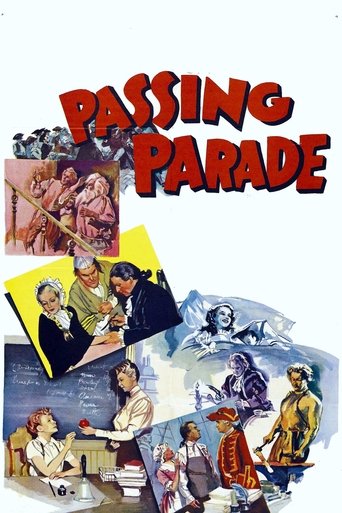
15 Nov 1941
Strange Testament
This MGM Passing Parade series short tells the story of Julian Poydras, whose encounter with a girl at Mardi Gras had a profound effect on his later life.
Made just before America would be forced into the Second World War, this short subject is a brief dramatized history of American democracy. It targets a perceived threat to democracy from board room and soapbox fascists who advocated a government based upon contemporaneous European models.

Narrator (voice)

Curdleface (uncredited)
Bartender (uncredited)

Shopkeeper (uncredited)
Abraham Lincoln (uncredited)
15 Nov 1941
This MGM Passing Parade series short tells the story of Julian Poydras, whose encounter with a girl at Mardi Gras had a profound effect on his later life.
28 Nov 1942
This Passing Parade series short chronicles the political life of Francisco Madero, who tried to bring democracy and land reform to Mexico.
12 Jun 1943
Young couple Joe and Mary Thompson love each other and their children despite the struggles that they have that are typical of most young couples early on in their married life, such as the basics of trying to make ends meet. But after Joe leaves Mary and their inner city life, she finds an unpostmarked envelope under their apartment door with her name written in Joe's handwriting. It contains a letter explaining why he left. It has primarily to do with his feeling that another part of his life was being left behind for his married life, that other life which consists of a want to travel, especially sail the south seas. The actual impetus to leave was inadvertently fostered by Mary through the birthday present she bought for him. So what actually did happen to Joe and will he ever return to his loving wife?
20 Apr 1940
Shows how important luck can be in a person's life.
30 Oct 1943
A Yugoslav man, dying after being shot while attempting to help defend his village, writes a letter of encouragement and hope to his unborn child, explaining what he was fighting for in resisting the Nazi invasion of his homeland. A John Nesbitt's Passing Parade short.
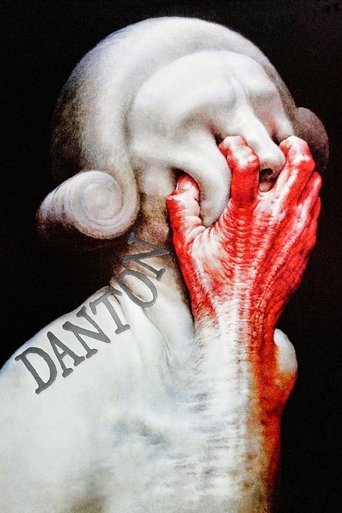
12 Jan 1983
Danton and Robespierre were close friends and fought together in the French Revolution, but by 1793 Robespierre was France's ruler, determined to wipe out opposition with a series of mass executions that became known as the Reign of Terror. Danton, well known as a spokesman of the people, had been living in relative solitude in the French countryside, but he returned to Paris to challenge Robespierre's violent rule and call for the people to demand their rights. Robespierre, however, could not accept such a challenge, even from a friend and colleague, and he blocked out a plan for the capture and execution of Danton and his allies.
07 May 1949
Historical short showing how Eli Whitney (best known for the invention of the cotton gin) played a significant role in the introduction of mass production techniques to the USA in the late 18th century.
23 Apr 2003
How will history remember him? The honest politician who brought the left to power, the reliable plane tree of the state, the poet who adds elegance to politics? Or is it the stubborn, skeptical, lonely leader who hinders the unity of the left? How many people will remember the legend of Karaoğlan, which was written on the mountains and stones in the milestones of democracy? And how many of them will question the reasons for the rise from the top to the prison, from the prison to the top again, and then to be forgotten at the ballot box? How will Turkey remember a leader who left his mark in the last fifty years, a republican intellectual, the captain of the country's most critical days?
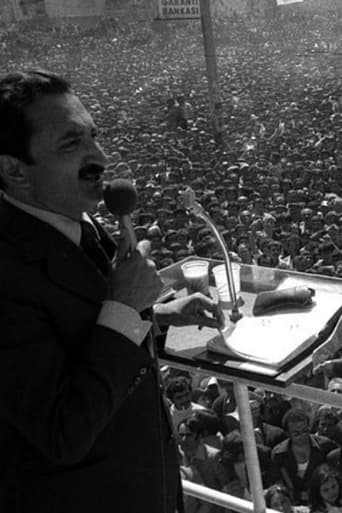
07 May 2003
A political amateur who was kneaded with art in the first half of the 1950s and was enthused with the idealism of politics in the second half, was now a person who was dealing with politics and state affairs 24 hours a day, gradually getting hotter and broadening his goals and horizons. In this section, you will follow the milestones of the poet's hopeful arrival in the 1970s, not a dream that the poet remembers with longing, but is no longer left behind. Contrary to the poem, you will recognize the struggle of a stubborn, belligerent missionary who is incompatible with the world. You will witness how it changed in that struggle and how this change affected a country...
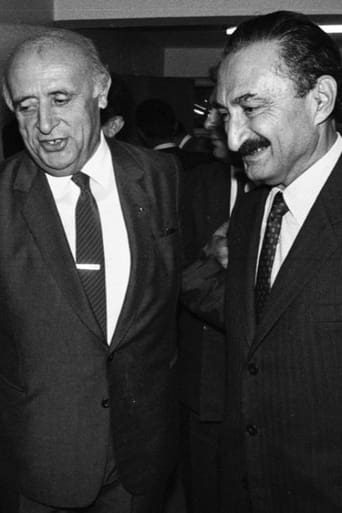
14 May 2003
What Ecevit feared had happened to him. Someone blew the whistle and the game was over. The name of the game was democracy. Those who finished the game, that is, those who took on the role of referees, were soldiers... The September 12 administration started by blaming the administrators, that is, the politicians. According to the military, incompetent and uncompromising politicians were responsible for the crisis in the country. Now they would put new rules into the game and this time there would be no old actors on the field. Ecevit's political life, which lasted for 27 years, was ending on the morning of September 12...
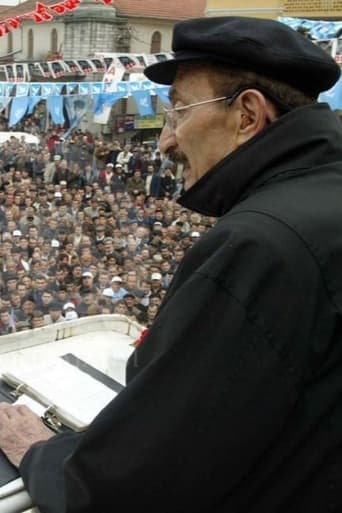
21 May 2003
A political adventure that started with a modest membership ceremony in the Çankaya District Building of the CHP in 1954 and ended in 2004, covering exactly 50 years. Bülent Ecevit was the name that left his mark on Turkey's multi-party years. The politics he said goodbye to was his way of life. No politician has ever been written on the mountains and stones like him... No politician has ever been as critical of the future of the left as he was. His name was sometimes referred to as a "divisive" and sometimes "honest politician. Bülent Ecevit was engraved in history as the memory of the multi-party period and as an example of a politician's exit from the ballot box and his exhaustion...
28 Oct 1944
In this John Nesbitt's Passing Parade short, a man recovers his lost memories when he is forced to relive events in his dreams.

09 Aug 2012
In 1988, Chilean military dictator Augusto Pinochet, due to international pressure, is forced to call a plebiscite on his presidency. The country will vote ‘Yes’ or ‘No’ to Pinochet extending his rule for another eight years. Opposition leaders for the ‘No’ vote persuade a brash young advertising executive, René Saavedra, to spearhead their campaign. Against all odds, with scant resources and while under scrutiny by the despot’s minions, Saavedra and his team devise an audacious plan to win the election and set Chile free.
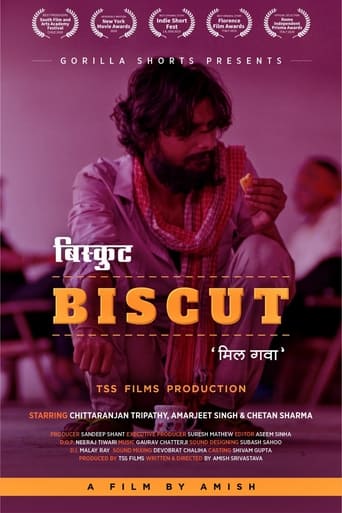
07 Feb 2022
BISCUT (HOTSTAR-DISNEY RELEASE -2022) In an Indian village ruled by muscle and money, one man sparks a revolution without guns or bullets by betting his life on just the power of democracy. Biscut is the awe-inspiring story of Bhoora, a poor Dalit (lower caste) youth condemned to a daily struggle for survival, who turns a collective curse into a formidable force for change. BISCUT is the Hindi language word for a cookie or a biscuit.
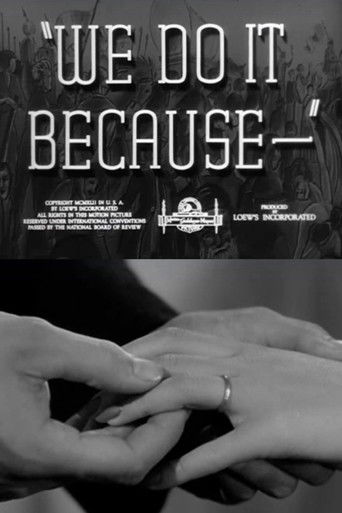
24 Jan 1942
This John Nesbitt's Passing Parade short explores the origins of various customs such as shaking hands, kissing, and why ships are christened.
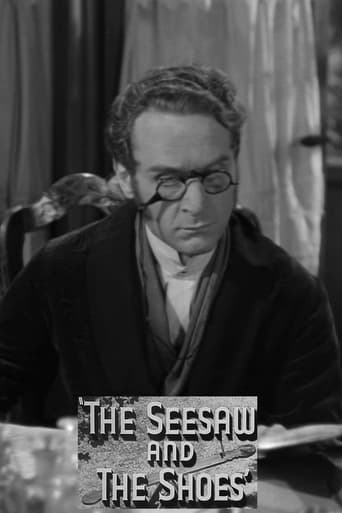
05 May 1945
This short shows how two objects led to important discoveries. Children playing with a seesaw inspire French physician Rene Laennec to invent the stethoscope, and a pair of shoes made of caoutchouc lead Charles Goodyear to discover the process for vulcanizing rubber.

11 May 2011
In a drab, anonymous gray school governed by a strict authoritarian regime, an apparently unremarkable day is turned on its head following a seemingly ridiculous announcement. Disbelieving at first, the all male, identically uniformed pupils are informed that what they had always been taught as fact is no longer true. When the incredulous students speak out, what initially seems laughably absurd becomes desperately real as they are forced to question how far they will go to stand up for their beliefs. Two & Two is an allegory for the absurdness of dictatorship and tyranny - and the resilience of the human spirit.
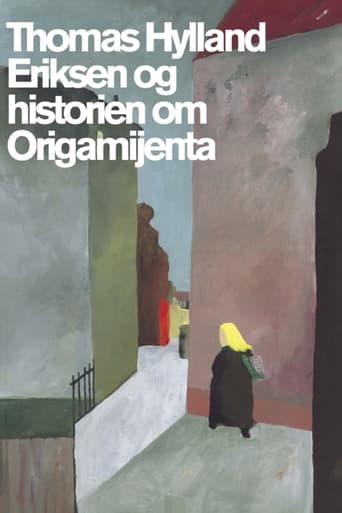
10 Jun 2005
A director feels he is about to lose himself to the market forces and thinks that the only way he can protest is by making a political film. He contacts Thomas Hylland Eriksen, who will become his mouthpiece and articulate what is wrong. But along the way the director becomes distracted by another person, a young, fumbling girl reminiscent of himself.
19 Jun 1948
This MGM John Nesbitt's Passing Parade series short tells the story of how a Mauser pistol used on the battlefield by Germans during WWII makes its way into the hands of an American gangster.
12 Apr 2013
'Project Censored: The Movie' explores media censorship in our society by exposing important stories that corporate media fails to report/under report. Using the media watchdog group, Project Censored, as their road map, two fathers from California decided to make a documentary film that will help to end the reign of Junk Food News that Corporate Media continues to feed the American people.