
01 Jan 1955

Carnivorous Plants
Photomicrography reveals the unusual structure and behavior of the Venus's flytrap, the trumpet plant, the cobra plant, the common pitcher plant, the sundew plant and the utricularia.

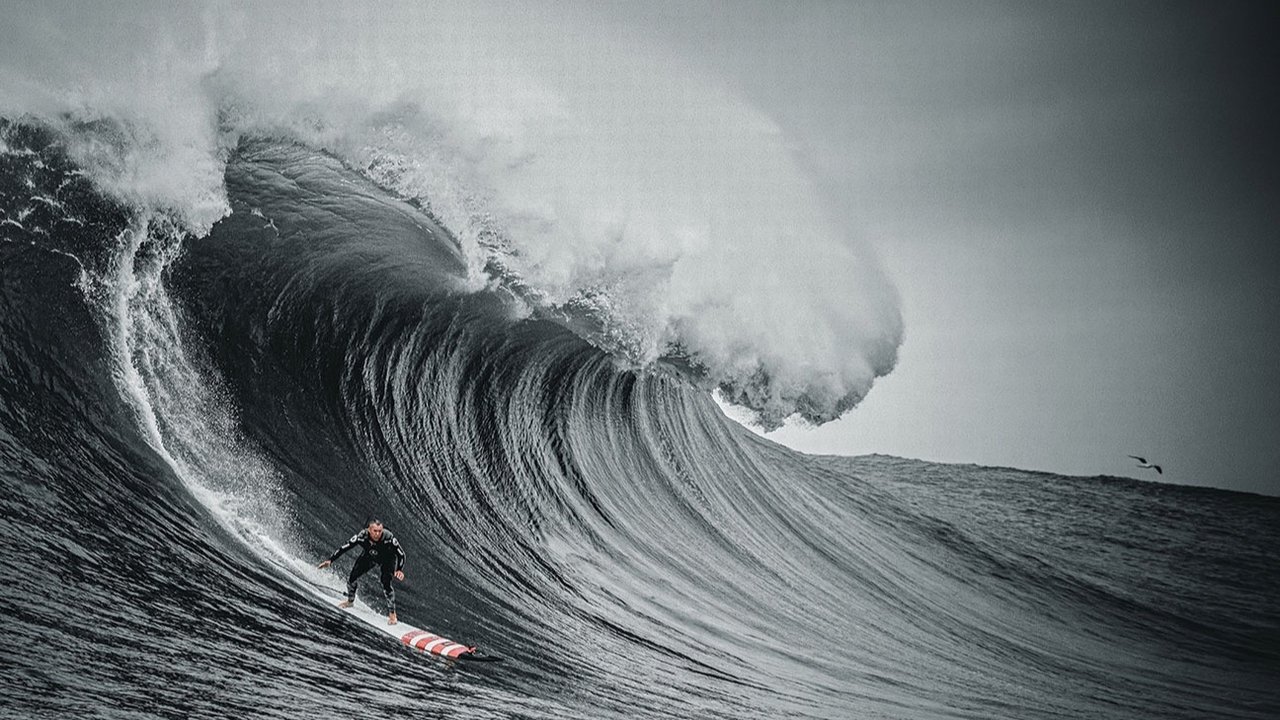
Documentary-maker David Malone delves into the secrets of ocean waves. In an elegant and original film, he finds that waves are not made of water, that some waves travel sideways and that the sound of the ocean comes not from water but from bubbles. Waves are not only beautiful but also profoundly important, and there is a surprising connection between the life cycle of waves and the life of human beings.

Himself - Presenter

01 Jan 1955

Photomicrography reveals the unusual structure and behavior of the Venus's flytrap, the trumpet plant, the cobra plant, the common pitcher plant, the sundew plant and the utricularia.

10 Oct 2012

Umberto Eco, the author of best-selling novels who passed away in February 2016, unveils the secrets behind his undertakings and novels.

27 Oct 2015

NOTFILM is a feature-length experimental essay on FILM -- its author Samuel Beckett, its star Buster Keaton, its production and its philosophical implications -- utilizing additional outtakes, never before heard audio recordings of the production meetings, and other rare archival elements.

02 Mar 2016

Follow astronaut Scott Kelly's 12-month mission on the International Space Station, from launch to landing, as NASA charts the effects of long-duration spaceflight by comparing him to his identical twin on Earth, astronaut Mark Kelly.

01 Apr 2014

Earthquakes, tsunamis, volcanic eruptions, and extreme weather. Has Earth always been this way? Featuring footage of top geologic hot spots on every continent, the film traces the scientifically-based story of the 4.5 billion-year-old Earth, from the core to the crust and up into the atmosphere.

29 Oct 2014

Professor Alice Roberts joins entomologist Tim Cockerill in a house filled with hundreds of spiders in a one-off documentary revealing the secret life of the spider in the home.

20 Nov 2024

In 1949, philosopher and novelist Simone de Beauvoir wrote the groundbreaking The Second Sex, launching a disruptive discourse on women’s oppression and second-class citizenship. This film dissects the origins and relevance of this bible of feminism, charting de Beauvoir’s fact-finding journey across the US to research her book. The timely and fascinating film honors de Beauvoir’s brilliance and limitations, connecting her revolutionary ideas to the pressing issues women face today.

01 Jun 2023

In a time of resurgence of social protests, political radicalization and distrust of power, Arendt's thought has never been more relevant: A critical thinker according to some or a conservative according to others, this great figure of the intellectual world remains, in many ways, an enigma. Who was Hannah Arendt?
01 Jan 1998
A look back at the origins of rocket science and forward to the cutting edge technology of reusable rockets and shuttles. Using computer animation, the program also explores the future of space travel that may some day carry commercial passengers or "tourists" into space.

24 Sep 2015

Without us noticing, modern life has been taken over. Algorithms run everything from search engines on the internet to satnavs and credit card data security - they even help us travel the world, find love and save lives. Mathematician Professor Marcus du Sautoy demystifies the hidden world of algorithms. By showing us some of the algorithms most essential to our lives, he reveals where these 2,000-year-old problem solvers came from, how they work, what they have achieved and how they are now so advanced they can even programme themselves.

01 Jan 1975

Orson Welles — with contributions from scientists George Wald, Carl Sagan, and others — examines the possibility and implications of extraterrestrial life. In examining our perceptions of alien 'martians' from his "War of the Worlds" broadcast, to then-modern explorations of Mars, this film from NASA provides a unique glimpse at life on earth, and elsewhere in the universe.

22 Feb 2005

The globe learned on December 26, 2004, that tsunamis can bring death and devastation to the world's coastlines. The product of undersea earthquakes and volcanic eruptions, tsunamis can race across oceans at more than 500 miles an hour, leaving a huge wake of destruction when they hit shore. Because it is difficult for scientists to predict how large these massive waves can be, tsunamis are one of the least understood of nature's forces, and one of the most dangerous. With insight from some of the scientific community's foremost researchers, and vivid accounts from past tsunami survivors, Tsunami: Killer Wave depicts nature at its most extreme, profiles the efforts being made to curb its effects, and illustrates the financial, physical and emotional toll it can leave on its victims.
A look at Christianity vs. Religion.

01 Jan 1988

Unmasks fraudulent cover-ups, wild speculations, and deceitful myths that have been presented as the absolute "facts" of evolution. Should evolutionism, the foundational faith of eastern mystical thought, be taught in schools as science, when Creationism, the foundational belief of Judeo-Christianity, has been expelled?

05 Apr 2009

An examination of the extinction threat faced by frogs, which have hopped on Earth for some 250 million years and are a crucial cog in the ecosystem. Scientists believe they've pinpointed a cause for the loss of many of the amphibians: the chytrid fungus, which flourishes in high altitudes. Unfortunately, they don't know how to combat it. Included: an isolated forest in Panama that has yet to be touched by the fungus, thus enabling frogs to live and thrive as they have for eons.

01 Apr 2020

When the U.S. trade embargo left Cuba isolated from medical resources, Cuban scientists were forced to get creative. Now they've developed lung cancer vaccines that show so much promise, some Americans are defying the embargo and traveling to Cuba for treatment. In an unprecedented move, Cuban researchers are working with U.S. partners to make the medicines more widely available.

14 Nov 2016

In 1962, spurred by the Cold War, President John F. Kennedy famously made the bold proclamation that NASA would send astronauts to the moon by the end of the decade, not because it was easy, but because it was a challenge. The Space Race inspired a generation to pursue careers in science and technology, but as the balance of world power shifted, interest in space exploration declined. "Fight for Space" serves as an urgent call to re-awaken our sense of wonder and discovery.

23 Jun 2017

As society tackles the problem of feeding our expanding population safely and sustainably, a schism has arisen between scientists and consumers, motivated by fear and distrust. Food Evolution, narrated by Neil deGrasse Tyson, explores the polarized debate surrounding GMOs. Looking at the real-world application of food science in the past and present, the film argues for sound science and open-mindedness in a culture that increasingly shows resistance to both.

01 Jul 1968

The San Francisco scene in 1967-68. Documentary about hippies shot during the height of the movement . Viewpoints from many kinds of people. Music by Steve Miller Band, Mother Earth, Quicksilver Messenger Service and others.
19 Nov 1926
"Though not given a New York showing until 1935, V. I. Pudovkin's Mechanics of the Brain (Mekhanika Golovnovo Mozga) was written and directed by Pudovkin in 1926. A full year in the making, this scientific documentary concentrates on the behavioral studies conducted by Prof. Ivan Pavlov. The laboratory dogs used in Pavlov's research don't seem too happy about it, and as a result this film might be hard to take for the more sensitive viewers (the vivisection sequence is particularly rough). The progress of the research is detailed with charts and graphs, hardly the "cinematic" touches one might expect from Pudovkin. Interestingly, Mechanics of the Brains was released two years before the results of Pavlov's studies were printed in book form."