05 Feb 1987

Continental Divide
Filmed in 1987, this documentary chronicles the journey of Via Rail's The Canadian as it makes its way across Canada.
Every winter for decades, the Northwest Territories, in the Canadian Far North, changes its face. While the landscape is covered with snow and lakes of a thick layer of ice, blocking land transport, ice roads are converted to frozen expanses as far as the eye can see.
Narrator (voice)

05 Feb 1987

Filmed in 1987, this documentary chronicles the journey of Via Rail's The Canadian as it makes its way across Canada.

10 Sep 2003

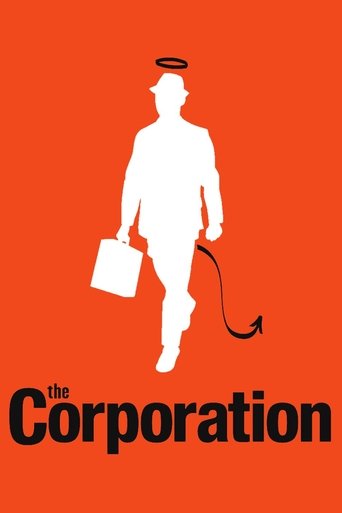
Since the late 18th century American legal decision that the business corporation organizational model is legally a person, it has become a dominant economic, political and social force around the globe. This film takes an in-depth psychological examination of the organization model through various case studies. What the study illustrates is that in the its behaviour, this type of "person" typically acts like a dangerously destructive psychopath without conscience. Furthermore, we see the profound threat this psychopath has for our world and our future, but also how the people with courage, intelligence and determination can do to stop it.

12 Dec 2001

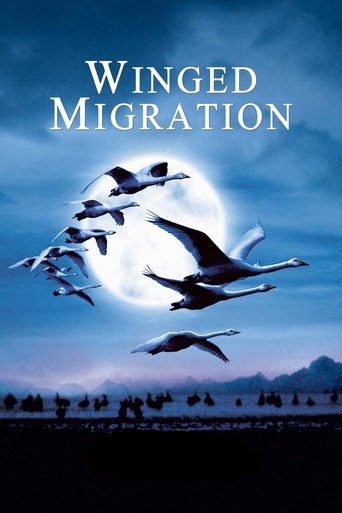
This documentary follows various migratory bird species on their long journeys from their summer homes to the equator and back, covering thousands of miles and navigating by the stars. These arduous treks are crucial for survival, seeking hospitable climates and food sources. Birds face numerous challenges, including crossing oceans and evading predators, illness, and injury. Although migrations are undertaken as a community, birds disperse into family units once they reach their destinations, and every continent is affected by these migrations, hosting migratory bird species at least part of the year.

01 Oct 2016

The adventures and exploits of Jean-Baptiste Charcot (1867-1936), an intrepid scientist and explorer who laid the foundations of modern oceanography.

09 Dec 2017

In the Norwegian lands south of Trondheim, not far from the Swedish border, temperatures can drop to -50°C in winter. Yet this harsh climate lends the landscape a special beauty. Ella Kjosnes, 16, is a sled dog leader. She prepares her six huskies for the 200-kilometer Femund race. While the lakes and rivers freeze over, Jan Moen goes ice fishing in the mysterious Hessdalen valley. If he doesn't catch anything, he may be able to observe the strange and partly unexplained light phenomena that regularly appear in the valley's skies. Not far away, Tone and Rolf Eriksen run a hotel on a lake that is only accessible by plane in winter.

24 Sep 2021

In Northern Russia, a few dozen people still live in their traditional houses surrounded by water, stone, and sand. Cut off from vital infrastructure, almost forgotten by regional governance, these people have to cope with their everyday struggles.

17 Jan 2023

In Canada and Alaska, the consequences of global warming are being keenly felt by brown bears - but in different ways by different populations. Their survival depends mainly on the quantity of wild salmon available in the region, as it is the fruit of their catch that enables the bears to accumulate fat reserves for the winter. While salmon populations off Canada's Pacific coast continue to decline year after year, in the immense Bristol Bay in western Alaska, as well as on Kodiak Island, they are increasing considerably. The water temperature in the North Pacific is now ideal for salmon development. From Canada to Alaska, the documentary follows different bear populations over a two-year period.

05 Sep 1962

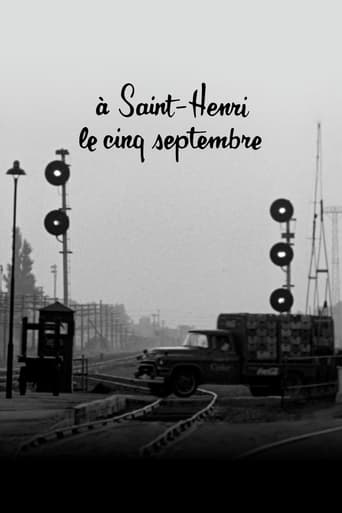
This short film is a series of vignettes of life in Saint-Henri, a Montreal working-class district, on the first day of school. From dawn to midnight, we take in the neighbourhood’s pulse: a mother fussing over children, a father's enforced idleness, teenage boys clowning, young lovers dallying - the unposed quality of daily life.

19 Dec 2024

Life After opens the dialogue surrounding grief and how we experience it. Through conversations with Nicola Winstanley and Carmen Galavan about what grief is and how it affects us, we learn what it really means to live a life after.

12 Sep 1987

Considered one of Canada's most important women artists of the second half of the 20th century, Joyce Wieland's art embodies the essence of her homeland, feminism, and ecology. Artist on Fire: Joyce Wieland captures the vibrant spirit of this painter, collagist, quilt maker, and filmmaker. In the early '70s, Wieland was involved in filmmaking, producing movies with a political message. In her 30-year career, she worked in a variety of mediums, including cloth, pastels, colored pencil, oils, bronze, and watercolor. Her works and her influence are examined in this detailed video portrait.

10 Jun 2003

Director Elisapie Issac's documentary is a sort-of letter to her deceased grandfather addressing the question of Inuit culture in the modern world.

23 Jan 2009

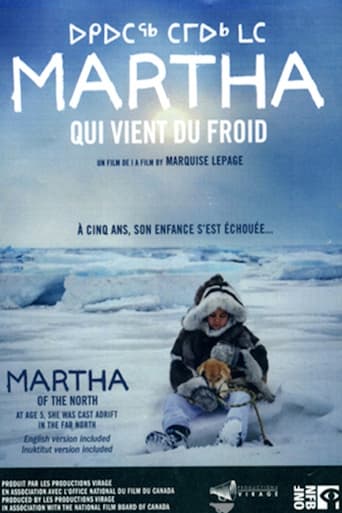
In the mid-1950s, lured by false promises of a better life, Inuit families were displaced by the Canadian government and left to their own devices in the Far North. In this icy desert realm, Martha Flaherty and her family lived through one of Canadian history’s most sombre and little-known episodes.

11 Sep 2021

Murray Sinclair's acceptance speech for an award in honor of his role as chair of the Truth and Reconciliation Commission of Canada, intercut with the testimonies of survivors of the Indian residential school system.

06 Jun 1999

Three Filipino families struggle to rebuild their lives in Canada after years of separation. The third part of a trilogy on the impact of labour migration, including Brown Women Blond Babies and Modern Heroes Modern Slaves.Every year thousands of women enter Canada as domestic servants, the majority of them from the Philippines. Leaving their own children and families behind, they can spend many isolated years cooking, cleaning and caring for others. Sending much of their wages back home, they dream of the day their families can join them.

03 Dec 2023

A harsh winter in Canada’s Muskoka, where players face sub-zero temperatures, contrasts with New Zealand, where hockey is just starting to take root. Yet, between these two far-apart nations, there’s one thing they share: a deep love for the game of hockey.

01 May 2024

Red Fever is a witty and entertaining feature documentary about the profound -- yet hidden -- Indigenous influence on Western culture and identity. The film follows Cree co-director Neil Diamond as he asks, “Why do they love us so much?!” and sets out on a journey to find out why the world is so fascinated with the stereotypical imagery of Native people that is all over pop culture. Why have Indigenous cultures been revered, romanticized, and appropriated for so long, and to this day? Red Fever uncovers the surprising truths behind the imagery -- so buried in history that even most Native people don't know about them.

18 Oct 1991

This large format film explores the last great wilderness on earth. It takes you to the coldest, driest, windiest continent, Antarctica. The film explores the life in Antarctica, both for the animals that live their and the scientist that work there.

01 Jan 1977

Crash 'n' Burn is an experimental film shot in and named after Toronto, Ontario's first punk rock club. (Not to be confused with Peter Vronsky's similarly titled 1977 documentary on the Toronto punk scene made for the CBC television network.) The film, shot on 16mm black-and-white stock, features performances by Dead Boys, Teenage Head, The Boyfriends, and The Diodes".
01 Jan 2004
"Adrift" is shot on the arctic island of Spitzbergen and in Norway. It combines time-lapse photography with stop-motion animation of the landscape. Through camera-angles and framing the film gradually dislocates the viewer from a stable base where one loses the sense of scale and grounding.

30 Mar 2023

Renowned Inuit lawyer Aaju Peter has long fought for the rights of her people. When her son suddenly dies, Aaju embarks on a journey to reclaim her language and culture after a lifetime of whitewashing and forced assimilation. But can she both change the world and mend her own wounds?