17 Aug 2016
Cycologic
And urban planner's journey to making the impossible possible.
A film about "the father" of Malmö Eric Svenning and how the city has developed during his time.

Himself
17 Aug 2016
And urban planner's journey to making the impossible possible.
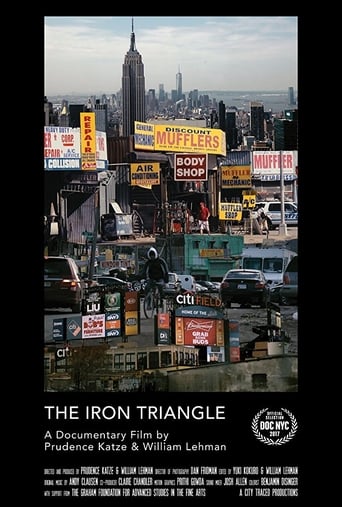
11 Nov 2017
Targeted for several failed redevelopment plans dating back to the days of Robert Moses, Willets Point, a gritty area in New York City known as the “Iron Triangle,” is the home of hundreds of immigrant-run, auto repair shops that thrive despite a lack of municipal infrastructure support. During the last year of the Bloomberg Administration, NYC’s government advanced plans for a “dynamic” high-end entertainment district that would completely wipe out this historic industrial core. The year is 2013, and the workers of Willets Point are racing against the clock to forestall their impending eviction. Their story launches an investigation into New York City’s history as the front line of deindustrialization, urban renewal, and gentrification.

26 Apr 2010
Make No Little Plans: Daniel Burnham and the American City reveals the fascinating life and complex legacy of architect and city planner Daniel Hudson Burnham. In the midst of the late nineteenth century urban disorder, Burnham offered a powerful vision of what a civilized American city could look like, one that provided a compelling framework for Americans to make sense of the world around them. A timely, intriguing story in the American experience, Make No Little Plans explores Burnham's impact on the development of the American city as debate continues today about what urban planning means in a democratic society.
01 Jan 1971
This feature documentary takes a look at how the Halifax/Dartmouth community in Nova Scotia was stimulated by a week-long session held by a panel of specialists from different fields who met with members of this urban community to consider the future of the area and the responsibility of the citizens and government in planning the future.
23 Sep 1927
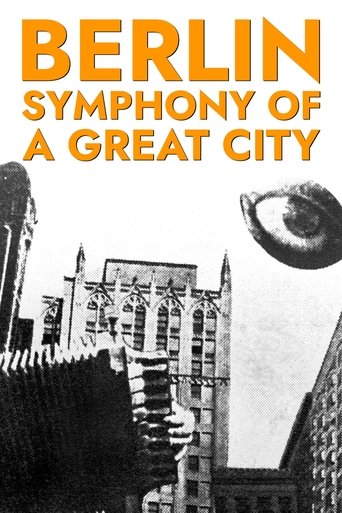
A day in the city of Berlin, which experienced an industrial boom in the 1920s, and still provides an insight into the living and working conditions at that time. Germany had just recovered a little from the worst consequences of the First World War, the great economic crisis was still a few years away and Hitler was not yet an issue at the time.
30 May 2007
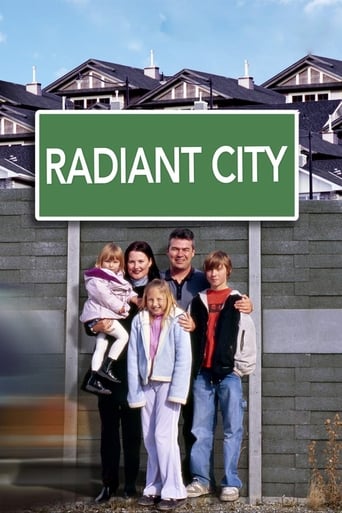
Since the end of World War II, one of kind of urban residential development has dominate how cities in North America have grown, the suburbs. In these artificial neighborhoods, there is a sense of careless sprawl in an car dominated culture that ineffectually tries to create the more organically grown older communities. Interspersed with the comments of various experts about the nature of suburbia

09 Mar 2023
No overview found
17 Dec 1963
A boat trip in the Helsinki archipelago: images of water, light and people on the cruise. The same people are met in the city in different situations: at work, with their family, in conversations with a circle of friends, meditating and figuring out their duties. Work and aspirations are important and encouraging to them. They all seem to have something personal to say about their time, their views and their imaginations.
01 Jan 1973
A short documentary about urban planning and the harmonisation of old and new building elements in Jerusalem of the 1970's, led by the architect Moshe Safdie.
26 Mar 1979
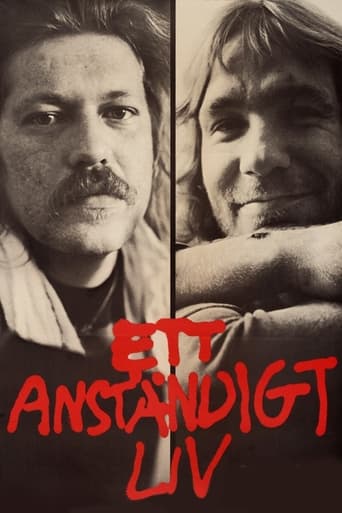
A decade has gone by and the spirit of the preceding film, Dom kallar oss mods, has disappeared. Kenta is an alcoholic and lives with his girlfriend Eva. Together they have a son, Patric. Kenta's mom is in jail for manslaughter and Kenta goes to Kronoberg to greet her. Heroin also comes to play and Stoffe is one of those who falls victim to it. He lives with his girlfriend Lena and their young son, Janne. Lena later throws Stoffe out their home when she gets enough of his abuse, and he is forced to live with his mother. Kenta calls Stoffe and decides to meet him, and he tries to persuade him to give up heroin, but the two have a falling out and they separate. This film features other users from the previous film, such as Jajje and Kenta Bergkvist. The film ends with the death of a prominent person in the trilogy.
02 Apr 1993
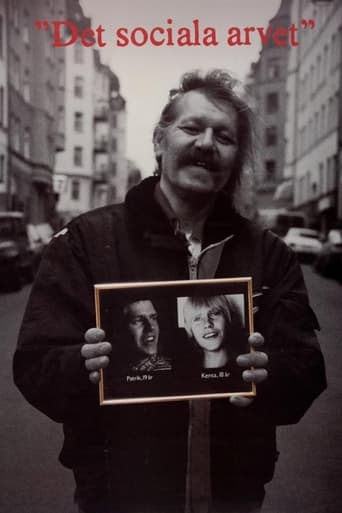
Misfits to Yuppies is the last of three films (Dom kallar oss mods, Ett anständigt liv, Det sociala arvet) that shows conditions for addicts in Stockholm and try to find out how social legacy have been transferred to their children from previous films.
07 Mar 2006
The Erie Canal was an engineering marvel in its time and remains so today. This documentary travels from Palmyra to the Genesee River, stopping along the way to visit the people and places that make the canal so special. Canal historian Thomas Grasso offers insight into the canal’s past while the Golden Eagle String Band provides the music track.
06 Aug 2006
Highlighting the canal’s quiet beauty and fascinating people, Part 2 travels from the Genesee Waterways to Spencerport, Brockport, Holley, and Lockport– taking to the trails and the water, on everything from the historic Sam Patch tour boat to Luxury cabin cruisers. Dr. William Hullfish, a SUNY Brockport associate professor, musician and the expert in Erie Canal Songs.
01 Jan 1974
In the city of Saskatoon, Saskatchewan, an effective government policy of controlling land investment prevents speculation, keeps land prices down, and provides a good balance between commercial, residential and public areas.

10 Nov 2022
Devastating hurricanes, torrential rains, the inexorably rising waters: coastal megacities are now up against the wall. The filmmakers have chosen three emblematic cities: New York, Singapore and Rotterdam. Cities that each face unique problems and must revisit their relationship with water in order to survive on the long run. In 50 years, all surge barriers in the world will be out of order. What solutions will then remain for coastal cities?
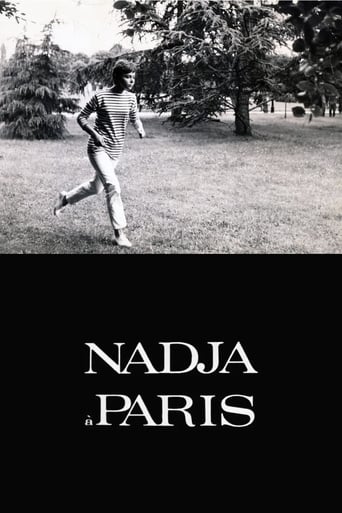
01 Jan 1964
Nadja is a guest student, who stays at Cité Universitaire and visits the Sorbonne, while preparing a thesis on Proust; she also likes to stroll about Paris.

16 Jun 2021
Amina, Sami and Jennyfer are high school students in the Paris suburbs, in 93. At the initiative of 3 of their teachers, they embark on an unexpected investigation into a gigantic leisure park project which involves concreting agricultural land near their homes. But can we have the power to act on a territory when we are 17 years old? Funny and intrepid, these new citizens take us to meet residents of their neighborhood, property developers, farmers and even elected officials of the National Assembly. A joyful quest that challenges conventional wisdom and revives our connection to the land!
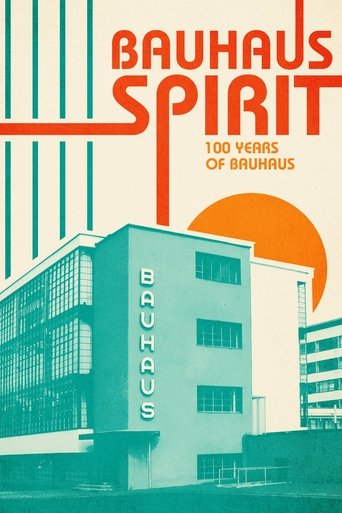
26 Apr 2018
Founded in 1919 by Walter Gropius, Bauhaus was supposed to unite sculpture, painting, design and architecture into a single combined constructive discipline. It is a synthesis of liberated imagination and stringent structure; cross-medial concepts that embellish and enrich our existence, illumination and clarity, order and playfulness. But Bauhaus was never just an artistic experiment. Confronted with the social conditions of that particular time, as well as the experience of WWI, the movement concerned itself with the political and social connotations of design from the very outset. Hence, Bauhaus history is not just the history of art, but also the history of an era that stretches from the early 20th century to the modern day.
06 Jul 1993
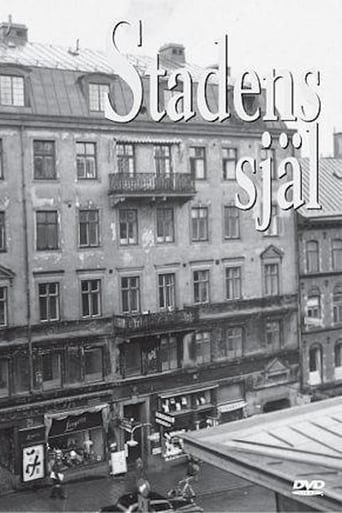
No overview found
03 Jul 2023
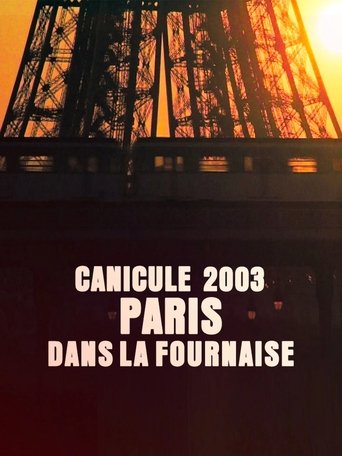
The heatwave of 2003 remains etched in our memories. We remember an angry emergency doctor, crowded hospital corridors, and a health minister in a polo shirt who seemed completely out of touch with reality. Between August 1 and 20, 2003, the heatwave claimed 15,000 lives. One in three victims lived in the Ile-de-France region, which was hardest hit by this deadly heatwave. This tragedy revealed many shortcomings. First, the lack of preparedness of the public authorities to deal with such a health crisis. Second, the way in which the elderly are treated. Climatologists estimate that from 2050 onwards, the summer of 2003 will be the norm. Hyper-urbanization, poor insulation in homes, and a lack of green spaces are all factors that exacerbate the effects of high temperatures.