01 Jan 1983
Brian Winston Reads the TV News
This live show features the energetic analysis of television network news by Brian Winston. Winston looks at the news as a unique institution, governed by its own conventions and constraints.

Ever go down a google wormhole?
The funniest thing happened to me the other day...
01 Jan 1983
This live show features the energetic analysis of television network news by Brian Winston. Winston looks at the news as a unique institution, governed by its own conventions and constraints.
01 Jan 1985
An auto-documentary about a disenfranchised Everyman and his struggle to re-integrate himself into society. He fails and turns to crime.
01 Jan 1989
A woman's body communicates with its surroundings; it is a receptor of the macrocosm that bears traces of all other laws, including even the physiology with all its energetic zones. This is the energy that corresponds to spiritual experiences, which also depend on the body technique. The communicability can be understood, among other things, as one of the variations of the functioning of the body within the sequential regime of signs.
01 Jan 1998
These 131 video monitors stacked in a grid present simultaneous, continuous footage of the German artist during the last year of his life. In this filmed diary-project that Dieter Roth executed while convalescing in Reykjavik and Basel, we see him not only working in his studio but also while he sleeps, bathes, and uses the bathroom. It is nearly impossible to pay attention to only one video without becoming distracted by an unexpected sound or movement coming from one of the many other screens. Each monitor broadcasts a different point in the artist's daily routine, while the gridlike arrangement of monitors reinforces a sense of order and chronology.
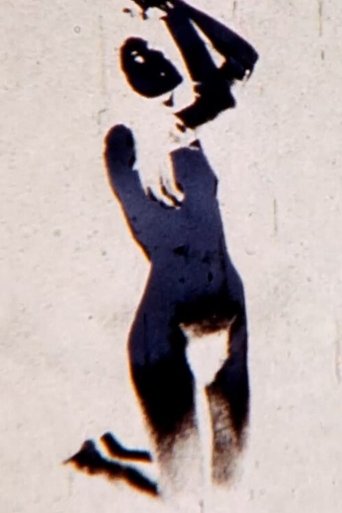
01 Jan 1970
A 1970 projection of what may come when pollution over powers nature.
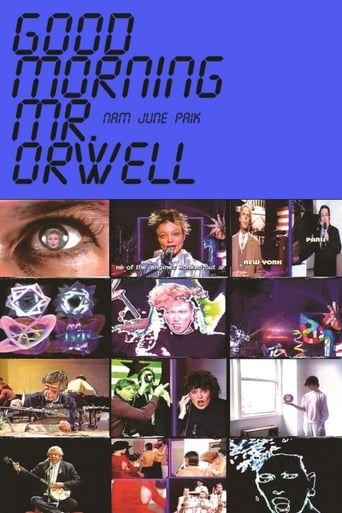
01 Jan 1984
In his book "1984", George Orwell saw the television of the future as a control instrument in the hands of Big Brother. Right at the start of the much-anticipated Orwellian year, Paik and Co. were keen to demonstrate satellite TV's ability to serve positive ends-- Namely, the intercontinental exchange of culture, combining both highbrow and entertainment elements. A live broadcast shared between WNET TV in New York and the Centre Pompidou in Paris, linked up with broadcasters in Germany and South Korea, reached a worldwide audience of over 10 or even 25 million (including the later repeat transmissions).
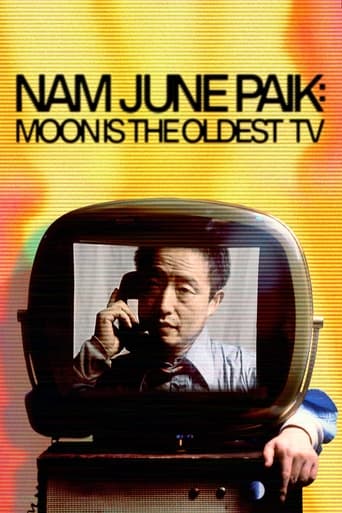
24 Mar 2023
The quixotic journey of Nam June Paik, one of the most famous Asian artists of the 20th century, who revolutionized the use of technology as an artistic canvas and prophesied both the fascist tendencies and intercultural understanding that would arise from the interconnected metaverse of today's world.
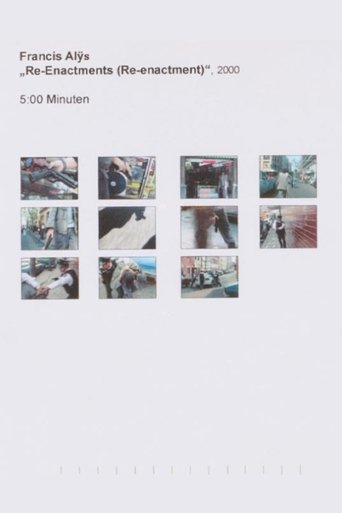
08 Aug 2000
For this work Alÿs purchased a gun in Mexico City then walked through the city streets with the weapon in his hand. After eleven minutes he was arrested by the police. The following day he repeated the action, this time in cooperation with the police. By presenting a record of this dramatic action alongside footage of its reenactment, Alÿs blurs the boundaries between documentation and fiction. Questioning the concept of authenticity, this work demonstrates “how media can distort and dramatize the immediate reality of a moment,” the artist has said. Gallery label from Francis Alÿs: A Story of Deception, May 8–August 1, 2011.
01 Jan 1982
An expedition to a peculiar small town where even the swans swim backwards and water in puddles is antimatter.
01 Jan 1978
The artist is balancing a video-camera on a tripod the top of which is poised in the palm of his hand. The lens of the camera is directed downwards so that it acts the part of witness and hostage of the action at the same time. Although the camera, together with the hand holding it, is keeping moving, it is seemingly staying still, and the floor the author is standing on appears to be sliding away. The video lasts as long as the artist retains the control over the equilibrium of the camera.
01 Jan 2002
Fellow violinist and artist Tony Conrad, in collaboration with software engineer Tom Demeyer, made for Steina the instrument seen in this title. Conrad and the Vasulkas all taught at the University at Buffalo in the Media Study Department from 1976 to 1979.
12 Nov 2020
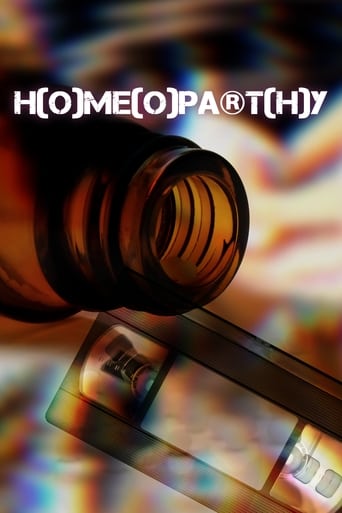
H(o)me(o)pa®t(h)y is a home entertainment healing system based on Homoeopathic medicine which one can at least to a certain extent autonomously manage as first aid tool, if you are skilled enough. As an allusion to David Cronenberg's Videodrome where the president of a trashy TV channel, Max Renn is desperate for new programming to attract viewers by establishing a new TV show dedicated to torture and punishment, H(o)me(o)pa®t(h)y instead is based on joy and healing. But will there be an overdose of globules? Insert 1 globules and start your solo home party! Cure yourself on so many occasions and relive a full relief. Your own H(o)me(o)pa®t(h)y kit is now available. Don't worry, be homoeopathic!
19 Nov 1993
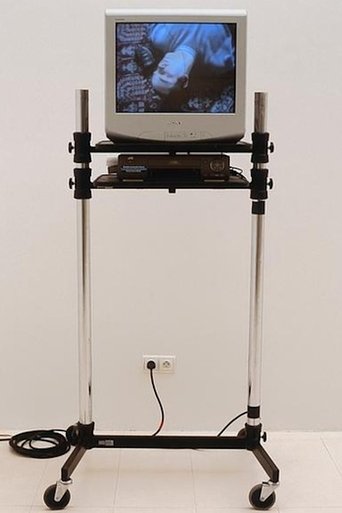
In the present work, the artists appears lying on his back, his eyes mostly closed, dreamingly listening to a walkman that plays, a recording of 'The Best of Lou Reed and the Velvet Underground'. The artist can hear the music through his earphones, but as viewers we are only privy to the sound of his voice that whispers the melody. As we listen to the hypnotic interpretion of the familiar songs - as emblematic for pop music history as 'Psycho' is for film - we are forced to mentally 'reconstruct' the remaining orchestration, instrumentation and vocals. We must attempt to reassemble something we already know to be a fact by negotiating the sticky mess of interpretation, meaning, and memory.
23 Apr 2023
Experimental video art compiled from video taken on an LG Env3 flip phone circa 2009-2010
01 Jan 2010
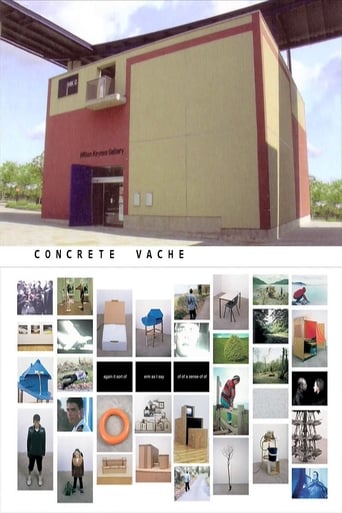
Made for Milton Keynes Gallery's 10th anniversary using images from its archive and language from its press releases and catalogues.
06 Nov 2024
No overview found
01 Jan 2006
Pia Yona Massie's Sayonara Super 8 uses personal archival footage to ask questions about the fragile nature of memory, human relationships and the foibles of the medium itself.
01 Jan 1979
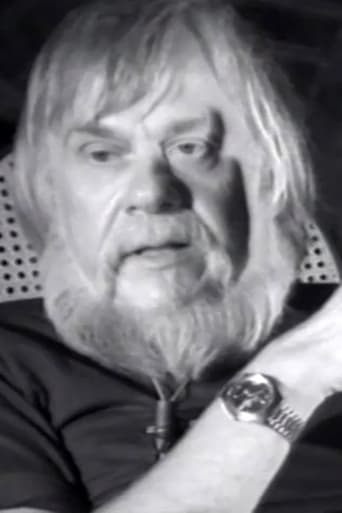
From his photo-text canvases in the 1960s to his video works in the 1970s to his installations in the 1980s, John Baldessari’s (b.1931) varied work has been seminal in the field of conceptual art. Integrating semiology and mass media imagery, he employed such strategies as appropriation, deconstruction, decontextualization, sequentiality, and text/image juxtaposition. With an ironic wit, Baldessari's work considers the gathering, sorting, and reorganizing of information. “Something that is part of my personality is seeing the world slightly askew. It’s a perceptual stance. The real world is absurd sometimes, so I don’t make a conscious attempt, but because I come at it in a certain way, it seems really strange,” Baldessari says in this interview with Nancy Bowen. A historical interview originally recorded in 1979 and re-edited in 2003 with support from the Lyn Blumenthal Memorial Fund.
01 Sep 1995
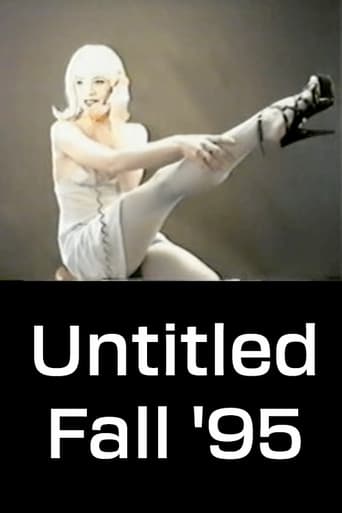
Untitled Fall '95 takes the form of a wryly humorous video diary of an art school student (sharply played by Bag) in the midst of “finding herself” in New York City. We can see the diarist physically and emotionally evolving throughout her eight semesters in the Big Apple. Such onscreen “confessionals” stem from the first major example of reality TV, The Real World. Interspersed throughout are commercial-like vignettes that further critique what it’s like to live in the world today. In Untitled Fall '95, Bag displays a profound self-awareness that evokes empathy on behalf of the viewer, despite her work’s glaring artificiality.
23 May 2022
Experimental video art shot in the Wallingford neighborhood of Seattle