31 Oct 2014
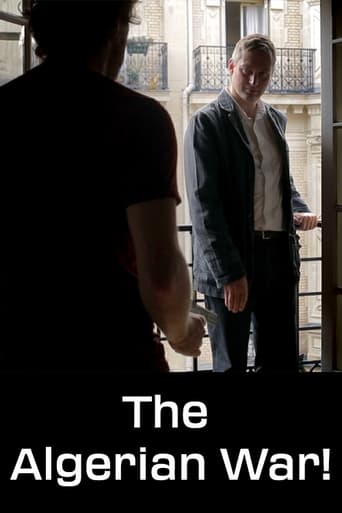
The Algerian War!
In a single static shot a man is threatened with death at another's gunpoint.

In search of his roots, each revelation shakes up his identity.
A woman has a close bond with her beloved Algeriann grandfather, who protected her from a toxic home life as a child; his death triggers a deep identity crisis as tensions between her extended family members escalate, revealing new depths of resentment and bitterness.

Caroline

François

Kevin

Lilah

Françoise

Ali

Matteo

Neige
Son of Neige
Son of Neige
Son of Neige
The Caregiver

The Director of the EHPAD
The Young Woman from the Funeral Home
The Derbuka Player
The Woman in the Hammam

The Man from the Consulate
Dr. Châtelet

Emir Fellah

Nurse (voice)
31 Oct 2014
In a single static shot a man is threatened with death at another's gunpoint.
02 Jan 1982
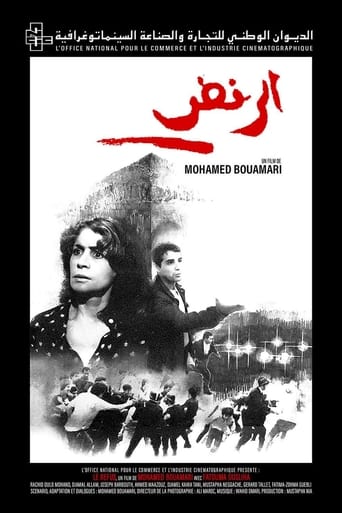
In 1971, the Algerian government nationalized hydrocarbons. The consequences of this decision on the community of Algerians in France are numerous. The Galti family is prey to these economic problems. The father, Khaled, former member of the F.L.N. in France, does not escape the sentence. Sharazade, his wife and comrade in combat, finds herself torn between her role as wife, mother and nostalgia for a country and a bygone past. As for his son Karim, a victim of socio-cultural division, all he has left is refusal.
14 Jan 2015
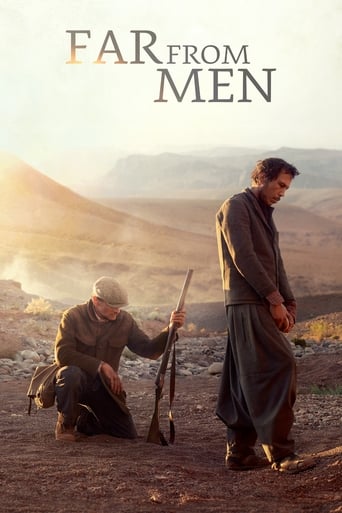
A French teacher in a small Algerian village during the Algerian War forms an unexpected bond with a dissident who is ordered to be turned in to the authorities.
03 Jul 2012
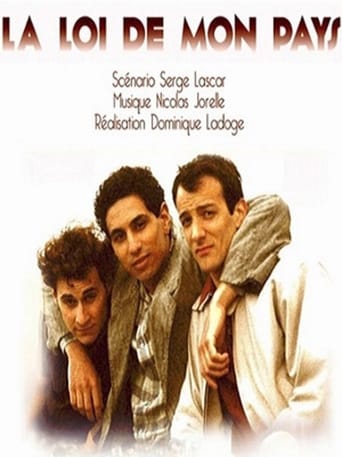
Algeria. Benjamin, Kateb and Antoine are three teenagers from three religious backgrounds who never should have met. But they share the same passion for football and the same disregard for the disapproving looks which their unusual friendship draws.
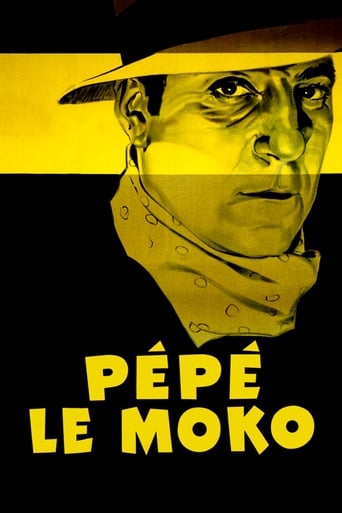
28 Jan 1937
Pépé le Moko, one of France's most wanted criminals, hides out in the Casbah section of Algiers. He knows police will be waiting for him if he tries to leave the city. When Pépé meets Gaby, a gorgeous woman from Paris who is lost in the Casbah, he falls for her.
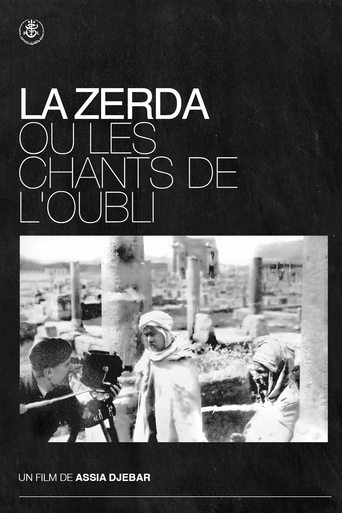
27 Feb 1983
“La Zerda and the songs of oblivion” (1982) is one of only two films made by the Algerian novelist Assia Djebar, with “La Nouba des femmes du mont Chenoua” (1977). Powerful poetic essay based on archives, in which Assia Djebar – in collaboration with the poet Malek Alloula and the composer Ahmed Essyad – deconstructs the French colonial propaganda of the Pathé-Gaumont newsreels from 1912 to 1942, to reveal the signs of revolt among the subjugated North African population. Through the reassembly of these propaganda images, Djebar recovers the history of the Zerda ceremonies, suggesting that the power and mysticism of this tradition were obliterated and erased by the predatory voyeurism of the colonial gaze. This very gaze is thus subverted and a hidden tradition of resistance and struggle is revealed, against any exoticizing and orientalist temptation.
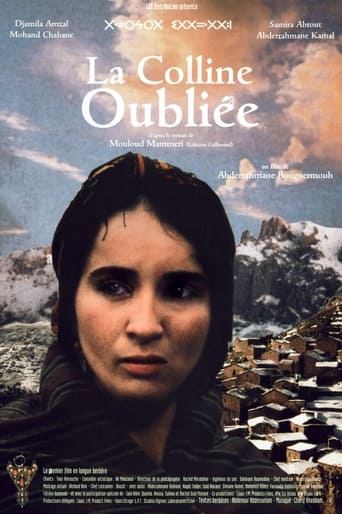
19 May 1996
At the outbreak of the Second World War, two friends, Mokrane and Menach, abruptly interrupt their studies and return to their remote native Kabylian village of Tagsa. While waiting to be drafted into the French Army they have time to woo. Mokrane falls for beautiful Aazi and soon marries her only to find out that she can bear no child. Menach, on his part, is stongly attracted to Davda, but the latter is already married to a rich merchant...Happiness does not seem to be in store for the two former students...

01 Jan 1995
In Kabylie, rude mountain region in the north of Algeria. Arezki finds the young Larbi exhausted, buried under the snow. He takes him in and nurses him until he's recovered. The host seduces Arezki's daughter. She is pregnant. This is an unsupportable shame to the father of the female sinner. Arezki claims vengeance. He leaves his house and takes the oath not to come back before having killed Larbi who betrayed him under his own roof.

09 Dec 1958
Djamila, a young Algerian woman living with her brother Hadi and her uncle Mustafa in the Casbah district of Algiers under the French occupation of Algeria, sees the full extent of injustice, tyranny and cruelty on his compatriots by French soldiers. Jamila's nationalist spirit will be strengthened when French forces invade her university to arrest her classmate Amina who commits suicide by ingesting poison. Shortly after the prominent Algerian guerrilla leader Youssef takes refuge with her, she realizes that her uncle Mustafa is part of this network of anti-colonial rebel fighters. Her uncle linked her to the National Liberation Front (FLN). A series of events illustrate Jamila's participation in resistance operations against the occupier before she was finally captured and tortured. Finally, despite the efforts of her French lawyer, Jamila is sentenced to death...
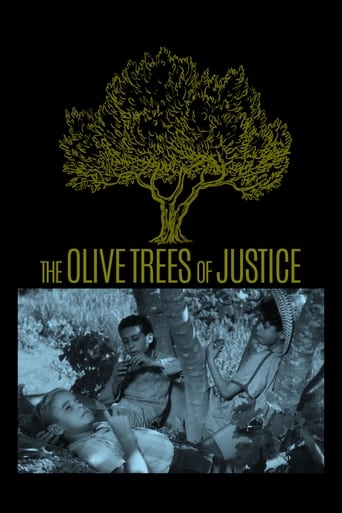
06 Jun 1962
The son of a French colonialist in Algeria returns to Algeria after learning that his father is ill. Memories from childhood return. He also must deal with some problems involving the Algerian fight for independence.
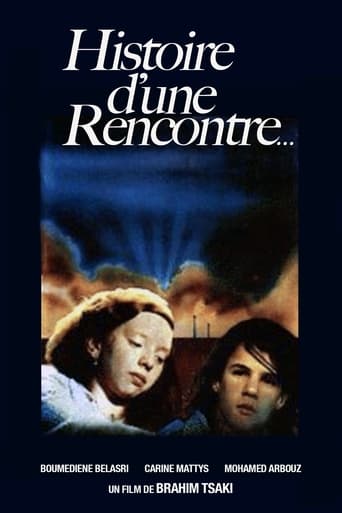
02 Jan 1985
Two deaf and dumb children. She is the daughter of an American Oil engineer. He is the son of an Algerian farmer. They meet and manage to communicate, transcending all the cultural barriers that separate them.
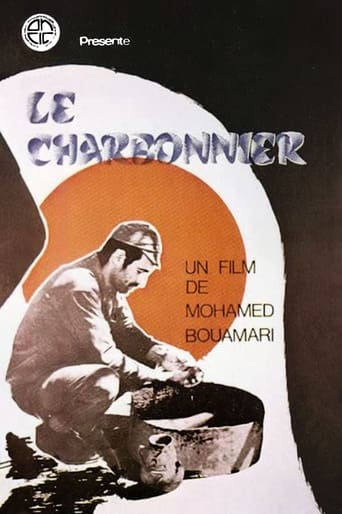
02 Jan 1973
Film describes the miserable existence of a charcoal-burner who is barely able to feed his family. His search for work in town ends in failure and he is forced to return to his village.
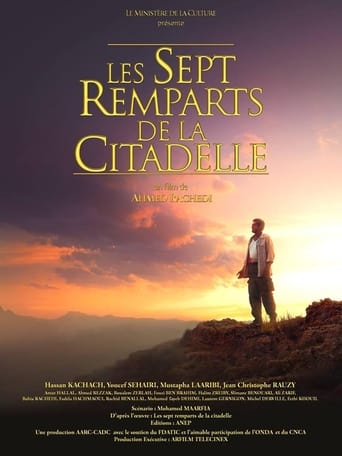
01 Jan 2018
The feature film “The seven ramparts of the citadel”, a fiction recounting the conflict between an Algerian family expropriated from its land and a bloodthirsty settler; by director Ahmed Rachedi. Adapted from the eponymous novel by Mohamed Maarafia, the film, whose plot begins in 1954, tells the story of two characters, Thebti and Lucien, “the fellaga and the colonist”, a story of crossed destinies. “After having engaged in a fight to the death, after having both traveled a long path of embers, (they) finally find themselves face to face and above all each face to themselves”.
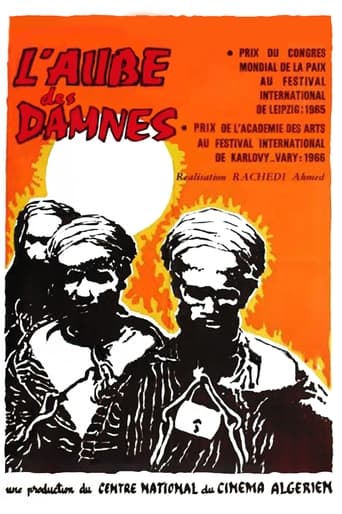
05 Jul 1965
This excellent feature-length documentary - the story of the imperialist colonization of Africa - is a film about death. Its most shocking sequences derive from the captured French film archives in Algeria containing - unbelievably - masses of French-shot documentary footage of their tortures, massacres and executions of Algerians. The real death of children, passers-by, resistance fighters, one after the other, becomes unbearable. Rather than be blatant propaganda, the film convinces entirely by its visual evidence, constituting an object lesson for revolutionary cinema.
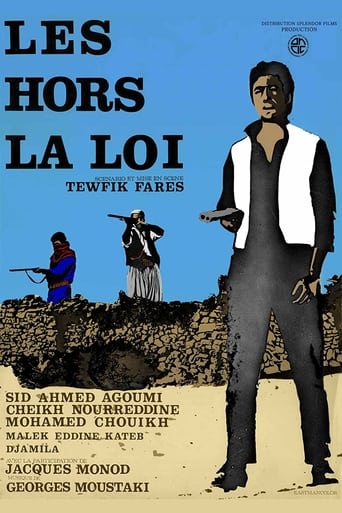
01 Jan 1969
In prison in colonial Algeria, shortly after the end of the Second World War, three indigenous cellmates make out. Once free, they attack the authority represented by the triad of the boss, the gendarme and the administrator. “Living the colonial condition,” confided Tewfik Farès, “is something! It’s not sociologically or historically speaking. It’s life. And I think that’s all there in it. [...] For a hundred and thirty years, we wait. We hold back. We push back. We hope. At the same time, on different occasions, there are skirmishes, unrest.

07 Jun 2005
Parisian authorities clash with the Front de Libération Nationale (FLN) in director Alain Tasma’s recounting of one of the darkest moments of the Algerian War of Independence. As the war wound to a close and violence persisted in the streets of Paris, the FLN and its supporters adopted the tactic of murdering French policemen in hopes of forcing a withdrawal. When French law enforcement retaliated by brutalizing Algerians and imposing a strict curfew, the FLN organizes a peaceful demonstration that drew over 11,000 supporters, resulting in an order from the Paris police chief to take brutal countermeasures. Told through the eyes of both French policemen as well as Algerian protestors, Tasma’s film attempts to get to the root of the tragedy by presenting both sides of the story.
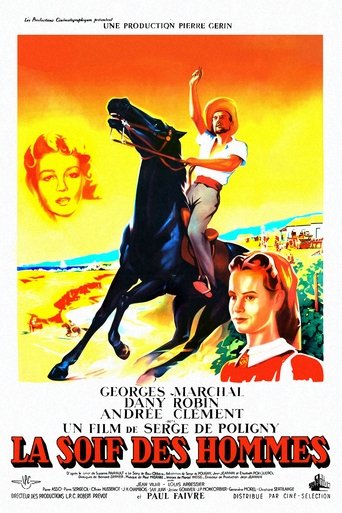
31 Mar 1950
During the colonial period in Algeria, Sergeant Bouvard helps Broussole and his two daughters, Alise and Julie, settle in Hassi Ben Okba. Demobilized, he plants vines with them. Seduced by Julie's charms, he nevertheless marries Alise because she owns the land. He protects Julie from all her lovers but cheats on Alise with Adèle, a settler's wife. Unable to bear it any longer, he runs away with Julie to Oran. The death of his father brings him back to Bou-Okba. He stays with Alise until the day when, selling his wine in Oran, he is taken over by his passion. It is Julie who will tell him to resume married life and start a family of settlers.
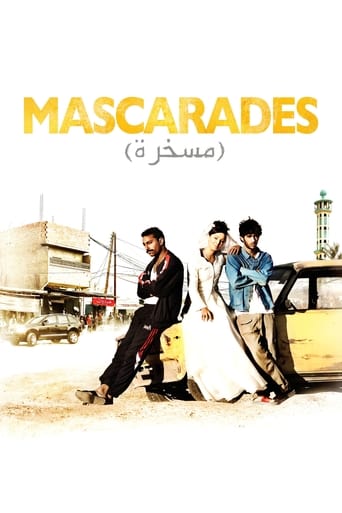
25 Nov 2008
Mounir Mekbek lives with his family in a small village in the heart of the Algerian countryside. Very proud and sure of himself, he has only one dream- to finally be appreciated by his fellow villagers. Screwing up his carefully maintained image is his headstrong, narcoleptic sister Rym who falls asleep anywhere and whom the village is convinced will end up a spinster. One evening, Mounir returns from town drunk and announces that he's found a suitor for his sister. The fake story snowballs and snowballs until the suitor morphs into a rich, blonde Australian. The village begins preparing for the wedding in earnest - but without a bridegroom in sight.
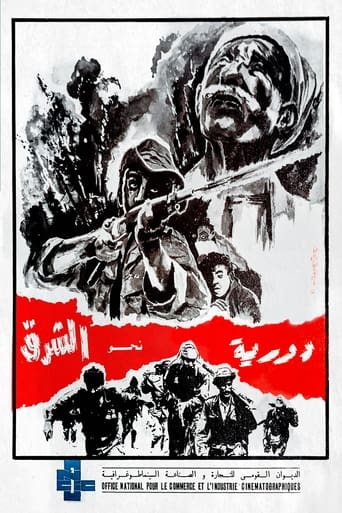
02 Jan 1971
The film traces the story of a patrol of the Algerian National Liberation Army (ALN), whose mission is to transport a prisoner French soldier to the Tunisian border. Through the march of this group of guerrillas we witness the spirit of sacrifice and combativeness of these men from the people. The patrol will be decimated, but a young peasant will take over and complete the mission.
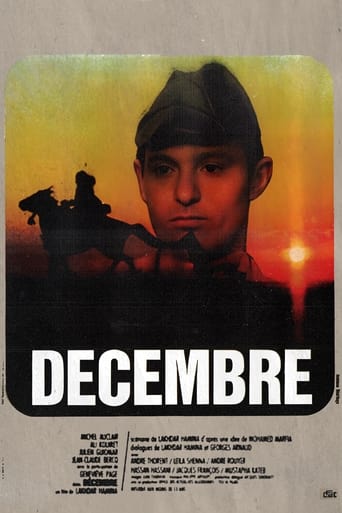
02 Jan 1973
In Algiers, during the Algerian War of Independence, one of the leaders of the FLN was arrested by the French colonial army, which used the most violent methods to make the prisoners speak. The use of torture poses a conscience problem for a French officer. Playing shot-reverse-shot, between the tortured and his torturer, in a suffocating camera, Mohammed Lakhdar-Hamina approaches torture by drawing inspiration from the story of his father, who died of abuse.