17 Dec 2019
Proyecto Ibera
No overview found

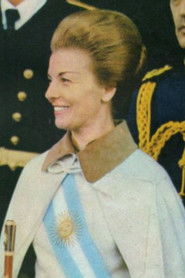
María Estela Martínez, better known as Isabel Perón, achieved what Evita Perón never could: From an unknown cabaret dancer she became the first female president of the Americas. But after surviving prison and exile under South America’s most brutal military dictatorship, Isabel was forgotten in popular memory. “Una casa sin cortinas” (A House Without Curtains) uncovers why Isabel still haunts Argentina today.

Herself
Himself
Himself
Ella misma (Material de archivo)
himself
himself
herself
himself
herself

himself
himself
herself
herself
himself
himself
himself
himself
himself
himself
himself
17 Dec 2019
No overview found

21 Mar 2025
No overview found

06 Sep 2014
His teachers, coaches, childhood friends and Barça teammates, together with journalists, writers and prominent figures from the history of football, come together in a restaurant to analyze and pick apart Messi's personality both on and off the field, and to look back at some of the most significant moments in his life. Viewed from Álex de la Iglesia's unique perspective, Messi recreates the player's childhood and teenage years, from his very first steps, with a football always at his feet, through to the decision to leave Rosario for Barcelona, the separation from his family, and the role played in his career by individuals such as Ronaldinho, Rijkaard, Rexach and Guardiola.

21 Feb 2020
Images of Argentinian companies and factories in the first light of day, seen from the inside of a car, while the director reads out documents in voiceover that reveals the collusion of the same concerns in the military dictatorship’s terror.
08 Apr 2021
No overview found
09 Oct 2018
Through testimonies and images, the crude reality of human rights in Argentina in democracy is portrayed and the role of the hegemonic means of communication to make causes and protests invisible ...

08 Jun 2015
A documentary following the day life of fans in Brazil on July 13, 2014: the day when Germany and Argentina met up in the finals of FIFA World Cup.
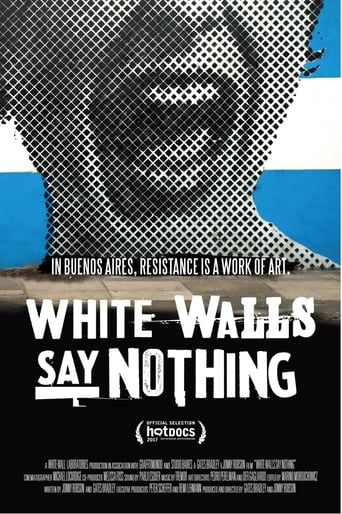
02 May 2017
Buenos Aires is a complex, chaotic city. It has European style and a Latin American heart. It has oscillated between dictatorship and democracy for over a century, and its citizens have faced brutal oppression and economic disaster. Throughout all this, successive generations of activists and artists have taken to the streets of this city to express themselves through art. This has given the walls a powerful and symbolic role: they have become the city’s voice. This tradition of expression in public space, of art and activism interweaving, has made the streets of Buenos Aires into a riot of colour and communication, giving the world a lesson in how to make resistance beautiful.
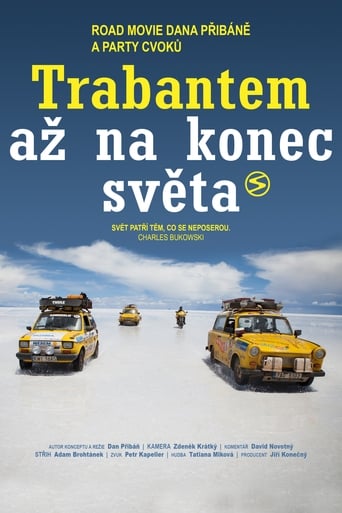
13 Mar 2014
The third installment in Dan Přibáň's series of travel documentaries describes the author's journey with his friends across South America in vehicles that are often notorious but cult in their own way. The charming dynamics of the group on screen are further enhanced by the high-quality craftsmanship.
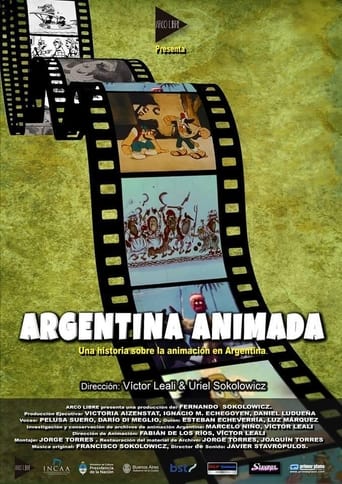
18 Oct 2018
A 3D dragon has become a 2D character. In his quest to recover, he discovers fragments of Argentine animation, new friends and teachings.
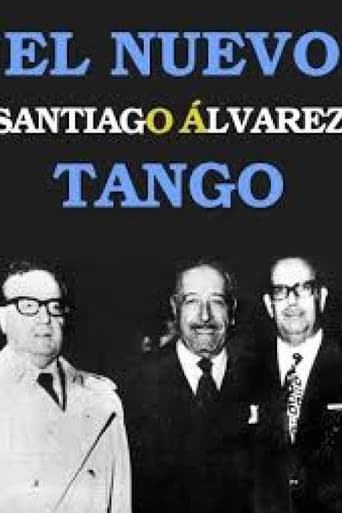
14 Mar 1973
The New Tango (El Nuevo Tango) was not shown in Argentina for a long time as it deals with the ascent of Argentinean president Hector Campora in May 1973, and features Cuban and Chilean presidents, Osvaldo Dorticos and Salvador Allende. A million people gathered on the Plaza de Mayo to acclaim the new President. One of Cámpora's first presidential actions was a granting of amnesty to political prisoners who where jailed during the dictatorship. On 28 May Argentina restored diplomatic relations with Cuba, which then received Argentine aid - such as food and industrial products - to break the United States embargo against Cuba.
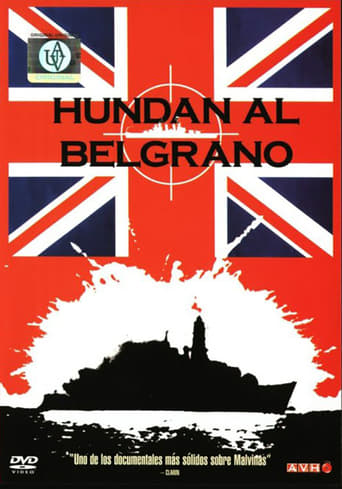
25 Apr 1996
A detailed account of each of the details of the Malvinas War based on interviews, dramatic scenes, maps and other elements of historical roots without ignoring the historical antecedents from the 18th century that ended in this confrontation.

31 Oct 2018
How a once-in-a-generation Argentina team, led by Manu Ginobili, brought down the “Dream Team” and won gold at the 2004 Olympic Games.

03 May 2018
A Journey to the Fumigated Towns is the final episode made by Fernando Solanas in a series of 8 films dedicated to the Argentinian’s crisis in the 21st century. Based on testimonies, re-creations, archives and photos, this investigative documentary reveals not only the after-effects of the soya’s model and other GMO’s grain productions with agrochemicals, on the health of the Argentinian people, but also the global and environmental consequences.
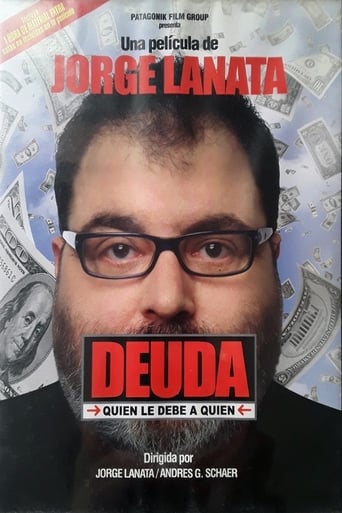
07 Oct 2004
DEBT is the story of a frantic pursuit: the search for the responsible for the televised cry of hunger of Barbara Flores, an eight-year-old Argentinean girl. Buenos Aires, Washington, the IMF, the World Bank and Davos; corruption and the international bureaucratic lack of interest.

01 Dec 2017
The villagers of El Dorado, Argentina, shy away from doctors. Then again, they hardly need one. They have almost as many cures for ailments and illnesses as there are residents in the village. 65 year old Jorge can also cure the most dreaded ailment of them all, the much feared espanto.
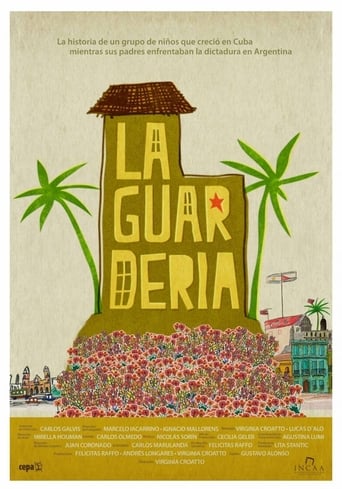
15 Nov 2015
There was a time in Argentina, not so long ago, when the army wasn't only one, official, but many and made up by civilians. In those times of courageous youths determined to fight to the death for that cause upheld around Peronism as wll as some left-wing postulates, revolutionary Cubas was a beacon of hope in the world scheme -a Montonero nation. "A House in Cuba" seeks to recover the curious adventure of a couple of Montonero parents and their small children, who were lovingly sent into exile in order for their parents to take up arms.

27 Jun 2024
Gentle or rough, blonde or shaved, cis or trans, long term inmates or those newly admitted: women re-enact their lives in a Buenos Aires prison, in trance and balance, voguing and singing. A hybrid musical and charming piece of collective empowerment.
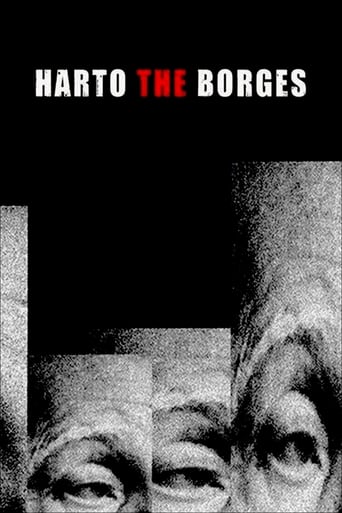
14 Sep 2000
A fragmented biography, inconclusive, partial, of the brilliant Argentinian writer Jorge Luis Borges, based on different testimonies: his links with Leonor de Acedevo —his mother— and María Kodama —his second wife—; his vast culture and devout dedication to literature, his and that of others; his country: the politicians and the disloyal military. Borges gradually builds his own impersonation of Borges.
23 Jun 1999
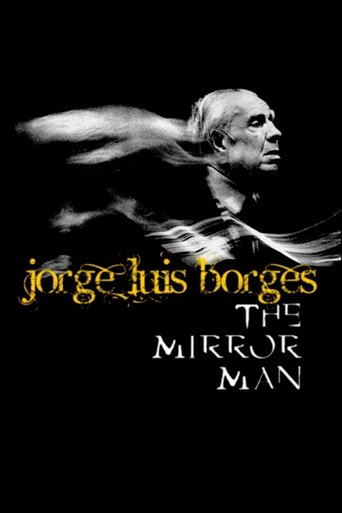
The lifetime of the great Argentinian man of letters Jorge Luis Borges through narration and interviews of such key players in his life as Leonor de Acevedo —his mother—, María Kodama —his second wife—, and Adolfo Bioy Casares —his best friend and collaborator for decades.