
09 Sep 2003
Lamp
Short documentary of David Lynch building a lamp.
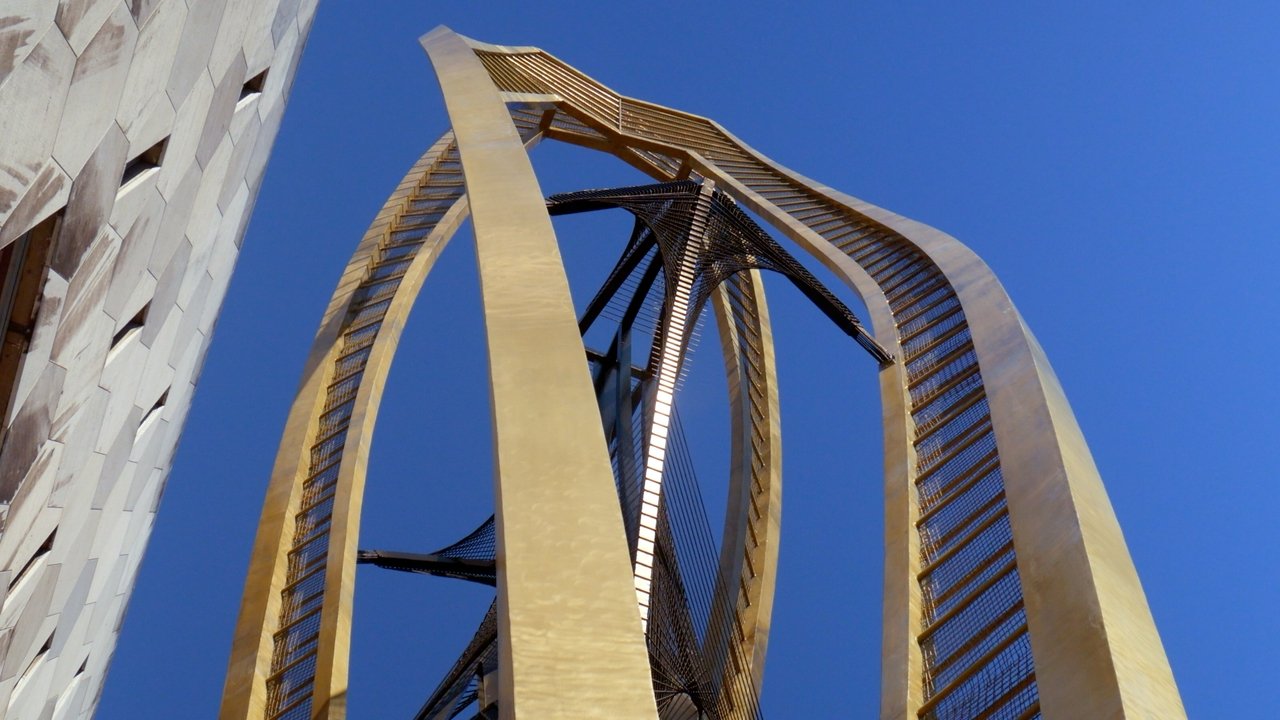
Next to the Bijenkorf on the Coolsingel stands one of Rotterdam’s most famous sculptures, an untitled structure created by Russian modernist artist Naum Gabo, that has been simply called Het Ding (The Thing). This documentary about the restoration of Naum Gabo’s nameless sculpture from 1957 combines awe-inspiring shots of this artwork with audio fragments from Gabo’s fiery Russian manifests.
09 Sep 2003
Short documentary of David Lynch building a lamp.
12 Sep 2007
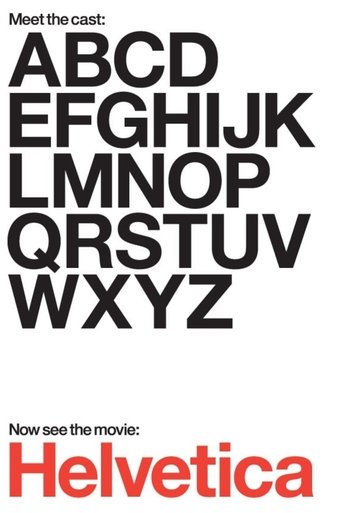
Helvetica is a feature-length independent film about typography, graphic design and global visual culture. It looks at the proliferation of one typeface (which will celebrate its 50th birthday in 2007) as part of a larger conversation about the way type affects our lives. The film is an exploration of urban spaces in major cities and the type that inhabits them, and a fluid discussion with renowned designers about their work, the creative process, and the choices and aesthetics behind their use of type.
02 Jan 1978
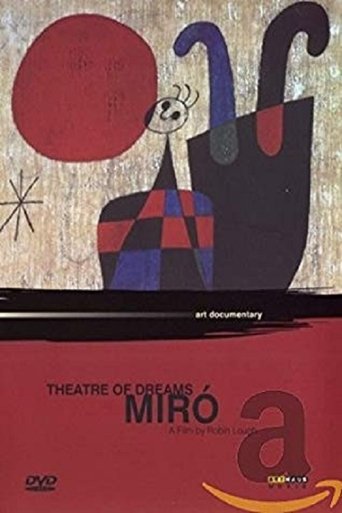
With his seemingly naïve, symbolic paintings, Joan Miró formed a new artistic language in the 20th century. Brought up in Barcelona, the painter, graphic artist and sculptor was drawn to Paris and, under the influence of the surrealists, developed his unique style and poetic imagery that unite Catalan folk art and fantastic elements. Robin Lough followed the 85-year-old Miró to theatre rehearsals and went to see him in his studio on Majorca. There he met with an amazingly creative and disciplined artist, whose visionary pictures paved the way for abstract expressionism.
14 Oct 2016
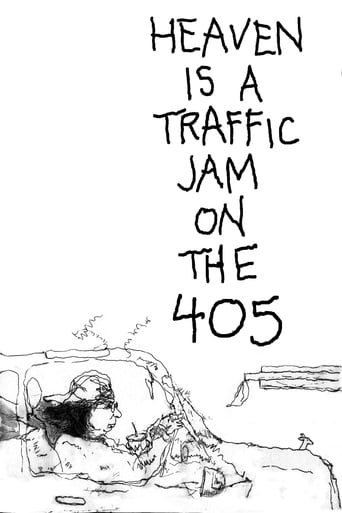
56-year-old artist Mindy Alper has suffered severe depression and anxiety for most of her life. For a time she even lost the power of speech, and it was during this period that her drawings became extraordinarily articulate.

15 Dec 2022
A short documentary on the River Ouse, following it downstream from Lewes to Newhaven, meditating on the surrounding area.

16 Nov 2017
An examination of the relationship between the life and art of Maria Martins, now recognized as one of the greatest Brazilian sculptors, in addition to her engravings and texts. The film reveals the greatness of her work and her boldness when dealing directly with the feminine perspective of sexuality, a transgression that led to attacks by Brazilian critics. In parallel, her life as the wife of an important diplomat and her connection to Marcel Duchamp, in a relationship of mutual collaboration between the two artists.
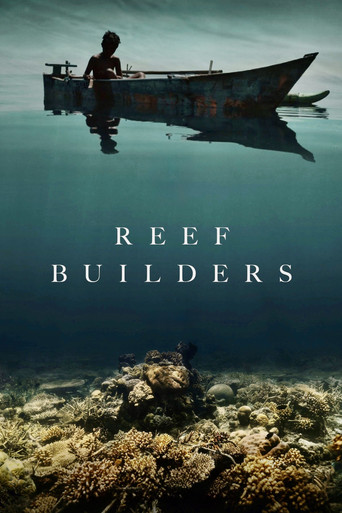
09 Mar 2025
"Reef Builders" tells the true stories of people involved in the Sheba Hope Grows program, leading major restorations to save the world’s coral reefs in the face of climate change.
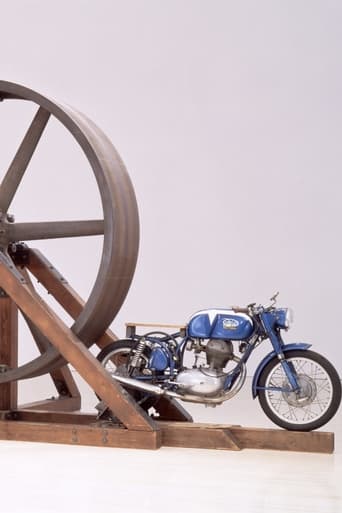
01 Jan 1980
During the 1980 exhibition of Burden's monumental kinetic sculpture The Big Wheel at Ronald Feldman Fine Arts, New York, Burden and Feldman were interviewed by art critic Willoughby Sharp. Burden articulates the process of creating The Big Wheel, a 6,000-pound, spinning cast-iron flywheel that is initially powered by a motorcycle, and discusses its relation to his earlier performance pieces and sculptural works. Addressing his motivations and the meaning of this potentially dangerous mechanical art object, Burden discusses such topics as the role of the artist in the industrial world, "personal insanity and mass insanity," and "man's propensity towards violence."
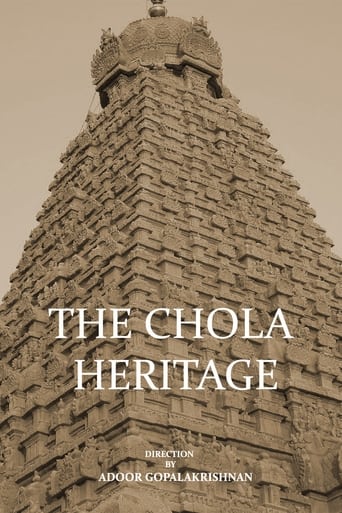
01 Jan 1980
The film highlighting the Dravidian temple architecture and bronze sculpture which attained the creative pinnacle during the rule of the Cholas in the 10th and the 11th centuries. Cholas were great temple builders. The temple of Vijayalaya Cholesvara is one of the finest examples of the early Chola style. The temple of Nagesvara at Kumbakonam is remarkable for the sculptures found in the niches of its outer walls. The Brihadesvara temple at Thanjavur is a landmark in the evolution of building art in India.Among several such unique temples, Tribhuvanam is the last important temple belonging to the Cholas. Besides temple architecture,the bronze sculpture of the Cholas holds a unique place in the field of art. One of the most important and famous of all Hindu icons,that of the cosmic dance of the Nataraja is intimately associated with the Chola bronzes.
01 Jan 1987
Guyanese painter Aubrey Williams (1926-1990) returns to his homeland on a “journey to the source of his inspiration” in this vivid Arts Council documentary, filmed towards the end of his life. The title comes from the indigenous Arawak word ‘timehri’ - the mark of the hand of man - which Williams equates to art itself. Timehri was also then the name of the international airport at Georgetown, Guyana's capital, where Williams stops off to restore an earlier mural. The film offers a rare insight into life beyond Georgetown, what Williams calls “the real Guyana.” Before moving to England in 1952 he had been sent to work on a sugar plantation in the jungle; this is his first chance to revisit the region and the Warao Indians - formative influences on his work - in four decades. Challenging the ill-treatment of indigenous Guyanese, Williams explored the potential of art to change attitudes. By venturing beyond his British studio, this film puts his work into vibrant context.
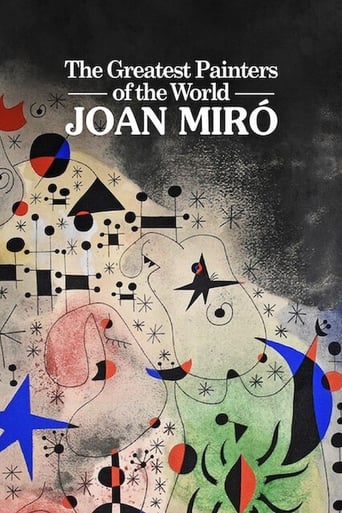
02 May 2019
No overview found
27 Jan 2012
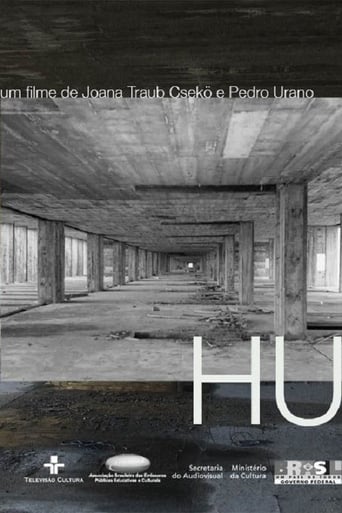
A symmetrically divided building: on one side, an important public hospital, on the other, a bewildering ruin. On the horizon, Rio de Janeiro, public health, education and Brazil’s aged modern project. Shot entirely in the monumental and only partially occupied modernist edifice of the University Hospital of UFRJ. A material metaphor of the Brazilian public sphere and its political maze. A synthesis architecturally expressed of the modernist utopia/dystopia.
30 Dec 1978
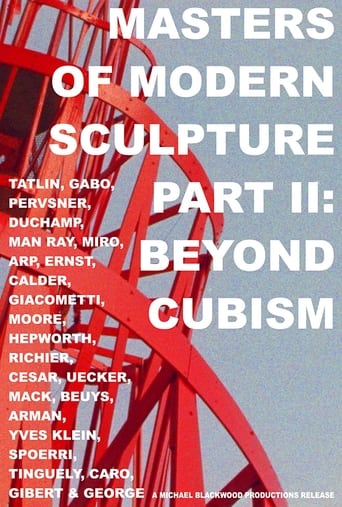
Centered around the emergence of Constructivism, Futurism, Surrealism and Dada, Beyond Cubism takes a closer look at the artists who ignited the new movements and the alterations of artistic culture brought forth by World War II. Creating out of their philosophy and ideology, artists such as Vladimir Tatlin, Barbara Hepworth and Henry Moore pushed sculpture to new limits of abstraction and possibility, feverently building on their predecessors.
31 Dec 1978
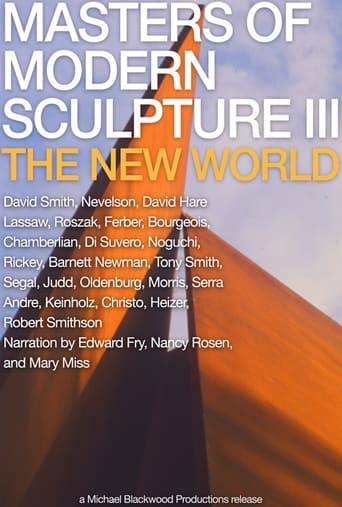
The Masters of Modern Sculpture series concludes with a look at post- World War II America, where sculpture became a deeply innovative art form. Using the objects at their disposal and the inspiration surrounding them, artists such as George Rickey, Claes Oldenburg, and Louise Nevelson cast sculptor in a new light. The New World observes the sculptors creatively utilizing wood, metals, and junkyard finds, bringing forth lively and shocking work. America's remote spaces, discarded objects and abundant materials enabled them to add to the concepts of European modernism in daringly unique ways.
01 Jan 2009
The first collaboration between Matthew Barney & Elizabeth Peyton, Blood of Two is a unique, site-specific work that draws its references from Hydra itself – the surrounding environment, animals, humans, and local traditions are all part of the project in equal measure. Blood of Two centers on the former function of the Slaughterhouse and the customs of Hydra to establish connections between paganism and religion, ancient and modern, the ritualistic and familiar. As much as its conflicted terms strive for balance and fusion, it is Blood of Two’s greater resistance to these impulses, its failure to surrender unconditionally to them that ultimately counts, as a network of overlaps and crisscrosses.

16 Oct 1909
The first meeting of a U.S. president and a Mexican president took place when William Howard Taft met Porfirio Díaz on 16 October 1909, in El Paso. The meeting was celebrated in both El Paso and Juárez with parades, elaborate receptions, lavish gifts and large crowds. Shot by the pioneers of Mexican Cinema the brothers Alva. This is a typical example of newsreel material prior to the Mexican revolution. By hemerographical references we know that this footage was presented to the then president of Mexico General Porfirio Díaz in the Castle of Chapultepec, then residence of the president.
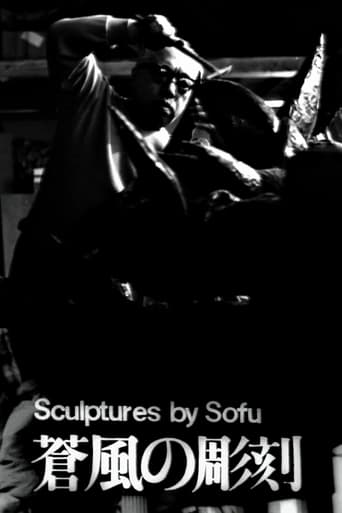
15 May 1962
A short documentary by Hiroshi Teshigahara about his father, the sculptor Sofu Teshigahara, preparing an exhibition.
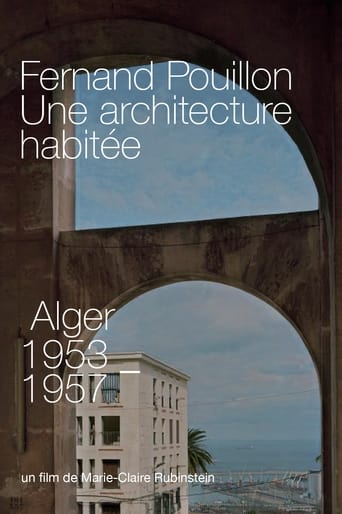
01 Jan 2017
In this documentary, Marie-Claire Rubinstein reveals to us, through the testimonies of the inhabitants who live there, the architectural achievements of the French urban planner Fernand Pouillon in Algiers. In particular the vast complexes of hundreds of social housing units, including the most famous Diar E Saâd (1953), Diar El Mahçoul (1954) and Climat de France (1957). The historical context, during the war of independence is related by the historian Benjamin Stora and Nadir Boumaza. This documentary also evokes the personality of Fernand Pouillon in a post-colonial context.
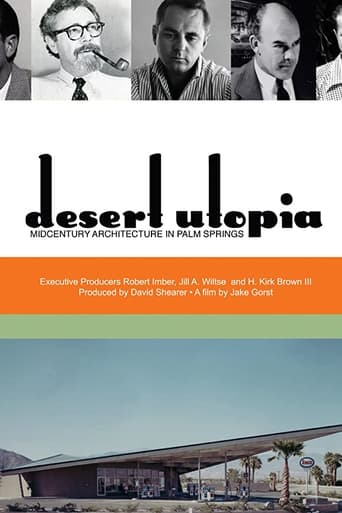
01 Jan 2010
Southern California’s Coachella Valley, including the communities of Palm Springs, Palm Desert, Desert Hot Springs, boasts hundreds of extraordinary midcentury modern homes, public buildings and commercial structures. Modern designers such as William F. Cody, Albert Frey, William Krisel, John Lautner, Richard Neutra, R.M. Schindler, Donald Wexler, E. Stewart Williams left their collective mark on this desert paradise. Desert Utopia: Mid-Century Architecture in Palm Springs traces the history of modern architecture in Palm Springs from the first bold forays into modernist design to the preservation challenges facing the region today. Director Jake Gorst’s film features rare archival images and footage as well as interviews with historians, homeowners and the architects who helped create this mecca of modernism.
01 Jan 1971
Enter the imaginative world of acclaimed sculptor Rolanda Polonsky, who had been a resident of Netherne Psychiatric Hospital in Coulsdon, Surrey for 26 years when this film was made. One of the positive aspects of her illness, described in the film as a schizophrenia, is that it "tapped a deep source of mystical vision and human feeling" which finds expression in her work.