17 Dec 2019

Proyecto Ibera
No overview found

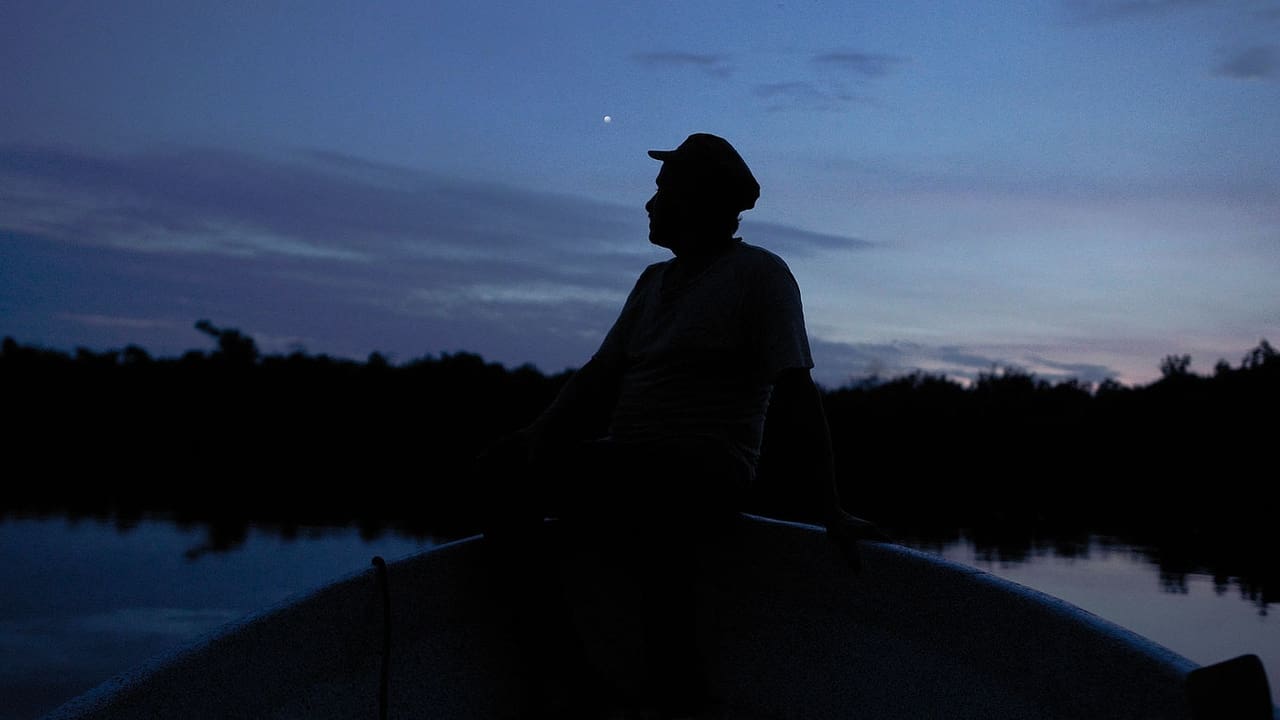
Pepedrilo and his peculiar connection with nature are embodied by the care and protection of a crocodile sanctuary, whose stability is put in danger day by day by the threat of men.
Pepedrilo

17 Dec 2019

No overview found

01 Jan 1989

Nishika 3D cameras were the inexpensive cousins to the Nimslo 3D cameras made in the mid to late 1980's (the Nimslo cameras used glass lenses, while the Nishika ones used plastic lenses). The cameras used regular 35mm film that captured 4 simultaneous images onto 2 frames of film. These images were printed onto photo stock with a lenticular surface bonded to it which allowed 3D to be seen without glasses, like the old kids story books with the 3D covers. The basic 3D camera kit came with this VHS instructional video that was hosted by Vincent Price. It was one of the last things he did.

04 Nov 2003

Jean-Michael Cousteau's documentary about the Great Barrier Reef keeps getting interrupted by characters from Disney's Finding Nemo.

30 Mar 2007

In 1966, John Harlin II died while attempting Europe's most difficult climb, the North Face of the Eiger in Switzerland. 40 years later, his son John Harlin III, an expert mountaineer and the editor of the American Alpine Journal, returns to attempt the same climb.

31 Dec 1967

Nature, gymnastic movements, a cat...

02 Jan 1967

Glen Denny observed: "This film is not ocean, it is panther stalking jungle." Camera flows because it is free to move through space.

01 Jan 1969

Fluidity of stone. Subatomic motion asserting a surface. Mind loop wandering. Visitation of sound matrix. Liquid solid. Nature transforms a planetary cycle. Relations of a timeless void.

20 Nov 2024

A Documentary film, following a group of friends going through their college life. with 3 months of filming starting in August 25th to November 1st 2024. most of everything was filmed in Boston. the purpose of the movie isn't to look amazing and have great story telling, but instead its meant to stamp a period in time. so that in 50 years we can look back and notice the human growth in a movie format. I hope you like the movie and thank you for watching :)

06 Feb 2009

Susana Barriga’s documentary, the illusion, begins with violence. A long shot reveals a man standing on a street corner, his features indiscernible in the night. He moves out of the camera’s line of vision, but the filmmaker, persistent, moves with him as the jostling of the camera marks her steps. As we learn moments later, the man in the distance is Susana’s father – and this is the clearest image of him we will have. Suddenly, an angry British man demands that Susana cease filming. Susana protests in heavily accented English, “He is my father!” Glimpses of a man’s torso are followed by blurred images as the camera spins rapidly over surfaces. The image cuts to black. A new male voice asks in carefully spaced out words if Susana would like him to call the police. When she doesn’t respond immediately, he speaks louder, as though volume would compensate for the language difference. She gives her name; she refuses the offer of an ambulance.

26 Aug 2018

An excellent display of how humans can rehabilitate and restore an area where a heavy industry polluted the water so severely that it was unsuitable to sustain any kind of life. A a film showing how birds returned to an environment once devastated by industry. The lakes around the northern Slovenian town of Velenje, placed in the Central Europe, are geographic center of the film. They emerged as the land above the lignite mines subsided and the depressions were filled with water. The mines started operating at the end of the 19th century. In the mid 20th century a power plant was built that caused a severe pollution of the lake waters to the extent of the lakes not being fit for any kind of life. As a consequence many birds moved from these parts. After a long ecological restoration that started in the mid 1980s, life returned to the water. Gradually the birds returned as well, including some there were previously never observed in this area.

05 Nov 2014

A look behind the lens of Christopher Nolan's space epic.

01 Jan 2002

No overview found

01 Jan 1995

No overview found


This video takes a particular viewpoint, with the camera placed behind a zone of blur. Slowly, we experience the perception of an expanded time. An expectation is created and resolved in the observation of the passage of boats that dissolve into the nebulousness, disappearing from our sight like a mirage.


This excerpt from A Pale Blue Dot was inspired by an image taken, at Carl Sagan's suggestion, by Voyager 1 on February 14, 1990.

17 Feb 2005

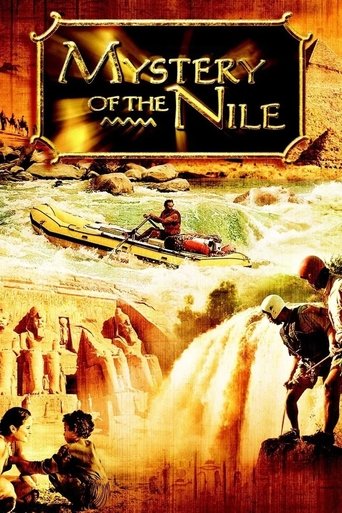
Filmed in IMAX, a team of explorers led by Pasquale Scaturro and Gordon Brown face seemingly insurmountable challenges as they make their way along all 3,260 miles of the world's longest and deadliest river to become the first in history to complete a full descent of the Blue Nile from source to sea.

14 Sep 2003

12,000 feet down, life is erupting. Alvin, a deep-sea mechanized probe, makes a voyage some 12,000 feet underwater to explore the Azores, a constantly-erupting volcanic rift between Europe and North America.

02 Oct 1989

The social democrats of the sixties and seventies worked on their grand plan to build a highway network in Germany that every German citizen could reach within five minutes of their home. The little film hangs around between and on the streets of this network - where the country discos, pedestrian zones, shopping centers, hospitals and roads home are behind noise barriers.

12 Mar 1990

A lonesome car. The wind is whistling. A door of an undefined building opens—is it a holiday bungalow, a shed or a ruin? A woman is standing at the window. The heat of an idle day of holiday, perhaps. The South, a place of longing.

17 Dec 1963

Stop for Bud is Jørgen Leth's first film and the first in his long collaboration with Ole John. […] they wanted to "blow up cinematic conventions and invent cinematic language from scratch". The jazz pianist Bud Powell moves around Copenhagen -- through King's Garden, along the quay at Kalkbrænderihavnen, across a waste dump. […] Bud is alone, accompanied only by his music. […] Image and sound are two different things -- that's Leth's and John's principle. Dexter Gordon, the narrator, tells stories about Powell's famous left hand. In an obituary for Powell, dated 3 August 1966, Leth wrote: "He quite willingly, or better still, unresistingly, mechanically, let himself be directed. The film attempts to depict his strange duality about his surroundings. His touch on the keys was like he was burning his fingers -- that's what it looked like, and that's how it sounded. But outside his playing, and often right in the middle of it, too, he was simply gone, not there."