03 Mar 2025
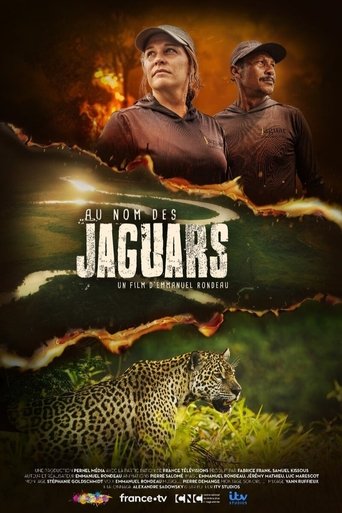
Au nom des jaguars
No overview found
This film documents the efforts of a group of Canadians and Americans to save the whooping crane from extinction. They display great determination in their dealings with this independent, pre-Ice Age creature. The issues of wild animals imprinting on people and the preservation of wild animals in captivity are examined in this film. Produced in cooperation with the Canadian Wildlife Service and the United States Fish and Wildlife Service.
03 Mar 2025
No overview found
01 Jan 1951
No overview found
26 Aug 2018
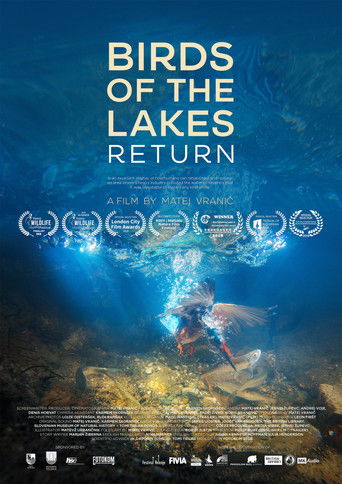
An excellent display of how humans can rehabilitate and restore an area where a heavy industry polluted the water so severely that it was unsuitable to sustain any kind of life. A a film showing how birds returned to an environment once devastated by industry. The lakes around the northern Slovenian town of Velenje, placed in the Central Europe, are geographic center of the film. They emerged as the land above the lignite mines subsided and the depressions were filled with water. The mines started operating at the end of the 19th century. In the mid 20th century a power plant was built that caused a severe pollution of the lake waters to the extent of the lakes not being fit for any kind of life. As a consequence many birds moved from these parts. After a long ecological restoration that started in the mid 1980s, life returned to the water. Gradually the birds returned as well, including some there were previously never observed in this area.
24 Jan 2015
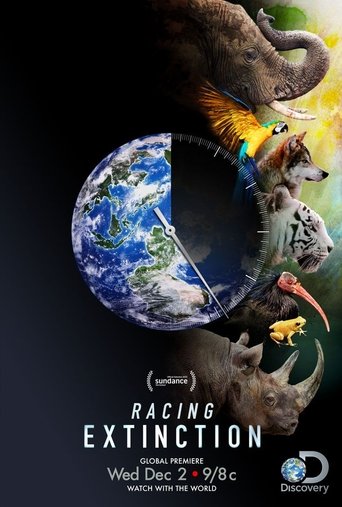
An unlikely team of activists and innovators hatches a bold mission to save endangered species.
01 Jun 1963
Did Cartier dream of making a country from this land of a million birds? In his records of his exploration he certainly marvelled at seeing the great auks that have since disappeared from Isle aux Ouaiseaulx, the razor-bills and gannets that are gone from Blanc-Sablon, and the kittiwakes from Anticosti, all the winged creatures of all the islands which he described as being "as full of birds as a meadow is of grass". And that's not even counting the countless snow geese.
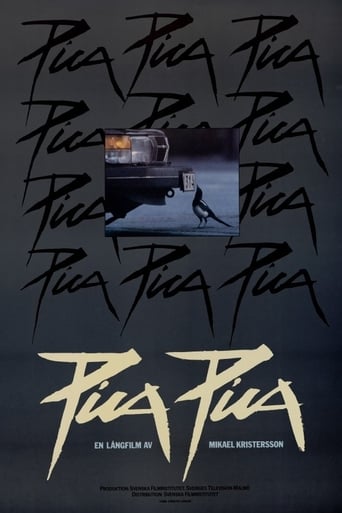
14 Mar 1987
In Pica Pica Kristersson invites the viewer to be enthralled for an hour and a half by the vicissitudes of magpie life. Opposing himself to the current nature films that tend to highly compress time in order to end up with a concentrated sequence of action-elements Kristersson leaves rhythm and tempo almost completely up to the magpies themselves. With great integrity he filmed the daily, social and emotional life of a species of birds that has many points of contact with human life. Thus, the movie offers us the oppurtunity to view our own everyday existence through other eyes, from a world right above our heads, but yet so far away.
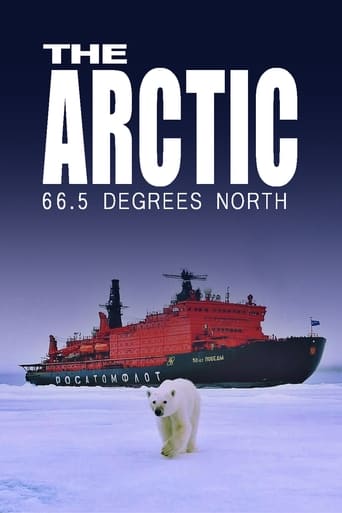
13 Jan 2023
The beauty of the Arctic is breathtaking. For as long as we can remember, the Arctic has been associated with inhospitable cold. But the climate is changing, and with it the northern polar region, which begins beyond latitude 66.5 degrees north. Climate change is now happening four times faster north of the Arctic Circle than on the rest of the planet, making the future outlook dire. At the moment it is still possible for polar bears to raise their cubs, but hunting is becoming increasingly difficult on the drastically shrinking pack ice. The disappearance of the ice also affects the marine fauna. The wintry ice bridge between Canada and Greenland is threatened with collapse. The unstoppable melting of the permafrost, which has held the tundra together for thousands of years, is worrying. But the Arctic is still one of the wildest and loveliest regions on earth. A documentary visit to the Arctic - as long as it still exists.
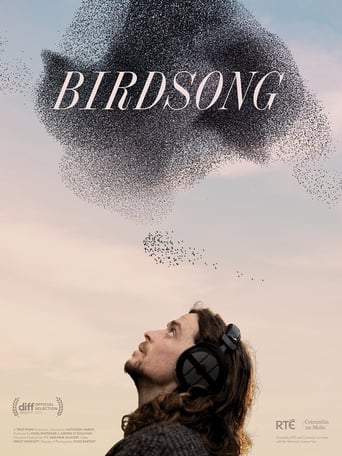
25 Feb 2024
Ornithologist Seán Ronayne from Cobh, Co. Cork is on a mission to record the sound of every bird species in Ireland – that’s nearly 200 birds. Often joined by his partner Alba, he travels to some of the country’s most beautiful and remote locations to capture its most elusive species and soundscapes: the busy seabird colony of Skellig Michael; a native woodland free from road noise in the Burren; the corncrake stronghold of Tory Island; a solitary nest in the Donegal uplands. Along the way we get to know Seán, whose hypersensitivity to sound has proven both a struggle and a strength. At once inspiring and cautionary, Seán’s journey illustrates the beauty and importance of sound, and what listening can tell us about the state of our natural world.
28 Jan 2020
This experimental nature documentary by Minna Rainio and Mark Roberts depicts climate change and the wave of extinction from the point of view of our near future. Actually, it depicts the age we live in now, or rather its fateful consequences.
28 Nov 1927
Finland’s first nature documentary. The filmmakers’ expedition leads them all the way to the Åland Islands and the Karelian Isthmus.

08 Jan 2020
An aspiring photojournalist takes a trip to Julian, CA to learn about the history of two wolf species and what caused their population decline throughout history.
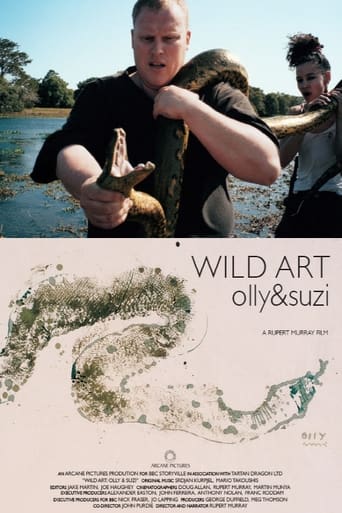
05 May 2009
Documentary following Olly Williams and Suzi Winstanley, two unique wildlife artists who simultaneously work on the same painting of exotic and endangered animals while on location in the wildest corners of the world. The film shows how they work and why what they do is so important.
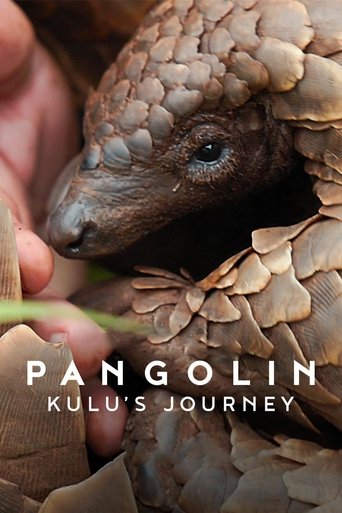
21 Apr 2025
Rescued from poachers, an endangered baby pangolin embarks on a journey back to the wild with help from a devoted human guardian in this documentary.
02 Aug 2010
On the eve of her 70th birthday, Canadian writer Margaret Atwood set out on an international tour criss-crossing the British Isles and North America to celebrate the publication of her new dystopian novel, The Year of the Flood. Rather than mount a traditional tour to promote a book's publication, Atwood conceived and executed something far more ambitious and revelatory--a theatrical version of her novel. Along the way she reinvented what a book tour could (and maybe should) be. But Atwood wasn't selling books as much as advocating an idea: how humanity must respond to the consequences of an environmentally compromised planet before her work of speculative fiction transforms into prophesy.
30 Nov 2014
It's death on an unimaginable scale, when a majority of Earth's species quickly die out. It's called "mass extinction," and it's happened at least five times before. Cataclysms, such as supervolcanoes or asteroids, are thought to cause these events, but some experts believe a manmade mass extinction could be next. Is our planet in trouble? And if so, is there anything we can do to stop the next catastrophic annihilation? Experts are traveling the world, performing groundbreaking scientific detective work to answer these very questions.
03 Apr 2020
after mourning the passing of his late wife, Bill finds the courage to travel to New York City and reconnect with his favorite mistress.
01 Nov 2001
Native Americans, ranchers, government officials, and environmental activists battle over the yearly slaughter of America's last wild bison, based on fear that migrating animals will transmit the disease brucellosis to cattle. Join a 500-mile spiritual march across Montana led by Lakota elder Rosalie Little Thunder expressing her people's cultural connection to bison, an environmental group engaging in civil disobedience and video activism, and a ranching family caught in the crossfire.
09 Nov 2012
David Attenborough chooses his ten favorite animals that he would most like to save from extinction. From the weird to the wonderful, he picks fabulous and unusual creatures that he would like to put in his 'ark', including unexpected and little-known animals such as the olm, the solenodon and the quoll. He shows why they are so important and shares the ingenious work of biologists across the world who are helping to keep them alive.
01 Jan 1951
No overview found
01 Jan 1952
No overview found