01 Oct 1968

God Respects Us When We Work, But Loves Us When We Dance
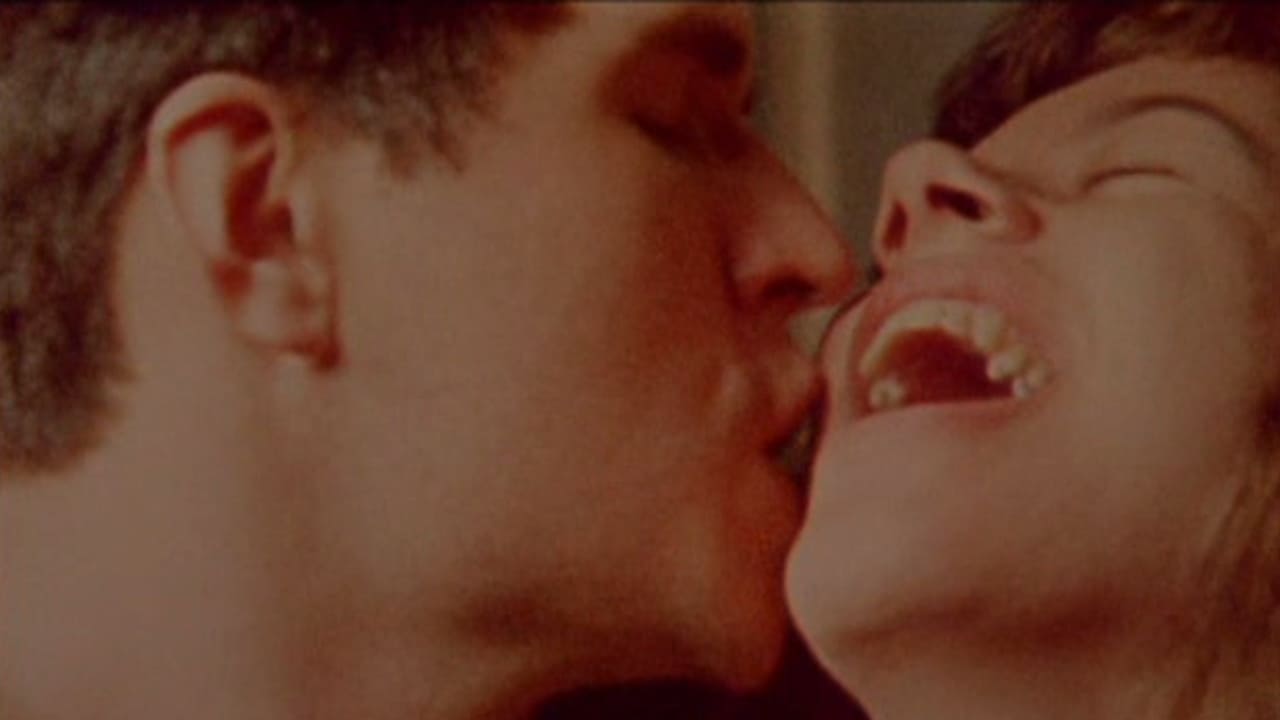
Les Blank's poetic documentation of 1967's Los Angeles Easter Sunday Love-In. Preserved by the Academy Film Archive in 2002.

On a winter's day, a woman stretches near a window then sits in a bathtub of water. She's happy. Her lover is nearby; there are close ups of her face, her pregnant belly, and his hands caressing her. She gives birth: we see the crowning of the baby's head, then the birth itself; we watch a pair of hands tie off and cut the umbilical cord. With the help of the attending hands, the mother expels the placenta. The infant, a baby girl, nurses. We return from time to time to the bath scene. By the end, dad's excited; mother and daughter rest. Preserved by the Academy Film Archive in 2013.
Self (uncredited)
Self (Baby Being Born) (uncredited)

01 Oct 1968

Les Blank's poetic documentation of 1967's Los Angeles Easter Sunday Love-In. Preserved by the Academy Film Archive in 2002.

30 Jun 1896

A group of people are standing along the platform of a railway station in La Ciotat, waiting for a train. One is seen coming, at some distance, and eventually stops at the platform. Doors of the railway-cars open and attendants help passengers off and on. Popular legend has it that, when this film was shown, the first-night audience fled the café in terror, fearing being run over by the "approaching" train. This legend has since been identified as promotional embellishment, though there is evidence to suggest that people were astounded at the capabilities of the Lumières' cinématographe.

01 Apr 1971

Satyajit Ray's poetic documentary was commissioned by the Chogyal (King) of Sikkim at a time when he felt the sovereignty of Sikkim was under threat from both China and India. Ray's documentary is about the sovereignty of Sikkim. The film was banned by the government of India when Sikkim merged with India in 1975. The ban was finally lifted by the Ministry of External Affairs in September 2010. Preserved by the Academy Film Archive in 2007.

05 Oct 1976

Dialogue-free short detailing the daily tasks of a man and his wife.

01 May 2014

A video reconstruction of the 1977 Wooster Group production Rumstick Road, an experimental theater performance created by Spalding Gray and Elizabeth LeCompte after the suicide of Gray's mother. Archival recordings are combined with photographs, slides, and other materials to recreate the original production.

29 May 1964

"Meat Joy is an erotic rite — excessive, indulgent, a celebration of flesh as material: raw fish, chicken, sausages, wet paint, transparent plastic, ropes, brushes, paper scrap. Its propulsion is towards the ecstatic — shifting and turning among tenderness, wildness, precision, abandon; qualities that could at any moment be sensual, comic, joyous, repellent. Physical equivalences are enacted as a psychic imagistic stream, in which the layered elements mesh and gain intensity by the energy complement of the audience. The original performances became notorious and introduced a vision of the 'sacred erotic.' This video was converted from original film footage of three 1964 performances of Meat Joy at its first staged performance at the Festival de la Libre Expression, Paris, Dennison Hall, London, and Judson Church, New York City."

18 Oct 1991

This large format film explores the last great wilderness on earth. It takes you to the coldest, driest, windiest continent, Antarctica. The film explores the life in Antarctica, both for the animals that live their and the scientist that work there.

27 Jun 1978

This film describes a psychological state "kin to moonstruck, its images emblems (not quite symbols) of suspension-of-self within consciousness and then that feeling of falling away from conscious thought. The film can only be said to describe or be emblematic of this state because I cannot imagine symbolizing or otherwise representing an equivalent of thoughtlessness itself. Thus the actors in the film, Jane Brakhage, Tom and Gloria Bartek, Williams Burroughs, Allen Ginsberg, Peter Olovsky and Phillip Whalen are figments of this 'Thought-Fallen Process', as are their images in the film to find themselves being photographed."

14 Apr 2000

From the banks of the Bahamas to the seas of Argentina, we go underwater to meet dolphins. Two scientists who study dolphin communication and behaviour lead us on encounters in the wild. Featuring the music of Sting. Nominated for an Academy Award®, Best Documentary, Short Subject, 2000.

10 May 1985

Carefully picked scenes of nature and civilization are viewed at high speed using time-lapse cinematography in an effort to demonstrate the history of various regions.

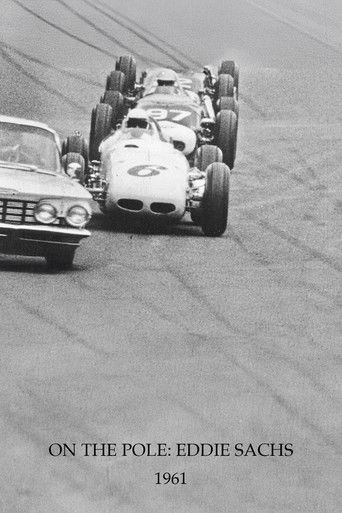
31 Aug 1961

The documentary traces Eddie Sachs (one of the most popular drivers in the history of the Indianapolis 500) in a behind-the-scenes look at the race from his perspective, starting from a week before the race through the day after the big event. You can feel the fervor and anticipation build (*pay close attention to the scaffolding that collapses with too many people on it during the race) as Eddie prepares to keep his place, "on the pole." Preserved by the Academy Film Archive in 2010.

01 Jan 2001

No overview found

14 Jun 2002

Journey across India, a breath taking land shaped by a myriad of cultures, customs and traditions. Come face to face with the Bengal Tiger and explore the work of this majestic creature with stunning clarity. Soar over blue-hazed Himalayan peaks and sweep down towards the thundering Indian Ocean as we celebrate the power and beauty of India's greatest ambassador - the mighty Bengal Tiger.

01 Jan 1978

This portrait of a guinea fowl is the first clear vision I've had of the hot-blooded dinosaurs still living among us. (SB)

01 Jan 1990

This is a film made in Toronto, in memoriam, so to speak - a memory piece, a "piecing-together" of the experience of living there. The consciousness of the maker comes to sharply focused visual music - not to arrive at snapshots, as such, but rather to "sing" the city as remembered from daily living...complementary, then, to an earlier film, "Unconscious London Strata." Preserved by the Academy Film Archive in 2015.

01 Jan 1986

"Firstly, I revealed in salutary confession the secret filth of my misdeed, which had long been festering in stagnant silence; and I made it my custom to confess often, and thus to display the wounds of my blinded soul..." (Petrarch, 1352, in a letter to his brother). I wish to avoid any "classical" misunderstandings of the above quote by stating clearly here that any sacrifice of love is, yes, "filth" or at the very least "misdeed." An academic reading of Petrarch tends to bias thought that there are kinds of love which might be wrong: I do not believe this. (SB)

01 Jan 1974

Pun on "light" intended - that short preceding expulsion of breath perhaps the "subject matter" of this film which centers in consideration of death. It is the third tone poem film and did much surprise me by thus completing a trilogy of the "4 classical Elements." (SB)

10 Dec 1989

After a six -or seven- year study of Hammurabi's Code, original Babylonian Text and translation, I've tried to feel my way into the moving visual thought process of this ancient culture (whose numerical system is composed primarily of building materials, nails, joints and the like): this, then, is a visual music which balances the two thought processes of Structure and Nature.

01 Jan 1990

Out of the vagueries of sometime beseeming repetitive light patterns, and the delicately variable rhythms of thought process, the imagination of The Monumental and of the Ephemeral are born to mind hard as nails.

01 Jan 1990

This is an architectural garden of the variably brash rock-solid liquid-encompassing, but always imitative, human mind as it processes the given light thoughtfully. This film is about that.