19 Nov 1992
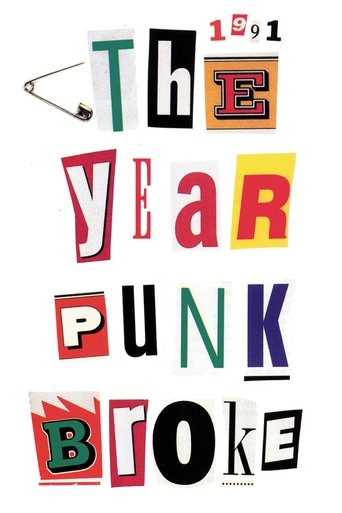
1991: The Year Punk Broke
David Markey's documentary of life on the road with Sonic Youth and Nirvana during their tour of Europe in late 1991. Also featuring live performances by Dinosaur Jr, Babes in Toyland, The Ramones and Gumball.

In the 1980s, Algeria experienced a tumultuous social context which reached its peak during the riots of October 88. This wave of protest, with youth as its figurehead, echoed the texts of raï singers. Thirst for freedom, misery of life and the aspirations of youth are among the main themes of their works which will inspire an entire generation. More than music, raï celebrates the Arabic language and becomes a vector of Algerian culture, thus providing the cultural weapons of emerging Algerian nationalism With Cheb Khaled, Cheb Mami and Chaba Fadela as leaders of the movement, raï is also a way of telling and reflecting the essence of Algeria in these difficult times. While the threat weighs on artists in Algeria, their exile allows raï to be exported internationally and thus, to bring the colors of Algeria to life throughout the world.

Self

Self
Self

Self

Self (archive footage)
Self

Self

Self
Narrator
19 Nov 1992
David Markey's documentary of life on the road with Sonic Youth and Nirvana during their tour of Europe in late 1991. Also featuring live performances by Dinosaur Jr, Babes in Toyland, The Ramones and Gumball.
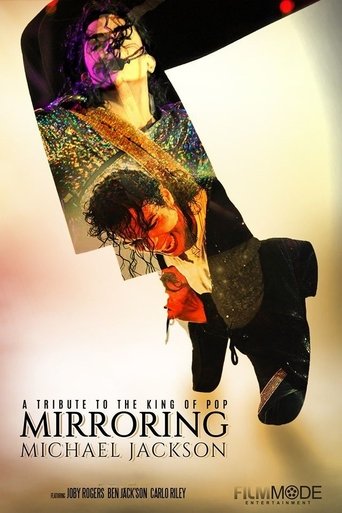
A documentary film honoring the King of Pop showcasing how Michael Jackson's groundbreaking musical legacy has influenced performers of the past, present and future.
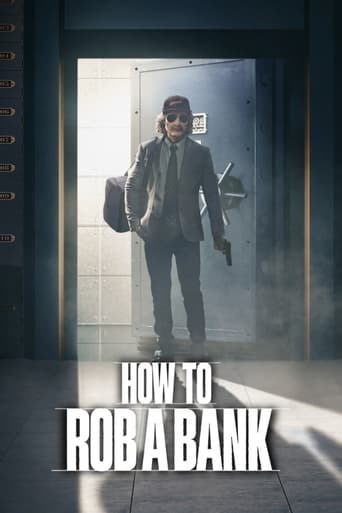
04 Jun 2024
In this true-crime documentary, a charismatic rebel in 1990s Seattle pulls off an unprecedented string of bank robberies straight out of the movies.
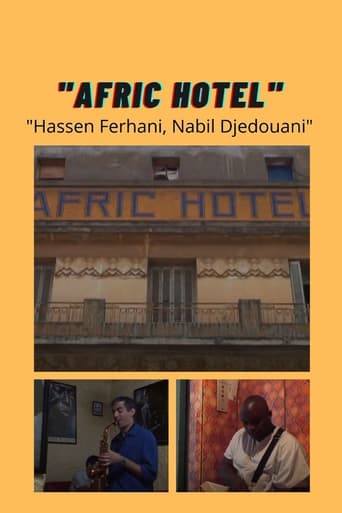
12 Jan 2011
In the furnace of Algiers, the camera follows and accompanies Ibrahim, Adam, and Ismael, originally from sub-Saharan Africa, in an irregular situation who live in this hotel with the predestined name. They live from odd jobs. One is an elevator operator in a building, the second is a shoemaker and the third works in the construction sector. The other side of immigration from sub-Saharan Africa. Behind the statistics hide people, bodies waiting to be able to start another life elsewhere. A hotel thus becomes a transit point in which stories and hopes mingle, a place which seems suspended in time and space. A static journey waiting for another to begin.
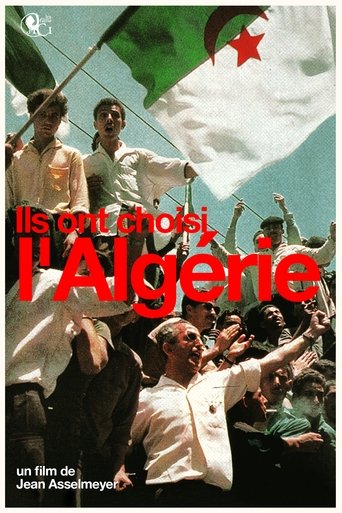
01 Jan 2007
Many of them participated in the struggle for Algerian independence. There are "those who believed in heaven", priests, Christians committed against torture, friends of the "natives", there are "those who did not believe in it", communist activists, students, progressive intellectuals, others remained in this country because they could not imagine living anywhere other than in this land of all passions. They are European and chose to stay in Algeria after independence, most of them opted for Algerian nationality. The film is another vision of the history of Algeria from the end of the fifties to the present day, told by these Europeans filmed at home, or in the context of their activities, illustrated by unpublished archive documents.
22 Jan 2020
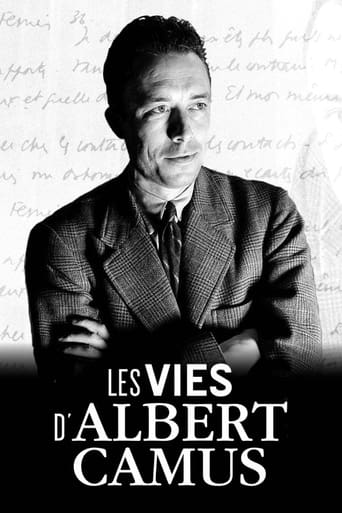
Albert Camus died at 46 years old on January 4, 1960, two years after his Nobel Prize in literature. Author of “L'Etranger”, one of the most widely read novels in the world, philosopher of the absurd and of revolt, resistant, journalist, playwright, Albert Camus had an extraordinary destiny. Child of the poor districts of Algiers, tuberculosis patient, orphan of father, son of an illiterate and deaf mother, he tore himself away from his condition thanks to his teacher. French from Algeria, he never ceased to fight for equality with the Arabs and the Kabyle, while fearing the Independence of the FLN. Founded on restored and colorized archives, and first-hand accounts, this documentary attempts to paint the portrait of Camus as he was.

01 Jan 2003
It is with the architect Jean-Jacques Deluz, that we visit Algiers, "his city" since 1960 and that he left only two years during the worst moments of terrorism. From the Casbah, in the 19th century center, including the cities of Fernand Pouillon and Bab El Oued to arrive at the new city of Maelma which he built today. Tender look, but without concessions at the same time architectural promenade and meetings with actors of art and culture: Djamel Allam, the singer Kabyle, Djamel Amrani, the poet, friend of Jean Sennac, Mohamed Ben Gettaf, Dramaturge and director of the theater of Algiers, Souad Delmi-Bourras, young designer Boudjemàa Kareche, director of the Algerian cinema, Amine Kouider, conductor, who relaunches the opera in Algeria, the painter Malek Salah, and others. A look at Algeria and the Algerians, far from the clichés of certain media, the bias being to seek signs of hope rather than "blood and tears".

29 Mar 2024
No overview found
Fabrizio, Dante and Roberto have 14 years old and they live in Palermo in the ZEN. How is their life, their universe?
16 Apr 2024
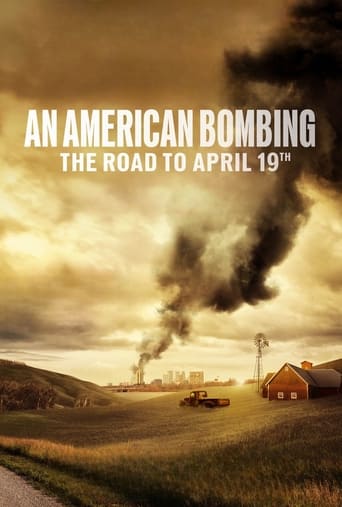
This documentary looks at the surge in political violence through the story of the 1995 Oklahoma City bombing, showing the roots of anti-government sentiment and its reverberations today, along with the emotionally charged warnings of those who suffered tragic losses in the deadliest homegrown attack in U.S. history.
28 Apr 2004
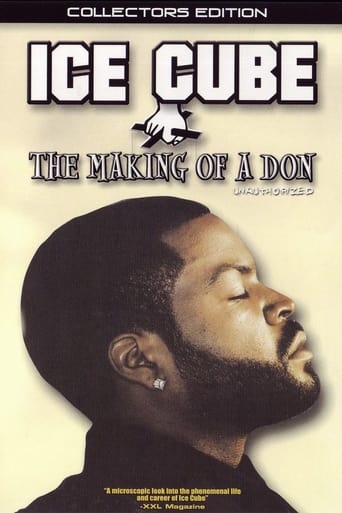
A true-life tale of the Great American Dream, this movie showcases one man's rise from the streets of South Central L.A. to the hills of Hollywood. Features photos and videos of the man himself and his contemporaries.
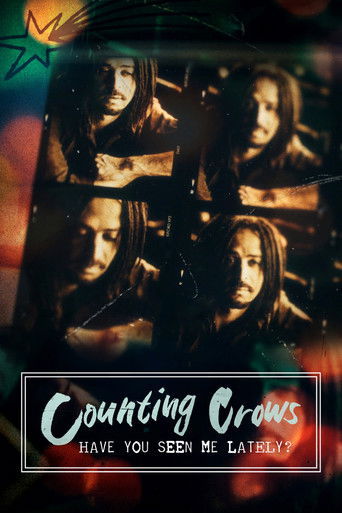
05 Jun 2025
An intimate documentary chronicling the rise of the band Counting Crows and the unrelenting pressure that followed their breakout success. Centered on frontman Adam Duritz, the film explores the emotional aftermath of the band’s landmark studio album debut “August and Everything After” and the pressures and creative process of making their follow-up album “Recovering the Satellites.”
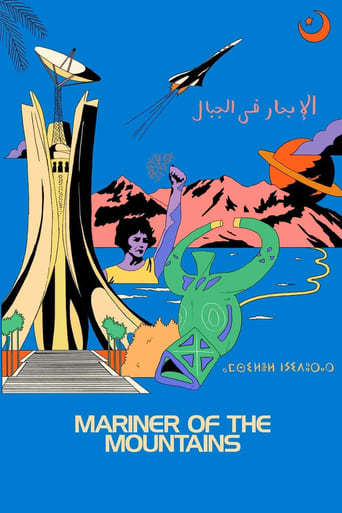
28 Sep 2023
Filmmaker Karim Aïnouz decides to take a boat, cross the Mediterranean, and embark on his first journey to Algeria. Accompanied by the memory of his mother, Iracema, and his camera, Aïnouz gives a detailed account of the journey to his father’s homeland, interweaving present, past, and future.

24 Dec 2022
The portrait of a woman who remembers. Sheila tells the story of Sheila, without concessions or evasions. Her childhood, her parents, her beginnings, the rumors, her love affairs, her marriage, her son, her successes, her farewells, her return, her mourning. The journey of an extraordinary popular icon who never stopped fighting. The courage of an artist who never gives up. "Sheila, toutes ces vies-là" is also a journey through time. 60 years of pop music, punctuated by numerous archives, personal films, timeless hits and illustrations by Marc-Antoine Coulon. But also 60 years of fashion, through a legendary wardrobe (her TV show outfits) that Sheila invites us to rediscover.
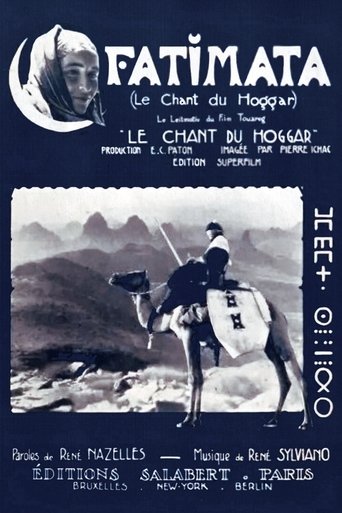
01 Jan 1931
Le Chant du Hoggar, a fictionalized documentary directed by Pierre Ichac, which takes as its theme the adventurous life of the Tuaregs of yesteryear, the setting being the lesser-known mountains and valleys of the Hoggar, and the actors being the Tuaregs themselves. This production, of considerable interest, was filmed last year by Pierre Ichac, a project manager for the General Government of Algeria. For six months, the young director, who traveled more than 7,000 kilometers by car and about 1,000 kilometers by Méhari through the Hoggar mountains, recorded 8,000 meters of film. The beautiful Fatimata reigns over all hearts in the wandering Tuareg tribe, with her herds, in the high valleys of the Hoggar. But she loves The Lion, the bravest of the young warriors of an enemy tribe. And it is Fatimata's name that The Lion lovingly carves on the rocks of the mountain.
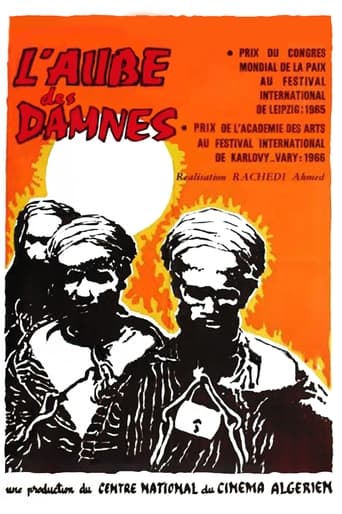
05 Jul 1965
This excellent feature-length documentary - the story of the imperialist colonization of Africa - is a film about death. Its most shocking sequences derive from the captured French film archives in Algeria containing - unbelievably - masses of French-shot documentary footage of their tortures, massacres and executions of Algerians. The real death of children, passers-by, resistance fighters, one after the other, becomes unbearable. Rather than be blatant propaganda, the film convinces entirely by its visual evidence, constituting an object lesson for revolutionary cinema.
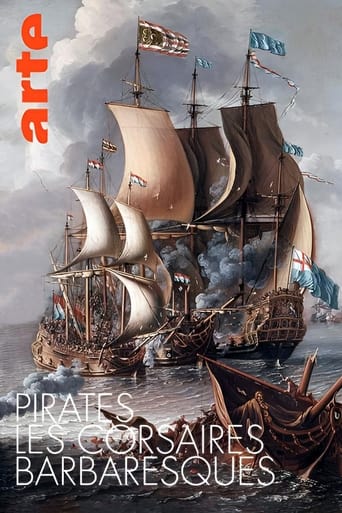
31 Oct 2015
In the 18th century, the Barbary threat became serious. In July 1785, two American boats were returned to Algiers; In the winter of 1793, eleven American ships, their crews in chains, were in the hands of the dey of Algiers. To ensure the freedom of movement of its commercial fleet, the United States was obliged to conclude treaties with the main Barbary states, paying considerable sums of money as a guarantee of non-aggression. With Morocco, treaty of 1786, 30,000 dollars; Tripoli, November 4, 1796, $56,000; Tunis, August 1797, 107,000 dollars. But the most expensive and the most humiliating was with the dey of Algiers, on September 5, 1795, “treaty of peace and friendship” which cost nearly a million dollars (including 525,000 in ransom for freed American slaves). , with an obligation to pay 20,000 dollars upon the arrival of each new consul and 17,000 dollars in annual gifts to senior Algerian officials...
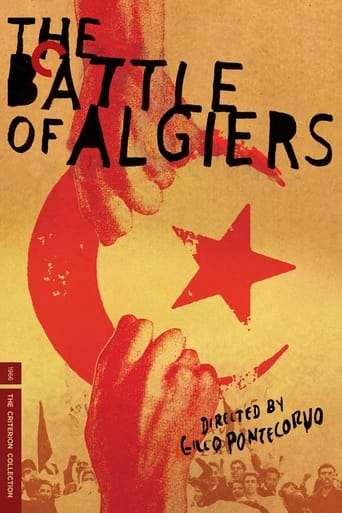
01 Aug 2004
This 17-minute documentary is featured on the 3-Disc Criterion Collection DVD of The Battle of Algiers (1966), released in 2004. An in-depth look at the Battle of Algiers through the eyes of five established and accomplished filmmakers; Spike Lee, Steven Soderbergh, Oliver Stone, Julian Schnabel and Mira Nair. They discuss how the shots, cinematography, set design, sound and editing directly influenced their own work and how the film's sequences look incredibly realistic, despite the claim that everything in the film was staged .
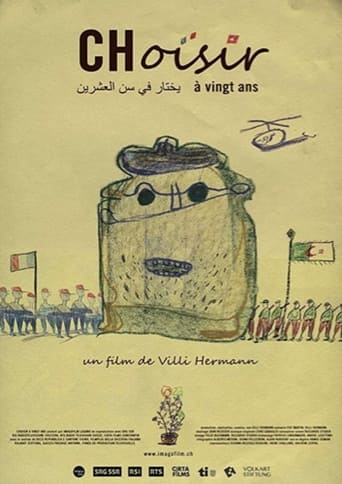
24 Aug 2017
Between 1954-1962, one hundred to three hundred young French people refused to participate in the Algerian war. These rebels, soldiers or conscripts were non-violent or anti-colonialists. Some took refuge in Switzerland where Swiss citizens came to their aid, while in France they were condemned as traitors to the country. In 1962, a few months after Independence, Villi Hermann went to a region devastated by war near the Algerian-Moroccan border, to help rebuild a school. In 2016 he returned to Algeria and reunited with his former students. He also met French refractories, now living in France or Switzerland.

01 Jan 1995
Akademija Republika shows a group of people gathered around the club from 1981 until 1995 and how it changed and influenced the cultural and night life around them.