27 May 2021
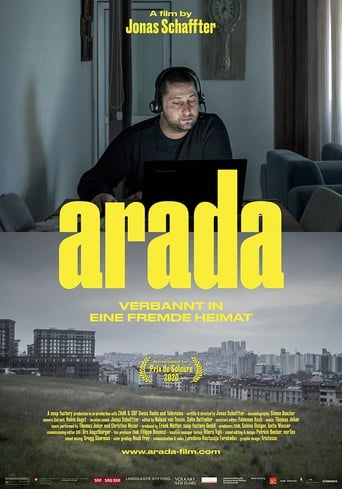
Arada
The story of three Turkish men. They all grew up in Switzerland and all got deported after various criminal offenses.
In Turkey, buses are a cheap, widespread and therefore the most important means of public transportation throughout the country. What the airplane is in America and the train is in Europe, the intercity bus is in Turkey. The documentary takes a trip through Turkey using the common people's means of transport.
Narrator (voice)
Narrator (voice)
27 May 2021
The story of three Turkish men. They all grew up in Switzerland and all got deported after various criminal offenses.
16 Apr 2015
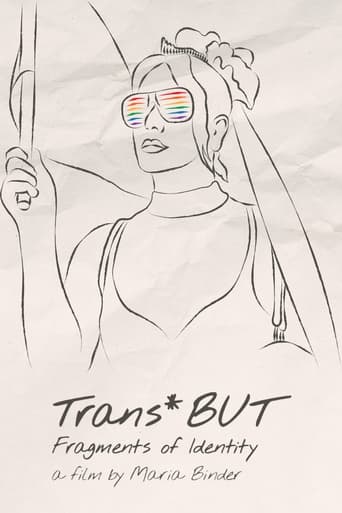
Fragmentary perspectives on Human Rights and transgender (trans*) People in Turkey. What remains at the place where a murder happened? What constitutes trans* life? How to cope with daily violence and hatred? We begin to search for traces. We follow the tracks of resistance and survival. We are collectors of the expelled. We gather fragments of trans* lives inspired by texts of Nazim Hikmet, Foucault, Benjamin and Zeki Müren. Trans*BUT is a documental research study driven by the question: “What keeps you going when all else falls away?”
24 May 2018
No overview found
06 Oct 2017
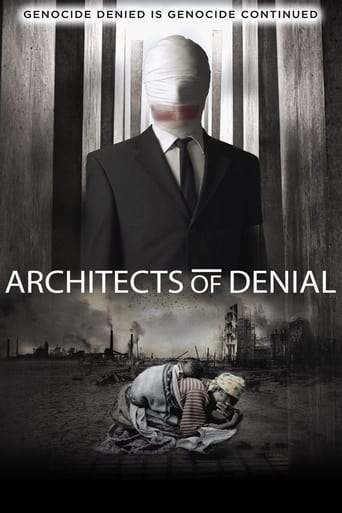
Though both the historical and modern-day persecution of Armenians and other Christians is relatively uncovered in the mainstream media and not on the radar of many average Americans, it is a subject that has gotten far more attention in recent years.
08 Nov 1934
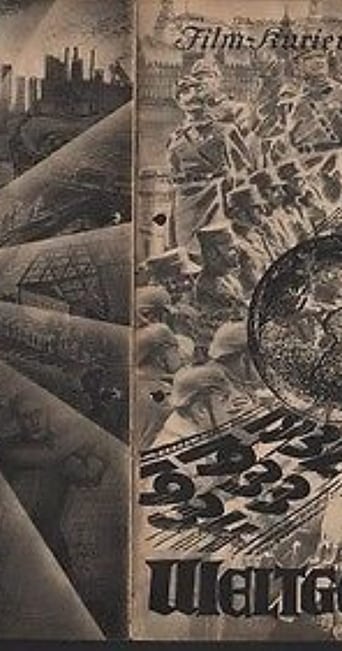
Produced by the Fox Movietone News arm of Fox Film Corporation and based on the book by Lawrence Stallings, this expanded newsreel, using stock-and-archive footage, tells the story of World War I from inception to conclusion. Alternating with scenes of trench warfare and intimate glimpses of European royalty at home, and scenes of conflict at sea combined with sequences of films from the secret archives of many of the involved nations.
21 Apr 2022
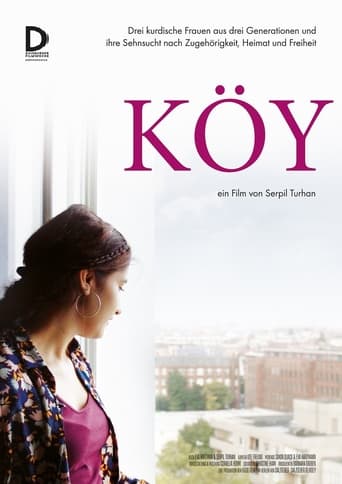
KÖY (Turkish for village) is about the longing for home, for belonging and the freedom of the self. Three women from three generations are united by their Kurdish roots.
02 Nov 2018
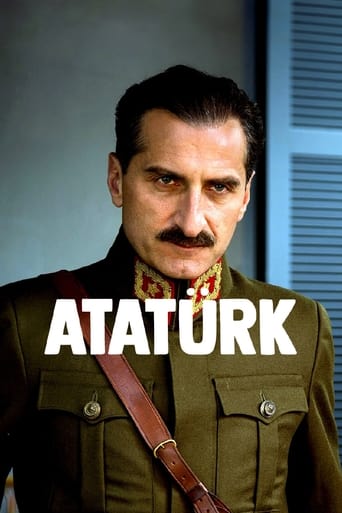
Docudrama examining the life of Mustafa Kemal Atatürk, who founded the Republic of Turkey from the ruins of the Ottoman Empire. Monuments to him can be found in every city; the anniversary of his death is commemorated every year; derogatory words about him are punishable by law. Rarely has a politician changed a society so radically in such a short time as Atatürk did Turkey.
23 Apr 2003
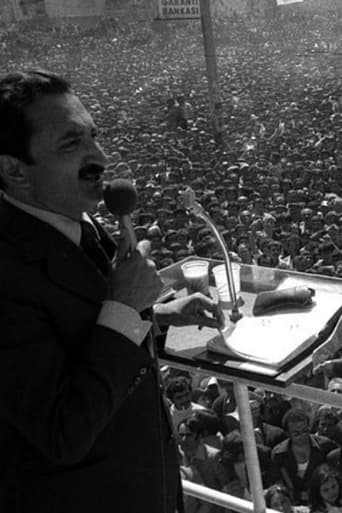
How will history remember him? The honest politician who brought the left to power, the reliable plane tree of the state, the poet who adds elegance to politics? Or is it the stubborn, skeptical, lonely leader who hinders the unity of the left? How many people will remember the legend of Karaoğlan, which was written on the mountains and stones in the milestones of democracy? And how many of them will question the reasons for the rise from the top to the prison, from the prison to the top again, and then to be forgotten at the ballot box? How will Turkey remember a leader who left his mark in the last fifty years, a republican intellectual, the captain of the country's most critical days?
07 May 2003
A political amateur who was kneaded with art in the first half of the 1950s and was enthused with the idealism of politics in the second half, was now a person who was dealing with politics and state affairs 24 hours a day, gradually getting hotter and broadening his goals and horizons. In this section, you will follow the milestones of the poet's hopeful arrival in the 1970s, not a dream that the poet remembers with longing, but is no longer left behind. Contrary to the poem, you will recognize the struggle of a stubborn, belligerent missionary who is incompatible with the world. You will witness how it changed in that struggle and how this change affected a country...
14 May 2003
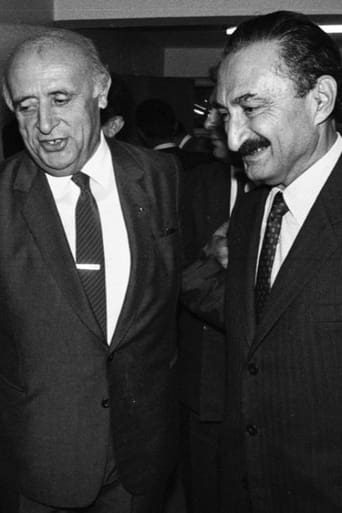
What Ecevit feared had happened to him. Someone blew the whistle and the game was over. The name of the game was democracy. Those who finished the game, that is, those who took on the role of referees, were soldiers... The September 12 administration started by blaming the administrators, that is, the politicians. According to the military, incompetent and uncompromising politicians were responsible for the crisis in the country. Now they would put new rules into the game and this time there would be no old actors on the field. Ecevit's political life, which lasted for 27 years, was ending on the morning of September 12...
21 May 2003
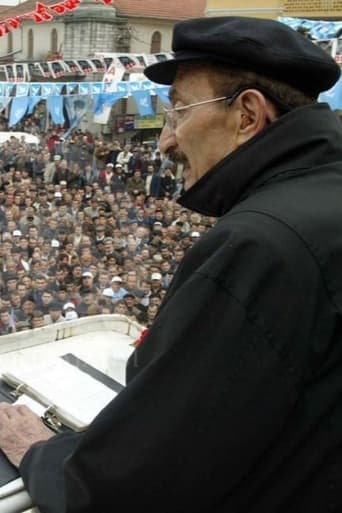
A political adventure that started with a modest membership ceremony in the Çankaya District Building of the CHP in 1954 and ended in 2004, covering exactly 50 years. Bülent Ecevit was the name that left his mark on Turkey's multi-party years. The politics he said goodbye to was his way of life. No politician has ever been written on the mountains and stones like him... No politician has ever been as critical of the future of the left as he was. His name was sometimes referred to as a "divisive" and sometimes "honest politician. Bülent Ecevit was engraved in history as the memory of the multi-party period and as an example of a politician's exit from the ballot box and his exhaustion...
19 Jul 2024
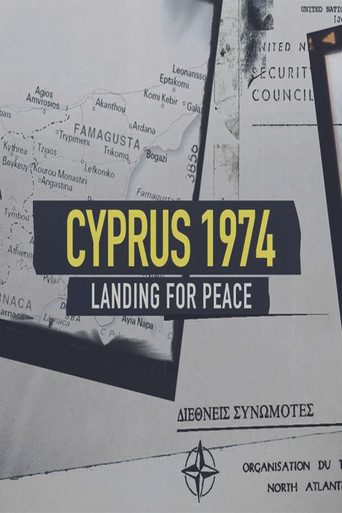
On the 50th anniversary of the Cyprus Peace Operation, TRT World revisits the island's turbulent history and asks: Is there still hope for reconciliation?

21 Dec 2011
In Turkey far too many women are still unable to read and write, and all they see in their life span is being forced into early marriage and relegation to the home, where they look after extended families and more children than they can feed. The girls are portrayed in their homes, together with the strongest supporters of their emancipation through education: their mothers. Girls of Hope portrays five girls who struggle for their education and, despite all the difficulties, try to hold on to their hope for a better future.
22 Jun 2025
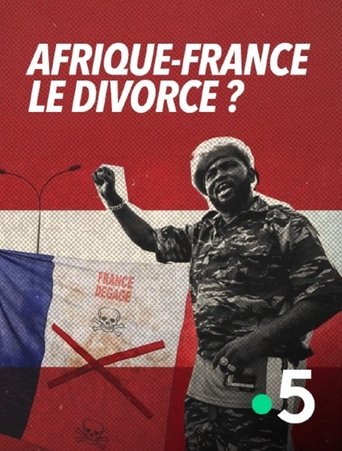
At a time when French flags are being burned and French embassies targeted, this documentary delves into the growing disaffection between French-speaking Africa and the former colonial power. Through the voices of African leaders, pan-African activists, and committed young people, the film questions the persistence of a relationship marked by the aftermath of colonization, the opaque agreements of "Françafrique," and a military presence deemed paternalistic.
23 Apr 2023
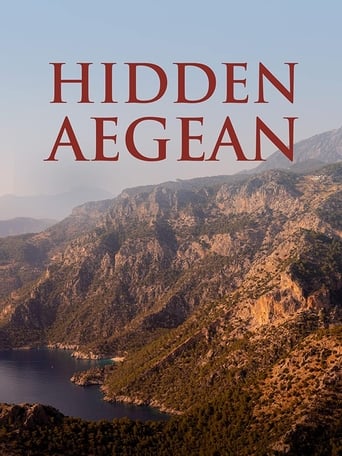
Host Peter Greenberg explores the hidden gems of Turkey's Aegean coast. Some of the stunning destinations include Bodrum, Izmir and the ancient city of Troy.
25 Apr 2012
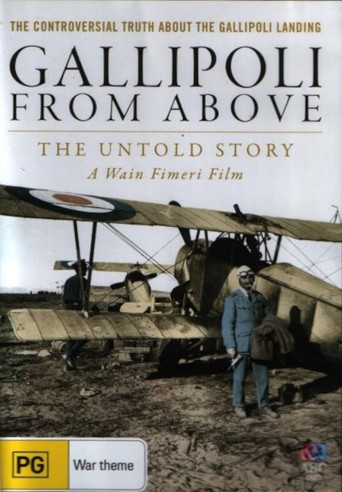
Gallipoli from Above: The Untold Story is the true story of how a team of Australian officers used aerial intelligence, emerging technology and innovative tactics to plan the landing at Anzac Cove. It is now nearly 100 years since the landing and hundreds of books, movies and documentaries have failed to grasp the significance of the ANZAC achievement. Instead, the mythology has clouded the real story of how these two influential Australian officers took control of the landing using every innovation they could muster to safely land their men on Z beach.
02 Jul 1991
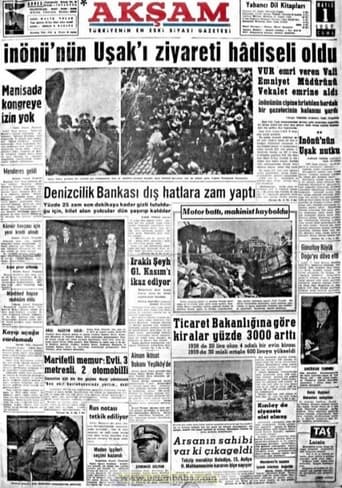
In the past, when spring came, there was a spring atmosphere in politics. But the spring of 1959 brought the CHP's spring offensive on the contrary. Seeing that the opportunity for a dialogue was completely lost after Menderes' plane crash, İsmet Pasha put on his boots in April and took his 46 deputies with him to the expedition. The chosen route was the route of the Great Offensive in the War of Independence. Uşak, where İnönü took the Greek Commander-in-Chief Trikupis prisoner, was the first stop...
09 Jul 1991
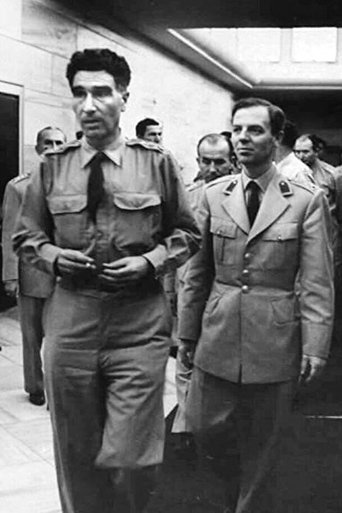
While the government was in a deep sleep, the brain staff of the revolution was completing its final preparations at the Military Academy, there were only a few hours left for the revolution that had been prepared for six years. Despite six years of preparation, there was actually no serious plan at hand. An unplanned, unscheduled full night raid was to be organized. The management level of the army was pro-government. Therefore, it was impossible for the intervention to take place within the chain of command. This was to be a grassroots military operation. The army of the operation consisted of young cadets. Except for the Harbiye, there was no force at hand. It was even possible for units such as the Guards Regiment and the Central Command to resist. That's how the day of May 27 began with the unknown and risks. Major General Cemal Madanoğlu, the commander of the Revolution Headquarters, would have the last word...
16 Jul 1991
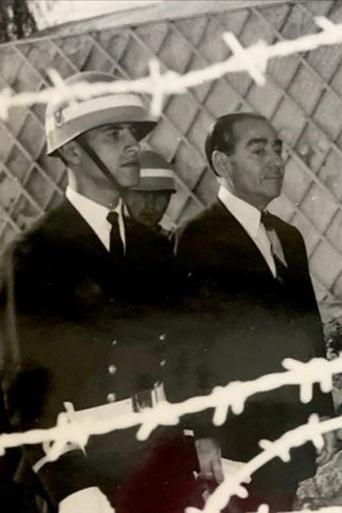
It is a famous saying: "One can come to power with a bayonet, but not sit on it." The organization, which carried out 27 May, came to power with a bayonet. Moreover, these young officers seized power that night by breaking the traditional chain of command. In the morning, a 10-year DP period was over, the support of the public was gained at first hand, and a brand new phase was reached. Now, the days that would mark the future of Turkey were beginning. Now, as those days put it, the "second republic period" was beginning.
23 Jul 1991
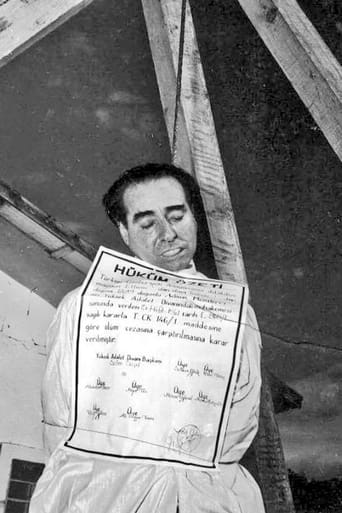
We came to the end of the road. We told you the story of the establishment of a democracy throughout 9 episodes... We witnessed the collapse of a one-party regime. We witnessed the disappearance of the national chiefdom. Together we experienced the holding of the first free general elections and the raising of democracy in pain. And finally, we told you about the birth, rise and fall of a new power. Where we ended up was a military intervention. Whatever the reasons, the storm of revolution had blown once. Now the task of the officers who seized power on the morning of May 27 was to contain that storm. But it didn't. After a while, the storm started to drag the revolutionaries in front of it. The historical scenario was repeated. The Revolution ate some of their children. The revolution was now speaking its own language...