09 Dec 1964
Kwaheri
Early Mondo film featuring primitive rituals, animals being butchered, unusual birth defects, and a legit trepanation scene.

The darkness of the mine, invaded by the miners' light, by the noisy machines and the permanent and intense smell of ore in the air, leads us to an environment in which time and space become confused. A documentary film at Panasqueiras' Mine, between 2008/09. A reality captured by an eye-observer which does not interfere, but follows the compost that grows from the earth and is decomposed by man-machine.
09 Dec 1964
Early Mondo film featuring primitive rituals, animals being butchered, unusual birth defects, and a legit trepanation scene.
01 Jan 1954
No overview found

01 Jan 1972
An experimental ethnographic documentary that criticizes the colonizer view of anthropology.
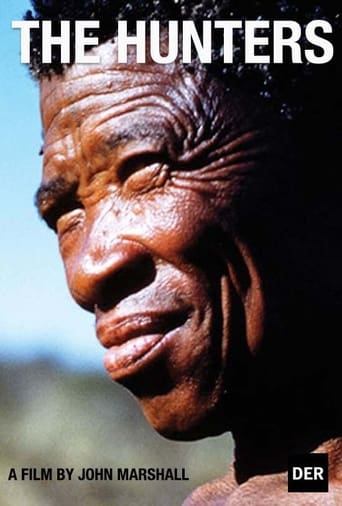
21 Mar 1957
An ethnographic documentary following four Ju/’hoansi (!Kung) men during a multi-day giraffe hunt in the Kalahari Desert, filmed during the Smithsonian–Harvard Peabody expedition of 1952–53.

01 Jan 1971
Mad, bad' poet Lord Byron and a lobster thermidor feature in a melancholy tour of Seaham with Johnny Morris.
01 Jan 2016
'Mod' is an attempt by the filmmaker at communicating with the young men who hang out at the ‘notorious’ water tank in her neighbourhood in Pratap Vihar, Ghaziabad. The water tank is a space that is frequented by the so-called ‘no-gooders’ of the locality, a place where they play cricket, play cards, drink and smoke up. When she enters the space with her camera, the boys are curious and at the same time wary of it and her. They sometimes resist, sometimes protest, and at times, open up. As the film unfolds we get a hint of the lives the boys lead and the fragile world they create for themselves at the water tank.
01 Jan 1986
Dancing in Dulias was made by members of Lesbians and Gays Support the Miners (LGSM) and Lesbians Against Pit Closures during and immediate after the 1984/85 minders strike. Like the forthcoming movie, Pride, it documents the interactions between lesbians and gay men and the miners and their families in Dulais in South Wales - only this time it's the real thing. As well as some memorable footage that includes the Blaenant Lodge banner leading the 1985 Lesbian and Gay Pride march and LGSM members struggling with bingo at the local community hall, the film documents the wider political impact of this seemingly unlikely alliance. (cont. http://www.cambridgefilmfestival.org.uk/films/2014/dancing-in-dulais#sthash.HScQCj7E.dpuf)

01 Jul 1949
The 23rd issue of the long running industry cinemagazine. Features the articles: 'Safety First', 'Paying For It' and ' A Star Drops In'.

01 Jan 1982
As retailers, wholesalers, and negotiators, Asante women of Ghana dominate the huge Kumasi Central Market amid the laughter, argument, colour and music. The crew of this `Disappearing World' film have jumped into the fray, explored, and tried to explain the complexities of the market and its traders. As the film was to be about women traders, an all female film crew was selected and the rapport between the two groups of women is remarkable. The relationship was no doubt all the stronger because the anthropologist acting as advisor to the crew, Charlotte Boaitey, is herself an Asante. The people open up for the interviewers telling them about their lives as traders, about differences between men and women, in their perception of their society and also about marriage.
22 Mar 2023
Short ethnographic documentary showing a leopard dance based upon footage shot by director Luc de Heusch in Congo in 1954 reassembled by Damien Mottier (Université Paris Nanterre) and Grace Winter (CINEMATEK).
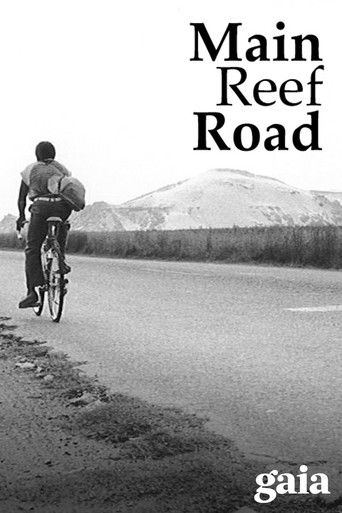
25 Jun 1999
Since the days of Apartheid, Main Reef Road has linked Johannesburg, its suburbs, and the outlying villages and gold mines of the region. Now the people of means flee the more remote reaches of the Road for the suburbs. Who remains along this once heavily travelled highway? Who slaves for the mining companies today? Filmmaker Nic Hofmeyr takes to the road to meet them. South Africa's history echoes in their stories, and in the very landscape.
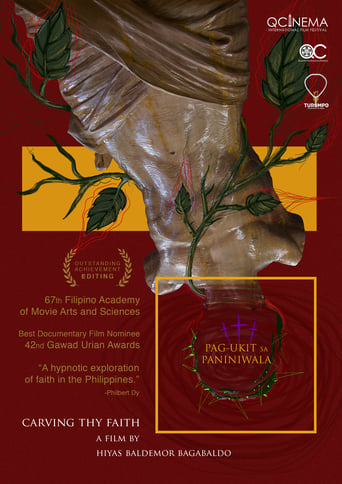
21 Oct 2018
A five-year visual ethnography of traditional yet practical orchestration of Semana Santa in a small town where religious woodcarving is the livelihood. An experiential film on neocolonial Philippines’ interpretation of Saints and Gods through many forms of rituals and iconographies, exposing wood as raw material that undergoes production processes before becoming a spiritual object of devotion. - A sculpture believed to have been imported in town during Spanish colonial conquest, locally known as Mahal na Señor Sepulcro, is celebrating its 500 years. Meanwhile, composed of non-actors, Senakulo re-enacts the sufferings and death of Jesus. As the local community yearly unites to commemorate the Passion of Christ, a laborious journey unfolds following local craftsmen in transforming blocks of wood into a larger than life Jesus crucified on a 12-ft cross.
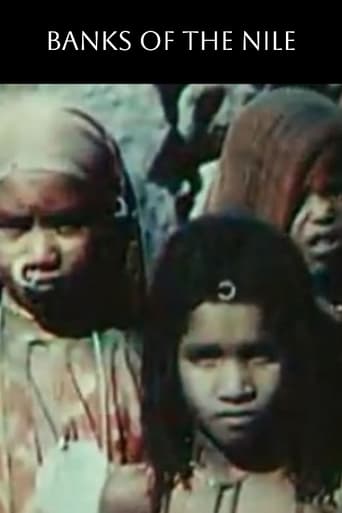
01 Jan 1911
With a dual motion a cruise ship and a fishing boat pass one another on the Nile and butlers in turbans set up a wooden gangway. Thanks to a rope and pulley system cows climb skywards then disappear into the hold of the sailing vessel. On the bank, black-haired women rock back and forth, bursting out laughing and showing the first signs of going into a state of trance. Never-before filmed gestures and faces of the people of the Nile succeed one another, uprooted to an unknown, magical world. The Banks of the Nile is one of the first experiments of film in colour that uses the Kinemacolor process.

30 Jul 2002
No overview found
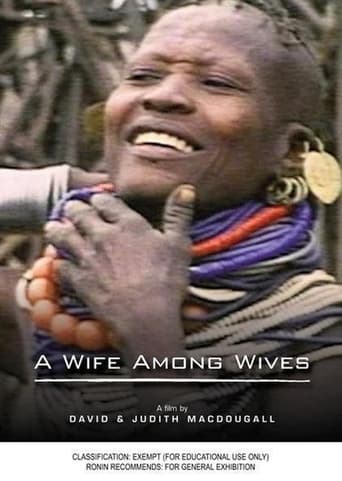
01 Jan 1981
David and Judith MacDougall are exploring the marriage rituals and roles of Turkana women in this ethnographic documentary. The film's biggest part is taken up by talks between the Turkana people. As one of the first ethnographic documentaries "A Wife Among Wives" subtitles these talks so that the viewer can get a better and probably more personal understanding of the life of the Turkana.
09 Jul 1901
“One of the principal features at the Pan-American Exposition is the Alaskan or Esquimaux Village. In this most interesting exhibit, scenes are enacted just as they take place in the far away frozen North. In this subject we depict a large number of Esquimaux clothed in their native costumes and seated on their sleds, which are drawn by spans of four Esquimaux dogs. They are engaged in a race and are to be seen running over the ice and snow at a high rate of speed. There is a pond in the foreground of the picture on the shores of which the home stretch of the race takes place. The picture is perfect photographically, and the figures stand out clear and sharp, throwing a most perfect reflection on the pond.” (Edison film company catalog)
14 Jul 1899
A young woman in traditional Japanese attire fixes her hair and kimono while her servants assist her.
16 May 1897
A woman from the Ashanti tribe bathes her child in a shallow bowl.

18 Apr 1897
Travellers, nomads and salesmen make their way along a dam next to the Nile.

01 Jan 1989
"With characteristic wit and rigor, experimental filmmaker Larry Gottheim here applies his impressionistic editing style to footage collected during his travels in the Dominican Republic. Gottheim’s formal emphasis on repetition and fissures between sound and image resonates here as a mode of sociological reflection (with the fragmentary montage mirroring elements of ritual while also destabilizing the ethnographic gaze). A largely overlooked antecedent to the contemporary blending of avant-garde and ethnographic filmmaking, MACHETTE GILLETTE… MAMA still poses a potent challenge to documentary convention." - Max Goldberg