23 Dec 2014

Blown Away
Cyclone Tracy 40 years on, exploring the myths and revealing new perspectives on one of the worst natural disasters in Australia's history.
Filmed on the island of Haida Gwaii, this documentary depicts the ongoing resistance and resurgence of the Haida people and their culture against the different manifestations and trauma of colonization.
Self
Self
Self
Self
Self
Self
Self
Self
Self
Self
Self - Carver
Self - Carver
Self - Carver

23 Dec 2014

Cyclone Tracy 40 years on, exploring the myths and revealing new perspectives on one of the worst natural disasters in Australia's history.

23 Nov 2021

“Kill the Indian to save the man” was the catchphrase of The Carlisle Indian Industrial School, a boarding school opened in Pennsylvania in 1879. It became a grim epitaph for numerous native children who died there. In 2017, a delegation from the Wind River Indian Reservation in Wyoming attempts to retrieve the remains of three Northern Arapaho children buried far from home in the school cemetery, on a journey to recast the troubled legacy of Indian boarding schools, and heal historic wounds. This documentary film is produced by The Content Lab LLC, with support from The Wyoming Cultural Trust Fund, The Wyoming Humanities Council, and Wyoming PBS.
06 Mar 2006
In 1885, German Zoo owner Carl Hagenbeck hired nine Aboriginal men from Bella Coola to perform their dances and songs for German audiences. The nine dancers spent one year in Germany performing in zoos and theatres in 22 cities. During summer 2005, the Canadian filmmaker Barbara Hager came to Germany to retrace the steps of the nine Nuxalk men on their original 13 month long tour.


The hard-working cinema owners and operators of the small towns found in BC's southern interior are doing more than showing movies and selling popcorn––they are bringing their communities together.

25 Dec 1962

Christmastime at the Roman Catholic-run Kamloops Indian Residential School in British Columbia.
25 Sep 2018
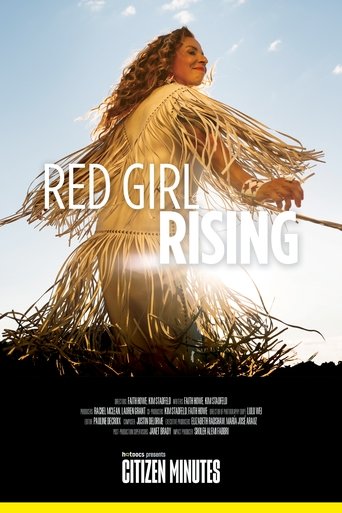
Three intrepid women battle for Indigenous women's treaty rights.

08 Mar 2020

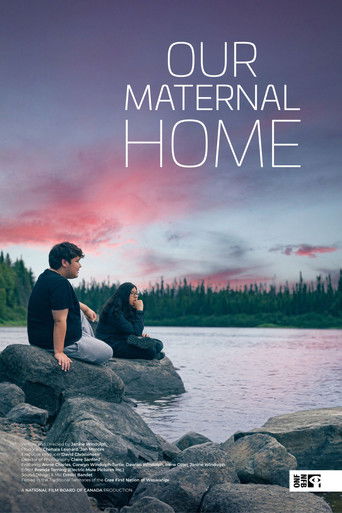
In this layered short film, filmmaker Janine Windolph takes her young sons fishing with their kokum (grandmother), a residential school survivor who retains a deep knowledge and memory of the land. The act of reconnecting with their homeland is a cultural and familial healing journey for the boys, who are growing up in the city. It’s also a powerful form of resistance for the women.

12 Aug 2022

Documentary about the production of Bunk #7.
01 Jan 2007
Between 1879 and 1986, upwards of 100,000 children in Canada were forcibly removed and placed into Indian Industrial Residential Schools. Their unique culture was stripped away to be replaced with a foreign European identity. Their family ties were cut, parents were forbidden to visit their children, and the children were prevented from returning home.
23 Oct 2022
The injustice of the Japanese internment is explored through the story of Kyuichi Nomoto, one of the first Japanese Canadians to graduate from UBC, who suffered a breakdown deep in the BC Interior.

07 Sep 2017

Legendary documentary filmmaker Alanis Obomsawin provides a glimpse of what action-driven decolonization looks like in Norway House, one of Manitoba's largest First Nation communities.

01 May 2020

In this era of “reconciliation”, Indigenous land is still being taken at gunpoint. Unist’ot’en Camp, Gidimt’en checkpoint and the larger Wet’suwet’en Nation are standing up to the Canadian government and corporations who continue colonial violence against Indigenous people. The Unist’ot’en Camp has been a beacon of resistance for nearly 10 years. It is a healing space for Indigenous people and settlers alike, and an active example of decolonization. The violence, environmental destruction, and disregard for human rights following TC Energy (formerly TransCanada) / Coastal GasLink’s interim injunction has been devastating to bear, but this fight is far from over.

01 Jan 1972

Atikamekw elder Cézar Néwashish continues to recount the history of the community of Manawan that first began in The History of Manawan: Part One. As Christianity and European customs take deeper root in the community – abetted by residential schools and aggressive assimilationist government policies – seemingly irreversible changes to significant customs begin to unfold. Despite these struggles, the people carry on. This short is part of the Manawan series directed by Alanis Obomsawin.

08 Jun 2018

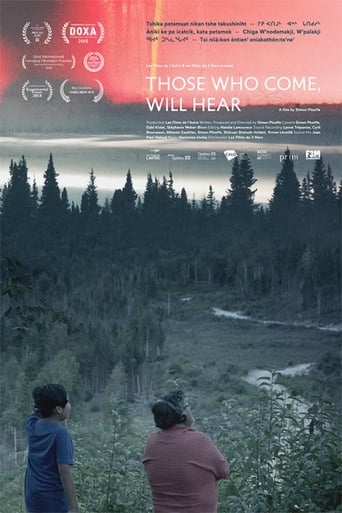
The documentary proposes a unique meeting with the speakers of several indigenous and inuit languages of Quebec – all threatened with extinction. The film starts with the discovery of these unsung tongues through listening to the daily life of those who still speak them today. Buttressed by an exploration and creation of archives, the film allows us to better understand the musicality of these languages and reveals the cultural and human importance of these venerable oral traditions by nourishing a collective reflection on the consequences of their disappearance.

15 Oct 2014

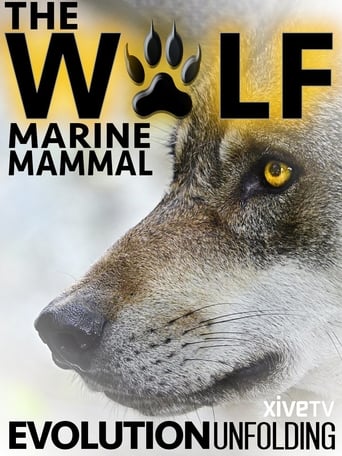
The wolf of British Columbia is on a quest to master water, fishing and swimming. According to several specialists, the wolf is at the first stage of a process that could turn it into a marine mammal. How will its evolution unfold?

24 Jan 2020

NIN E TEPUEIAN - MY CRY is a documentary tracks the journey of Innu poet, actress and activist, Natasha Kanapé Fontaine, at a pivotal time in her career as a committed artist. Santiago Bertolino's camera follows a young Innu poet over the course of a year. A voice rises, inspiration builds; another star finds its place amongst the constellation of contemporary Indigenous literature. A voice of prominent magnitude illuminates the road towards healing and renewal: Natasha Kanapé Fontaine.

04 Sep 2014

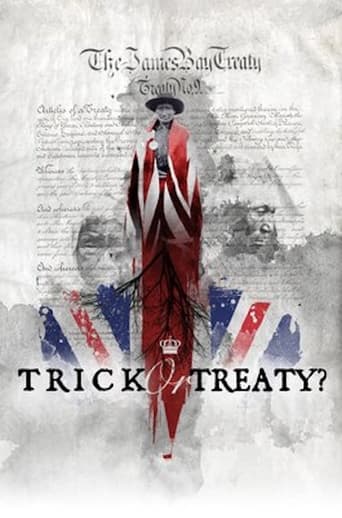
Legendary Canadian documentarian Alanis Obomsawin digs into the tangled history of Treaty 9 — the infamous 1905 agreement wherein First Nations communities relinquished sovereignty over their traditional territories — to reveal the deceptions and distortions which the document has been subjected to by successive governments seeking to deprive Canada’s First Peoples of their lands.
25 Mar 2023
Famed Haida artist Robert Davidson carves his latest monumental totem pole and gives a rare insight into the deeper meanings of North Coast Indigenous art works.
25 Aug 2022
Filmmaker Charles Wilkinson gives viewers an immersive look at that potlatch, a jubilant gathering that finds the members of many Haida clans celebrating the revitalization of their cultural traditions as caretakers of the land.

01 Jan 1970

When Masset, a Haida village in Haida Gwaii (formerly known as the Queen Charlotte Islands), held a potlatch, it seemed as if the past grandeur of the people had returned. This is a colourful recreation of Indigenous life that faded more than two generations ago when the great totems were toppled by the missionaries and the costly potlatch was forbidden by law. The film shows how one village lived again the old glory, with singing, dancing, feasting, and the raising of a towering totem as a lasting reminder of what once was.