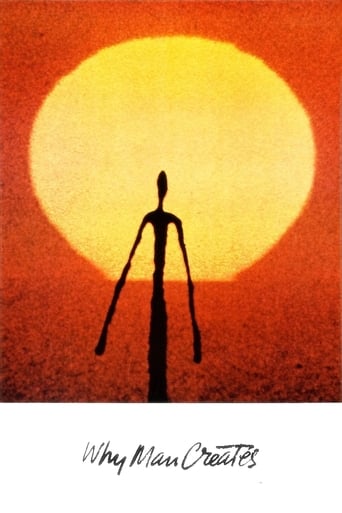
24 Sep 1968
Why Man Creates
A 1968 animation/documentary that criticises the industrial system. Preserved by the Academy Film Archive.
After becoming hypnotised Felix decides to try hypnotism himself. After he is successful a couple of times he decides to hypnotise his wife. The plan backfires and Felix is kicked out of his house again. Preserved by the Academy Film Archive in 2010.
24 Sep 1968
A 1968 animation/documentary that criticises the industrial system. Preserved by the Academy Film Archive.
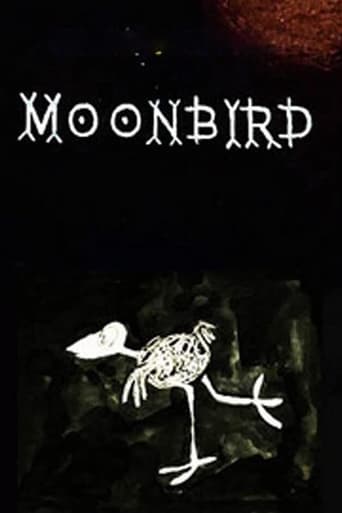
29 Jan 1959
Two boys go outside at night to capture a bird. Preserved by the Academy Film Archive in 2003.
13 Mar 1971
A woman's nightly domestic rituals—from putting her baby to bed to making love—unspool in a playful parade of surreal, straight-from-the-id images.
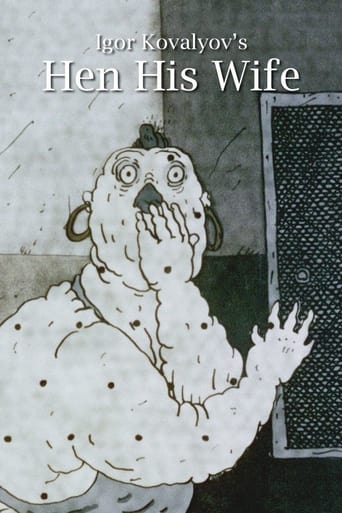
01 May 1990
Extraordinarily detailed and beautifully drawn animation of a bizarre and surreal world; the domestic life of a fat man, his wife, a sort of oversized obese chicken, and their child/pet, a slug-like creature with a human head. This expressionistic and interior vision of Soviet animator Kovalyov is like an animated Eraserhead.
01 Jan 1973
Music: Carl Stone. Colored pen-and-ink drawings, like topological maps of biomorphic objects, grow and evolve from the red star. Once the master image is formed, this continuously throbbing, pulsating sight is used to ring changes based on years of optical work. Music and picture work together to create a mood of ecstatic tranquility. The bright colors, beautiful music, surprise at the end, etc. make this a good film for young children. Awards: Sinking Creek Film & Video Festival, 1973; Washington National Student Film Festival, 1974; Brooklyn Independent Filmmakers Exposition, 1974; Vanguard Int'l Competition of Electronic Music for Film, 1974; Humboldt Film Festival, 1974. Preserved by the Academy Film Archive in partnership with iotaCenter and National Film Preservation Foundation in 2007.
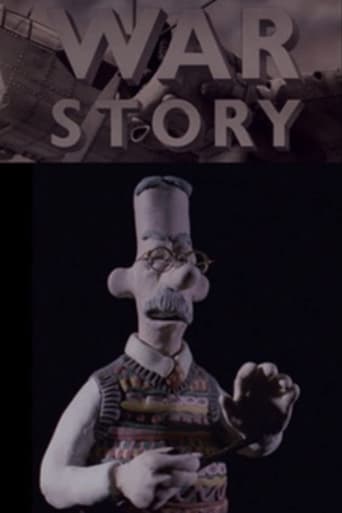
27 Sep 1989
This claymation short film uses a real interview for dialogue. Bill Perry relates stories about his youth, his tilted house, and adventures during WWII in Bristol, England during the blitz. Preserved by the Academy Film Archive.
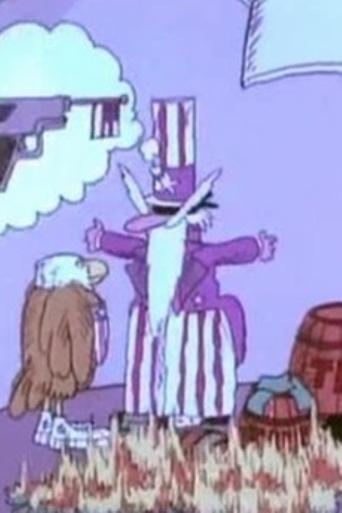
31 Dec 1971
Uncle Sam has been living peacefully in the American southwest, running a gas station. But when terrorists kidnap the Statue of Liberty, Uncle Sam teams up with an eagle to go rescue her. Preserved by the Academy Film Archive in 2007.
21 Feb 1973
This is one of those abstract animated films in which colored, richly textured light moves in a black, three-dimensional space. The pictures and the electronic score are unified in a strict structure made of three main sections which progressively develop three subsections. This film may look like it was made using computers or video to the uninitiated, but only animation and much optical printing are to be seen herein. Preserved by the Academy Film Archive in partnership with iotaCenter and National Film Preservation Foundation in 2007.
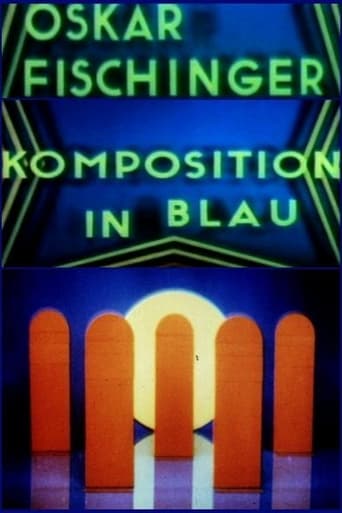
28 Jun 1935
An abstract film in which every motion of coloured shapes is in strict synchronization with music. Preserved by the Academy Film Archive in 2000.
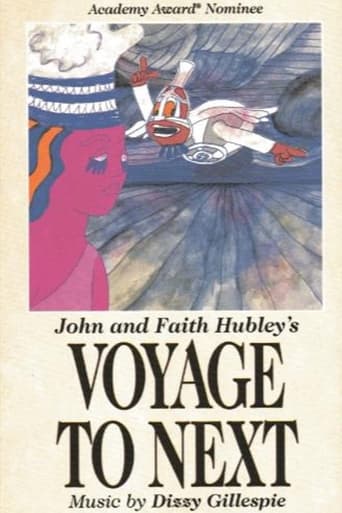
01 Oct 1974
Mother Earth and Father Time converse about the choices humans make. Preserved by the Academy Film Archive in 2010.
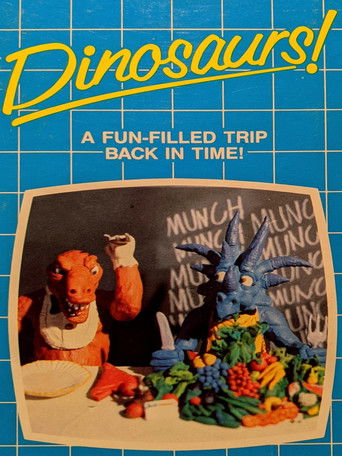
18 Jul 1980
Everyone in Philip’s science class has a great idea for a report - everyone, that is, except Philip. That evening, he listens to a song playing on his boombox, and it provides him with inspiration: DINOSAURS! The next day at the museum, Philip discovers that the search for the truth about these magnificent animals and their astonishing 160-million-years success on the Earth is the most fascinating mystery tale he’s ever heard. What follows is an exciting collection of established theories and fascinating speculation. Philip’s report captivate viewers of all ages, just as it captivates Philip’s classmates. The Kingdom of the Dinosaurs comes to life through animation, live action, and a special Claymation feature by Will Vinton Productions. A short educational Claymation film about dinosaurs. Preserved by the Academy Film Archive in 2013.
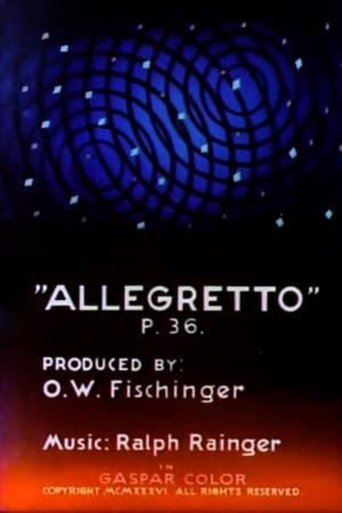
01 Jan 1936
In the 1936 short Allegretto, diamond and oval shapes in primary colors perform a sensual, upbeat ballet to the music of composer Ralph Rainger. The geometric dance is set against a background of expanding circles that suggest radio waves. [Early Version and Late Version preserved by the Academy Film Archive in 1999].
01 Jan 1959
Images of two women, two men, and a gray cat form a montage of rapid bits of movement. A woman is in a bedroom, another wears an apron: they work with their hands, occasionally looking up. A man enters a room, a woman smiles. He sits, another man sits and smokes. The cat stretches. There are close-ups of each. The light is dim; a filter accentuates red. A bare foot stands on a satin sheet. A woman disrobes. She pets the cat. Preserved by the Academy Film Archive in 2006.

28 Aug 1967
After the title, a white screen gives way to a series of frames suggestive of abstract art, usually with one or two colors dominating and rapid change in the images. Two figures emerge from this jungle of color: the first, a shirtless man, appears twice, coming into focus, then disappearing behind the bursts and patterns of color, then reappearing; the second figure appears later, in the right foreground. This figure suggests someone older, someone of substance. The myth? Preserved by the Academy Film Archive in 2012.
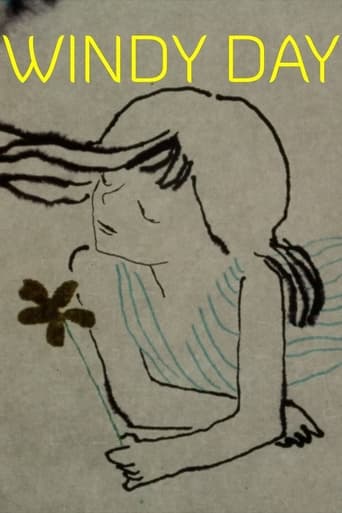
29 May 1968
Two little girls muse on marriage and babies, love and death as they create and act out plays in their backyard. Preserved by the Academy Film Archive in partnership with New York Women in Film & Television in 2006.
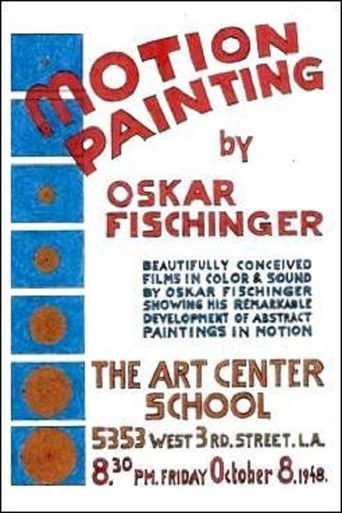
31 Dec 1947
Motion Painting No. 1 is a 1947 experimental short animated film in which film artist Oskar Fischinger put images in motion to the music of Johann Sebastian Bach’s Brandenburg Concerto no. 3, BWV 1048. It is a film of a painting (oil on acrylic glass); Fischinger filmed each brushstroke over the course of 9 months. In 1997, this film was selected for inclusion in the United States National Film Registry by the Library of Congress as being “culturally, historically, or aesthetically significant”. Preserved by the Academy Film Archive in 2000.
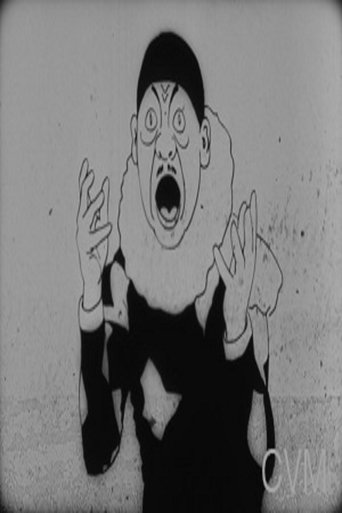
01 Jan 1924
What remains, unedited, of the first episode of a serial by several hands, subject to a form of supervision-control by Fischinger. It opens with an extremely happy image (a "creative hand" which subsequently returns from time to time) — with shading and movements which appear to have been achieved by the use of the Rotoscope — characters who evoke the commedia dell’arte, in a somewhat joyless tone, but visually dramatic and with echoes of "caligarism". Enno Patalas would like to visit the other surviving episodes, better to understand the spirit of the operation conceived by Louis Seel, designer emeritus and the inspiration of the project. Preserved by the Academy Film Archive in 2000.
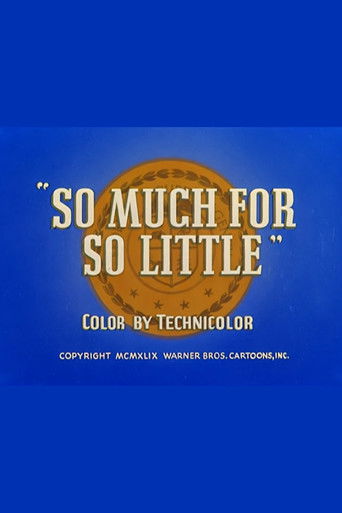
16 Mar 1949
Little Johnny Jones, to be born in the next year, is shown growing to a ripe, healthy old age, thanks to the efforts of his local public health officers. But without them, he might be one of the 5% or so that dies in the first year. The price for the public health service: about 3 cents a week. Preserved by the Academy Film Archive in 2005.
28 Dec 1963
An experimental animated short film in which a piano plays a song and the keys, hammers, and various other parts of the piano are different colors. Preserved by the Academy Film Archive in 2007.

17 Mar 1977
Begins as a whimsical piece with 'sheets' of lines running down the screen, progressing into more and more complex geometic patterns but without deviating from the basic precepts of 'dot and line' animation. Jazz piano on a lazy Sunday afternoon, and a spring color palette. -- Stephanie Sapienza. Preserved by the Academy Film Archive in 2001.