28 Aug 2017
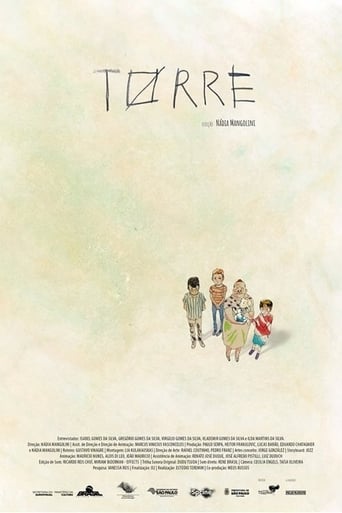
Tower
Four siblings, whose father disappeared during Brazilian Military Dictatorship, report their childhood during the regime.
28 Aug 2017
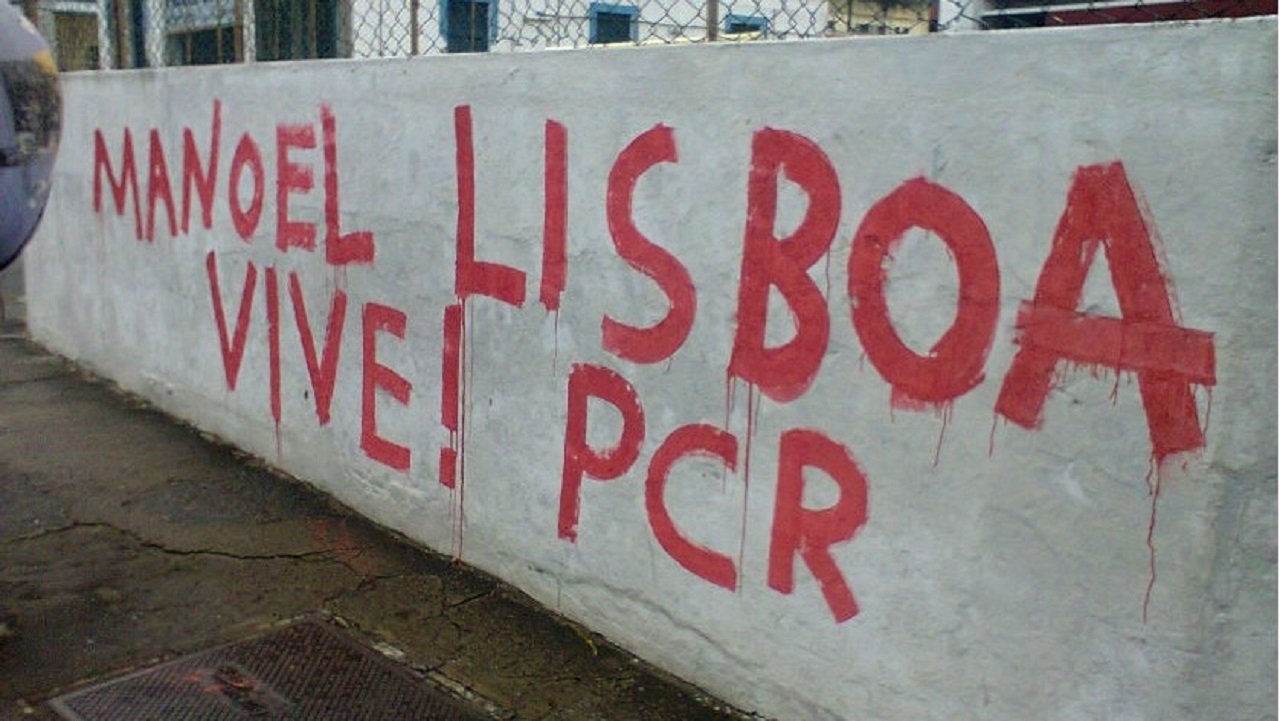
Four siblings, whose father disappeared during Brazilian Military Dictatorship, report their childhood during the regime.
01 Oct 2013
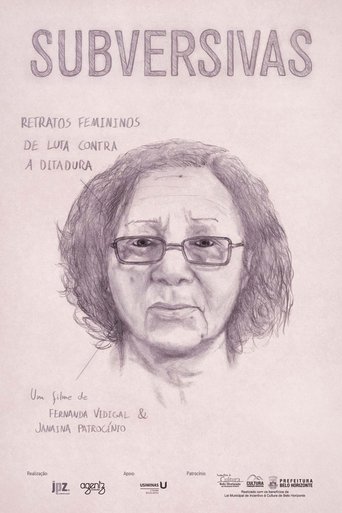
"Subversivas" is a documentary that reveals the brazilian military dictatorship from the perspective of women. Teresa Angelo, Gilse Cosenza, Thereza Vidigal, Angela Pezzuti and Delsy Gonçalves joined the resistance to the military regime in different ways. Their memories bring out events that marked that time and their life. These statements reveal their effort for freedom and democracy not only in political actions, but also in their family, work and everyday relationships, imbued with a belief and search for a fair and free country.
01 Jan 2001
A feature-length documentary about the Free Kevin movement and the hacker world.

06 Jun 2024
A group of young politicians campaigning against an authoritarian constitution speak up, spark hope and ignite a once-in-a-generation movement in this energetic exploration of the recent elections in Thailand.

21 Feb 2020
Images of Argentinian companies and factories in the first light of day, seen from the inside of a car, while the director reads out documents in voiceover that reveals the collusion of the same concerns in the military dictatorship’s terror.

12 Mar 2022
An elderly choir group brings back erased violent history by singing songs that were written in prison and have been silenced for more than 50 years.
29 Jun 2018
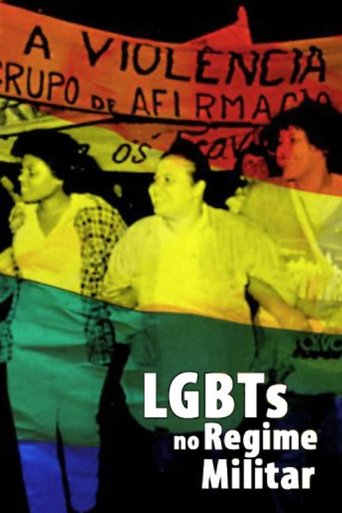
In 1980, the first march of gays, lesbians and transvestites took place in Brazil in protest against the constant police operations that took place in São Paulo, which aimed to repress these groups. Based on Renan Quinalha's doctoral thesis, “Against morality and good customs: the sexual politics of the Brazilian dictatorship (1964-1988)”, carried out by the Institute of International Relations, a series of four 5 minute videos about the birth of the LGBT movement during the Military Regime.
With no choice, César faced leaving his family behind, quitting his job and joining the Army. In an unprecedented chain of events he became the first conscientious objector in Galicia (Spain) to be put in prison. Now, nearly thirty years later, Two Years, Four Months, A Day takes a look at what made him do it.
05 Jul 2006
Amid the civil-military dictatorship implanted with the 1964 coup, Sergio Muniz had the idea of making a documentary about the action of the Death Squad. At the time, the press still had some freedom to disseminate the work of these death squads formed by police officers of various ranks, and that he acted on the outskirts of cities like Sao Paulo and Rio de Janeiro. The victims of police repression (as today) were men, poor and black, and this condition is supposed criminals.
01 Nov 2019
Carlos Eugênio Paz recalls his participation in the armed struggle against the military dictatorship between the 1960s and 1980s. Using the code name “Clemente”, he participated in the National Liberation Alliance and in several urban actions. Through her own testimony and that of her fellow fighters, director Isa Albuquerque builds a portrait of a troubled moment in Brazilian history and of an entire generation that fought for their country's democracy.
No overview found
01 Jan 1992
No overview found
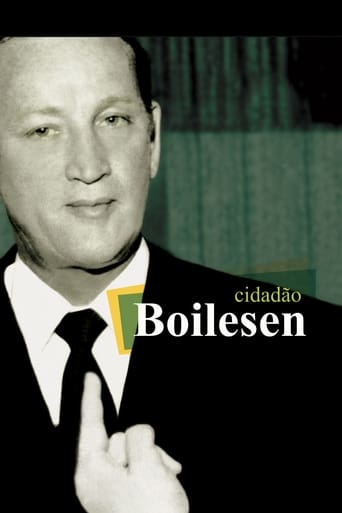
27 Nov 2009
A documentary about the controversial businessman Henning Boilesen Jr. and his involvement with the military regime as one of its most enthusiastic supporters, financing it and participating in the tortures of political prisoners. Those actions later culminated in his assassination in 1971 by members of militant groups opposed to the regime.
14 Jun 2016
No overview found
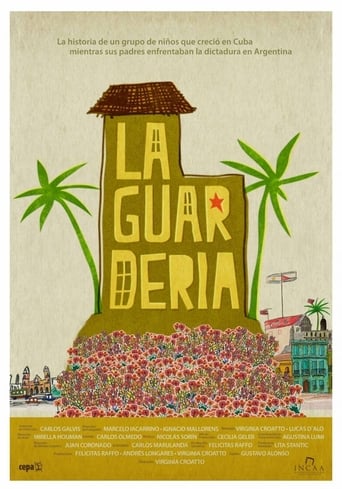
15 Nov 2015
There was a time in Argentina, not so long ago, when the army wasn't only one, official, but many and made up by civilians. In those times of courageous youths determined to fight to the death for that cause upheld around Peronism as wll as some left-wing postulates, revolutionary Cubas was a beacon of hope in the world scheme -a Montonero nation. "A House in Cuba" seeks to recover the curious adventure of a couple of Montonero parents and their small children, who were lovingly sent into exile in order for their parents to take up arms.
01 Jan 1994
No overview found
30 Sep 2022
When Mariana connects the Military Dictatorship's violent legacy as the structure behind Brazilian families, she embarks on an introspective journey to deconstruct her family life growing up in Brazil.
14 Sep 2022
“Let’s Do It!” is a story about how a national cleanup campaign in a small European country grew into an ambitious global environmental movement. The idea spread far and wide, bringing about new wave of civic activism in many countries. However, even good initiatives can hit rough spots. The important thing is not to lose hope. This documentary captures the passion to change the world over the course of 10 years, culminating in World Clean-Up Day in 2018. The movie also showcases how grass-root initiatives can grow and subside and how some ambitions can be defeated only to give rise to even more ambitious ones.
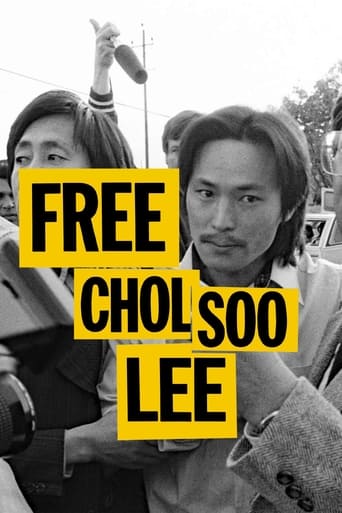
12 Aug 2022
On June 3, 1973, a man was murdered in a busy intersection of San Francisco’s Chinatown as part of an ongoing gang war. Chol Soo Lee, a 20-year-old Korean immigrant who had previous run-ins with the law, was arrested and convicted based on flimsy evidence and the eyewitness accounts of white tourists who couldn’t distinguish between Asian features. Sentenced to life in prison, Chol Soo Lee would spend years fighting to survive behind bars before journalist K.W. Lee took an interest in his case. The intrepid reporter’s investigation would galvanize a first-of-its-kind pan-Asian American grassroots movement to fight for Chol Soo Lee’s freedom, ultimately inspiring a new generation of social justice activists.
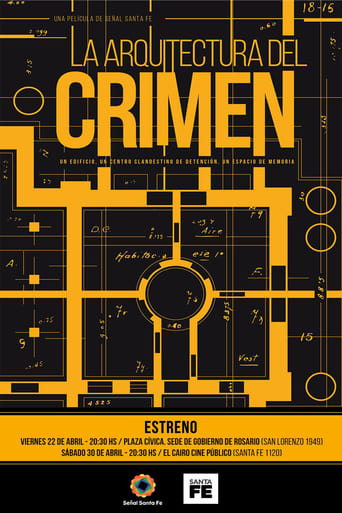
22 Apr 2016
At the end of the last civil-military dictatorship, a camouflage operation took place in the Information Service, an office of the former Rosario Police Headquarters that operated as a clandestine detention center in the heart of the city. This architectural intervention, not recorded in the plans, obscures the survivors' accounts and hides the traces of crimes against humanity. Drawing on images, previously unpublished archives, and survivor testimonies, the documentary explores the scars of political repression and highlights the importance of preserving memorial spaces to ensure the transmission of fundamental events in our contemporary history.